Quick answer: Most Dallas AC problems trace back to one of eight causes: warm air from the vents, ice on the unit, a system that won't start, strange noises, short cycling, refrigerant leaks, tripped breakers, or sticky indoor humidity. A surprising number can be ruled out at the thermostat, filter, and breaker panel before you ever pick up the phone. For everything else, professional AC repair in Dallas starts with a free diagnostic from Stork's, so finding out what's wrong never costs you anything.
When your air conditioner acts up in the middle of a North Texas summer, it never feels like a small thing, because it isn't. From late May through early October, your AC runs more hours per day than almost any appliance you own, fighting 100-degree afternoons and humid nights without a break. Something eventually gives.
This guide walks through the problems we see most often in Dallas-area homes after 30+ years of crawling through attics and kneeling beside condensers: what each symptom means, what's safe to check yourself, and when calling a professional is genuinely the cheaper move.
Why Dallas Summers Are So Hard on Air Conditioners
An air conditioner in Michigan might run 600 hours a year. Yours likely runs over 2,000, which is also why summer electric bills in DFW look the way they do. Triple-digit heat forces long, continuous cycles that wear motors, capacitors, and compressors far faster than the national average. On top of that, our sudden spring storms, oak pollen, and construction dust clog filters and condenser coils quicker than most maintenance schedules assume. That's the backdrop for nearly every problem below: a system working close to its limits for months at a time.
The 8 AC Problems We See Most
1. The AC runs, but the air isn't cold
The single most common summer call. Sometimes it's as simple as a thermostat set to fan instead of cool; sometimes it's a refrigerant leak or a failing compressor. We've broken down all seven usual suspects in our guide to why an AC blows warm air. And if the air is cold but the house still loses ground every afternoon, that's a different diagnosis: see why an AC runs all day without catching up.
2. Ice on the refrigerant lines or outdoor unit
Ice in August feels impossible, but a frozen evaporator coil is one of the most common problems we diagnose. It almost always points to restricted airflow or low refrigerant, and running the system while it's frozen can destroy the compressor. If you're seeing frost, read our step-by-step on what to do when your AC freezes up before you do anything else.
3. The system won't turn on at all
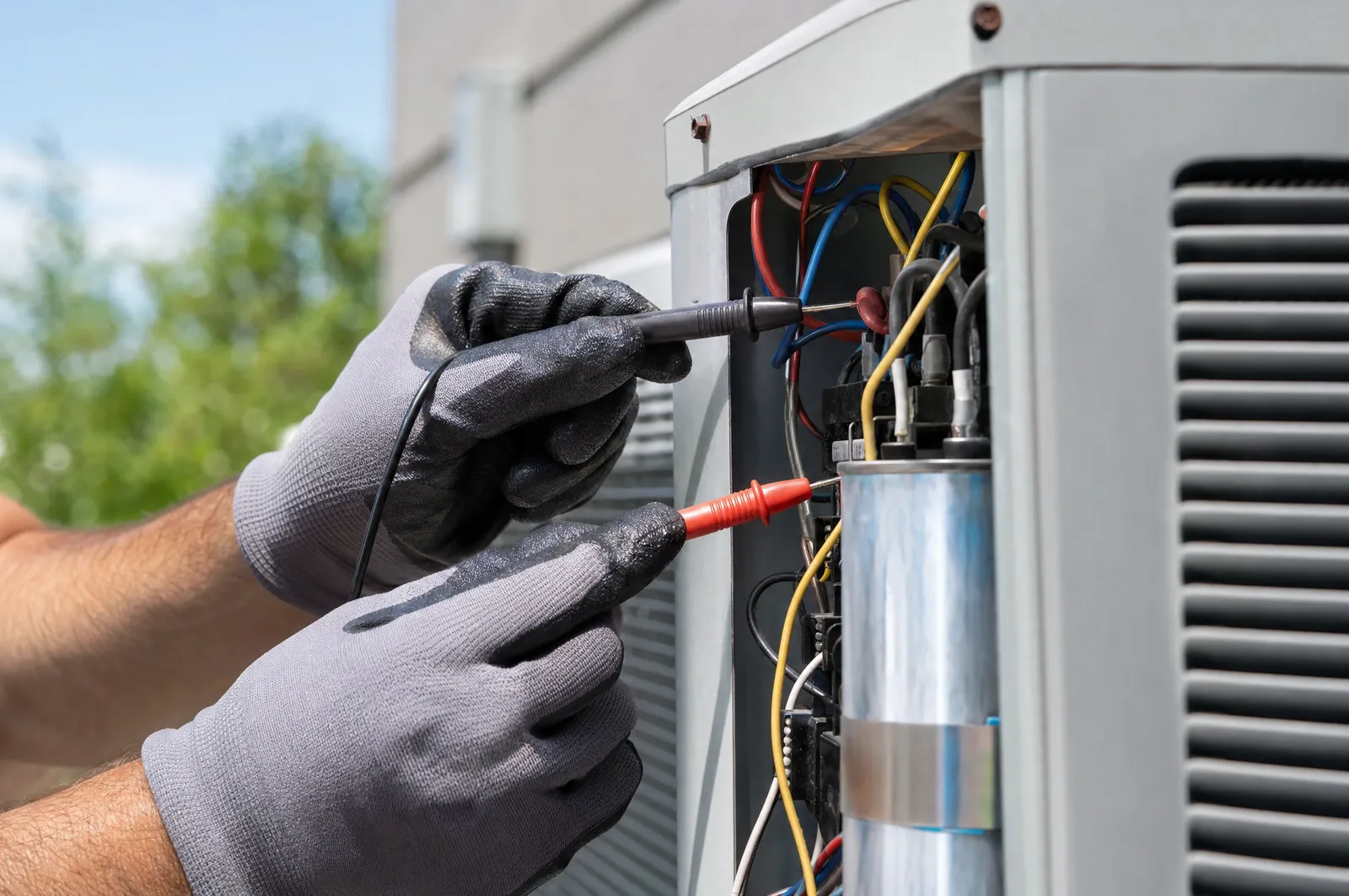
Dead thermostat batteries, a tripped breaker, a float switch tripped by a clogged drain line: many no-start conditions have five-minute fixes. Check the thermostat, the breaker panel, and the disconnect box by the outdoor unit before assuming the worst.
4. Grinding, squealing, or banging noises
A healthy system hums. Squealing usually means a belt or blower-motor bearing; grinding suggests metal on metal; banging often means a loose or broken part rattling around inside the cabinet. Noises never fix themselves. They get more expensive.
5. Short cycling: on, off, on, off
A system that starts and stops every few minutes never completes a proper cooling cycle. Causes range from a dirty filter or an oversized system to a failing capacitor or refrigerant issue. It drives your electric bill up while cooling your home worse, and our full guide to AC short cycling ranks the causes from cheap fix to design problem.
6. Refrigerant leaks
Refrigerant isn't fuel. It doesn't get "used up." If your system is low, it has a leak, and topping it off without fixing the leak is renting comfort by the pound. Hissing sounds, ice, and weak cooling are the classic signs.
7. The breaker keeps tripping
Once might be a fluke. Repeatedly is your electrical system protecting you from a real problem, often a shorted compressor, failing capacitor, or wiring issue. Don't keep resetting a breaker that keeps tripping; that's how small problems become fires.
8. The house feels cool but sticky
If the thermostat says 74 but the house feels like a greenhouse, your system is cooling without properly dehumidifying, which is common with oversized systems and worn equipment in our humid climate.
What You Can Safely Check Yourself
Before you call anyone, us included, it's worth five minutes to rule out the simple stuff:
- Thermostat: set to COOL, temperature below the current room reading, fresh batteries
- Air filter: if you can't see light through it, replace it
- Breaker panel: look for a tripped AC breaker (reset it once; if it trips again, stop and call)
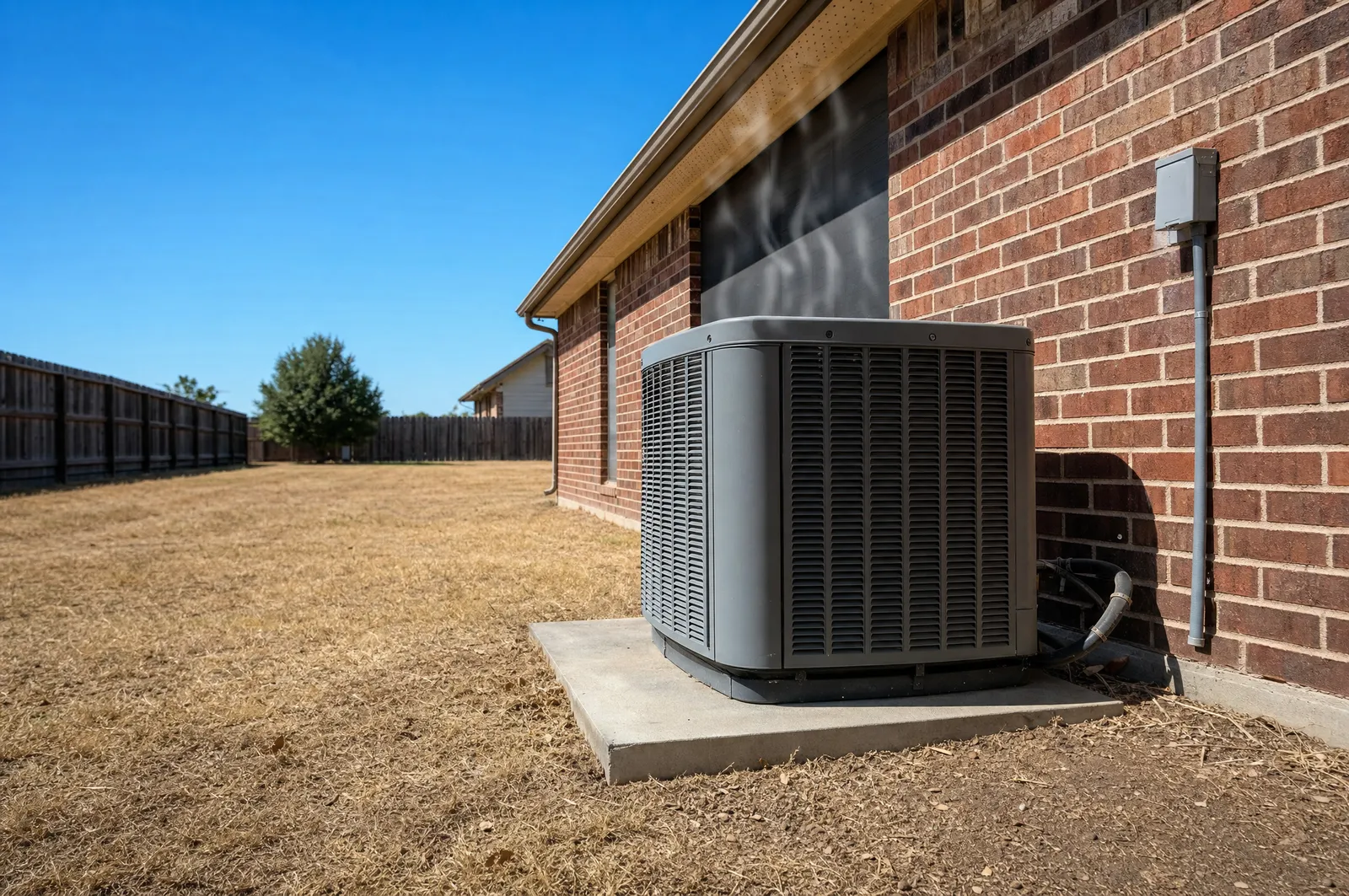
- Outdoor unit: clear leaves, grass clippings, and debris at least two feet around the condenser
- Vents: make sure supply and return vents aren't blocked by furniture or rugs
When to Call a Professional
Anything involving refrigerant, electrical components, or the compressor belongs with a licensed technician, not because we want the work, but because those repairs involve high-voltage circuits and pressurized chemicals that can hurt you, and DIY attempts usually turn a $200 repair into a $2,000 one. The good news: with Stork's, finding out what's wrong is free. We don't charge a call-out fee or a diagnostic fee, and we quote the fix upfront with online pricing before any work starts. If it's a five-minute fix, we'd rather tell you that and earn your trust for the day something bigger breaks.
Most AC Problems Are Preventable
Almost everything on this list shows warning signs months early, and most of it gets caught in a routine AC tune-up. Our maintenance agreements go a step further: they include 10-year parts and 10-year labor warranties, protection most contractors won't put in writing. A tune-up each spring is the difference between finding a weak capacitor in April and losing your compressor on the Fourth of July.
Serving Dallas and the Whole Metroplex
Stork's is family-owned and has served North Texas for over 30 years, not just Dallas proper but the whole metroplex. Whether you need AC repair in Allen, a second set of eyes on a system in Carrollton, or help with a brand-new build in Celina, our air conditioning team covers your neighborhood.
Cool Heads, Cold Air
AC problems are stressful, but they're rarely mysterious, and you now know more about diagnosing them than most homeowners ever will. When you're ready for a pro, booking takes about a minute with the calendar on this page, or reach out online anytime. Prefer to talk to a real person? Call us at 972-421-8000 for a free call-out, a free diagnostic, and an honest answer. That's the whole pitch.