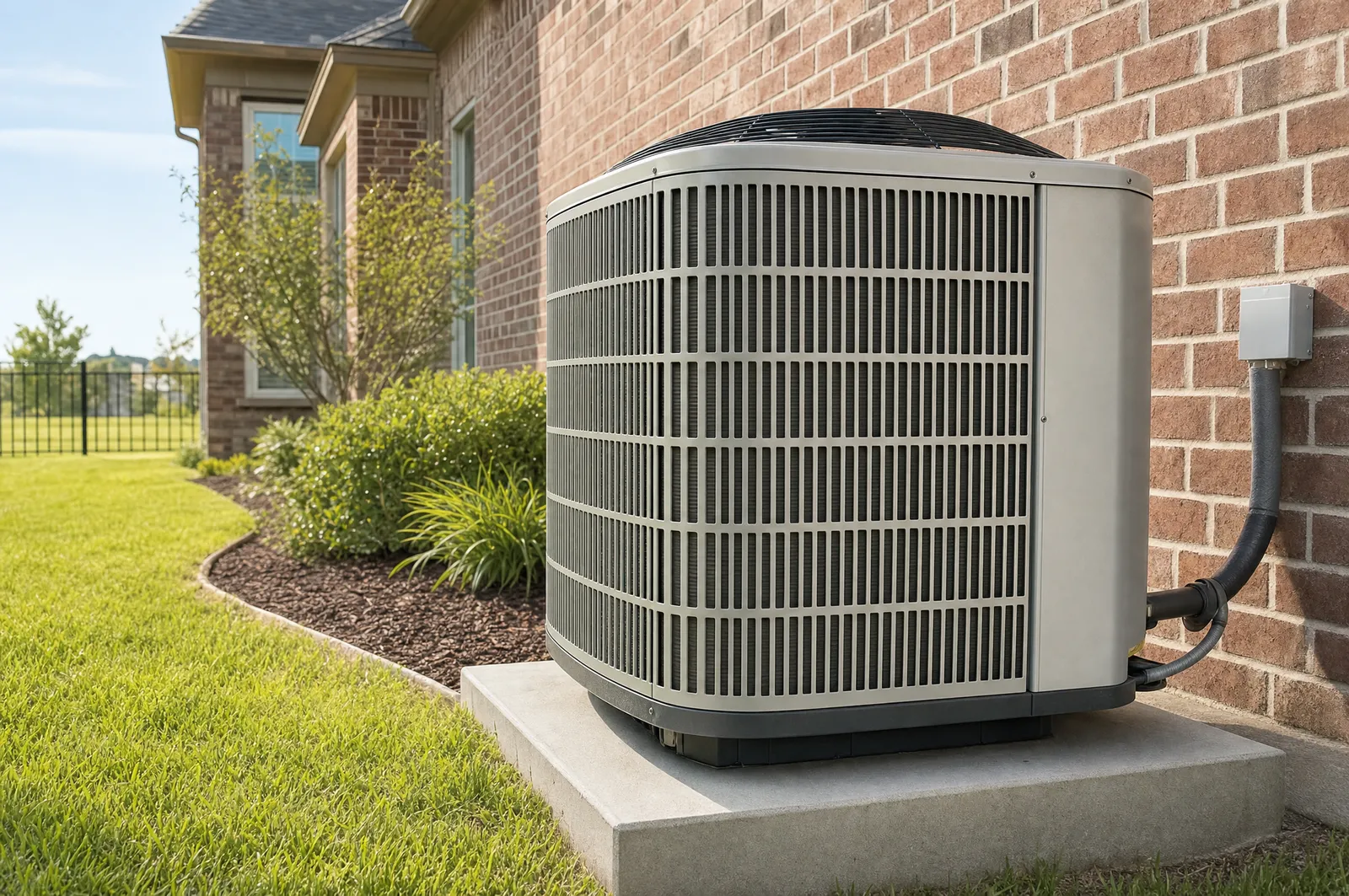
Quick answer: A high electric bill in a Texas summer is an air conditioning bill. Cooling runs 50 to 60 percent of a DFW home's electricity in July and August, so a big number is not proof that anything is broken. What turns a big bill into a shocking one is specific and fixable: a choked filter or a filthy outdoor coil, ducts leaking into a superheated attic, a low refrigerant charge, an aging low-efficiency unit, or a thermostat nobody has touched in years. A yearly AC tune-up catches most of it before your utility does.
You open the utility app expecting the usual August damage, then read the number twice because it does not look like it belongs to your house. Nobody was home more than usual. No new appliances. The thermostat has sat on the same setting since May. And the total still landed sixty, eighty, sometimes a hundred above the same month last year.
A Texas summer is expensive no matter what you do. But there is a real difference between a bill that is high because it stayed above 100 for nine days straight and one that is high because your system is doing twice the work to reach the same 75 degrees. The first one you pay and forget. The second one has a fix that usually costs less than the problem does.
The Honest Math Behind a High Electric Bill in a Texas Summer
Guessing at a bill gets you nowhere. Across Oncor's DFW territory most households land right around 15 cents per kilowatt-hour once delivery charges are baked in. A 3-ton central system of ordinary age and efficiency pulls about 3.5 kilowatts on a 100-degree afternoon, blower included. Call it 53 cents an hour to keep cold air moving.
On a design day near 100, that unit is not loafing between cycles. Ten hours of compressor time out of 24 is a conservative estimate, and the bad weeks run longer. Ten hours is 35 kilowatt-hours, a little over five dollars a day, right around $160 across a month. Stack that on everything the house draws anyway, water heater, refrigerator, laundry, and a bill that sat near $130 in April clears $270 in August with nothing wrong. Cooling is the biggest line item you have all summer, so anything that makes the air conditioner work harder does not add to your bill. It multiplies it.
A Choked Filter and a Filthy Coil Are the Same Problem
None of that math assumed a fault anywhere. Now add a clogged filter. The unit runs longer to move the same cold air, so every one of those 53-cent hours stretches. A filter in a house with two dogs strangles airflow well before it looks dirty enough to bother with, which is why the 90 days printed on the box reads like advice for somebody who lives somewhere else.
The outdoor coil does the same damage from the other end. Caked in dust, cottonwood fluff, and grass clippings, it cannot dump your house's heat into the air outside, so the compressor keeps running past a setpoint it should have hit twenty minutes ago. A yearly tune-up catches both while they are still cheap, and our maintenance agreements carry 10-year parts and 10-year labor warranties on the work.
If Your Ducts Run Through a 130-Degree Attic, You Are Paying to Cool the Attic
Most DFW homes deliver cold air through ductwork strung across an attic that pushes past 130 degrees on an August afternoon. Every loose seam and separated joint up there is an exit ramp for air you already paid to chill, and ENERGY STAR puts typical losses at 20 to 30 percent of conditioned air in homes where nobody has ever looked.
Long duct runs make it worse, which describes plenty of the roomy two-story plans that filled in across Murphy in the 2000s. Flex duct kinked behind a knee wall. A boot shaken loose from its register by twenty years of an attic swinging between 130 degrees and freezing. None of it is visible from the living room, and all of it lands on the bill. Sealing the system through duct repair and replacement is often the single largest cut available in a house whose equipment is healthy.
Low Refrigerant Bills You Full Price for Partial Cooling
A system low on charge does not simply blow warmer air. It moves less heat per cycle, so it runs far longer to drag the house down to the same number, and those extra minutes cost the same 53 cents an hour whether the air off the register is 55 degrees or 65.
Refrigerant is not fuel. It circulates in a sealed loop and is never consumed, so a system that needs a top-off has a leak, full stop. Paying to add refrigerant every June without finding the leak means buying the same pound of gas over and over and watching it drift into the sky. The habit gets pricier every year, too. New equipment has moved to R-454B as R-410A is phased down, and R-410A prices have climbed right along with the tightening supply.
An Old Low-SEER Unit Taxes Every Degree You Cool
Efficiency minimums have climbed hard. New systems in our region have to hit 14.3 SEER2, and plenty of homeowners buy well past that. The federal floor sat at 10 SEER from 1992 until 2006, and units built to that standard still run behind brick two-stories that went up across Plano in the 1990s. Side by side, the old one burns roughly 40 to 50 percent more electricity for identical cooling.
Run that against the numbers above. The $160 cooling month becomes closer to $230, and that extra seventy dollars leaves every August for the privilege of keeping a unit already past its expected life. It never arrives as a repair bill, which is exactly why nobody notices it.
Every Degree Below 78 Has a Price Tag
ENERGY STAR's summer guidance is 78 degrees while you are home and awake, and the rule of thumb underneath it, repeated for years by the Department of Energy and most utilities, is roughly 3 percent of cooling cost per degree. Some estimates run considerably higher. Either way, holding 72 instead of 78 costs close to a fifth of your cooling spend, about thirty dollars a month for six degrees.
None of which matters if the thermostat itself does not work. A builder-grade unit original to the house drifts out of calibration, reads a hallway wall rather than the rooms anyone actually sits in, and quietly abandons whatever schedule somebody programmed years ago. A thermostat repair or upgrade that genuinely holds an overnight setback and pulls the house down before you wake recovers most of that gap without asking anyone to sweat through a Tuesday afternoon.
When You Have Fixed Everything and the Bill Is Still Wrong
Sometimes the whole list gets cleared. Filter is new, coils are clean, ducts are sealed, charge is dead on, and the bill is still ugly, because at that point the equipment is the inefficiency. The question stops being what is broken and becomes whether it is worth fixing. A compressor replacement on a 20-year-old 10 SEER unit might buy another summer or two. It does nothing about the seventy dollars a month that unit's efficiency quietly costs you.
That is arithmetic rather than a judgment call, and it deserves real numbers on both sides. Our guide to repairing versus replacing an AC weighs a repair quote against the efficiency you would gain, and our free second opinion calculator puts that comparison in writing before you sign anything. If somebody has already handed you a replacement quote, run it through there first.
Find Out Which Part of Your Bill Is Fixable
Book from the calendar on this page, send us a message, or call 972-421-8000 and talk to somebody who runs these calls for a living. Call-out, diagnostic, and estimate are all free, and our pricing is published online, so you will know what the real fix costs before you agree to any of it. Thirty-plus years in DFW has taught us that a shocking bill almost always has one specific reason behind it, usually cheaper to fix than to keep paying for.