Quick answer: First check the two DIY culprits: a thermostat set to fan or heat instead of cool, and a clogged air filter. Then look for a tripped breaker on the outdoor unit. If air still isn't cold after those three checks, the likely causes are dirty condenser coils, a refrigerant leak, a frozen evaporator coil, or a failing compressor, and all four need professional AC repair. Stork's diagnoses the problem free of charge, any day of the summer.
Few things are more maddening than an air conditioner that's clearly running. You can hear it, the fan is spinning, air is moving through the vents, and yet your house creeps toward the same temperature as the driveway. It happens to thousands of North Texas homes every summer, and the cause is almost always one of the seven below. (If the air from the vents is genuinely cold and the house just can't hold its temperature, that's a different problem, covered in why an AC runs all day but the house stays hot.) We've ordered them from "fix it yourself in five minutes" to "stop and call someone."
1. The Thermostat Isn't Actually Asking for Cold Air
It sounds too simple, but it tops the list every single summer. If the thermostat is set to FAN, the blower runs continuously, circulating room-temperature air even when the system isn't cooling. Make sure it's set to COOL, the target temperature is below the current reading, and the batteries are fresh. Houseguests, cleaning crews, and curious kids change thermostat settings more often than you'd believe. (Once the cold air is back, our guide to the best thermostat setting for a Texas summer covers what to run it at.)
2. The Air Filter Is Suffocating the System
A clogged filter chokes airflow across the indoor coil. Less air across the coil means less heat absorbed, and eventually the coil gets so cold it ices over, at which point warm air is all you'll get. Hold your filter up to a light: if you can't see light through it, replace it. In a Texas summer with pets, every 30 days is a better rhythm than the "90 days" printed on the box.
3. The Outdoor Unit Lost Power
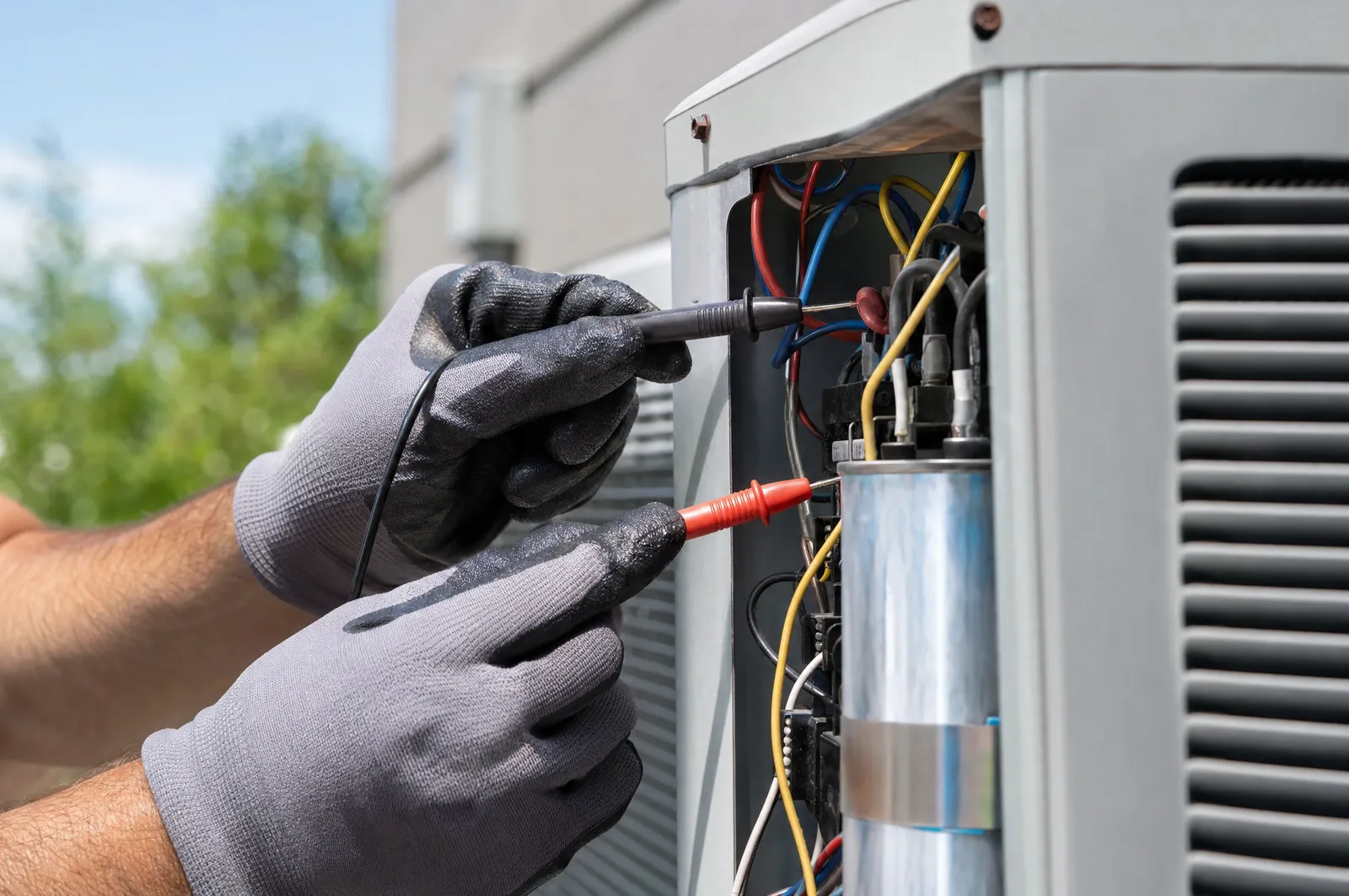
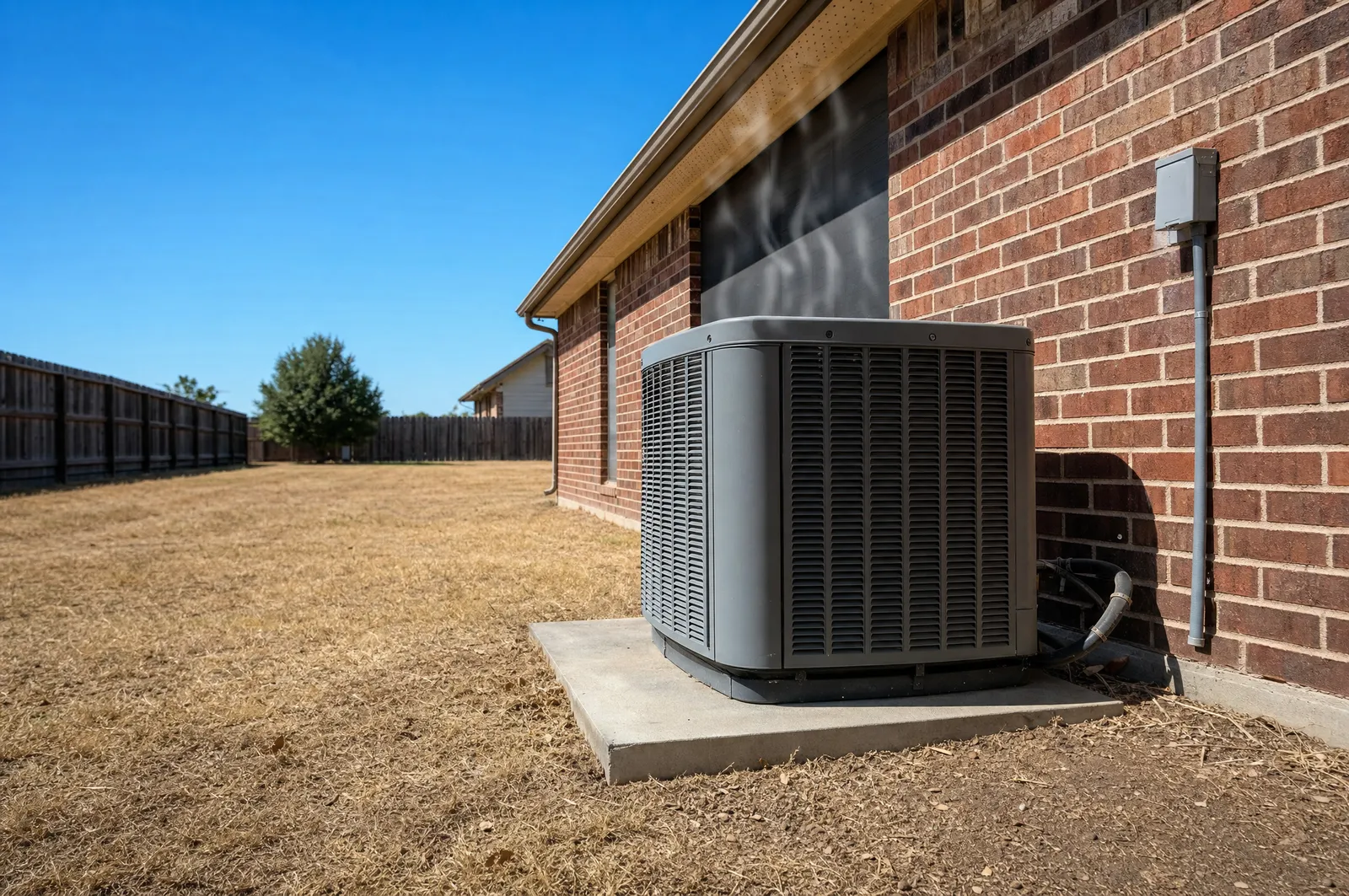
Your system has two halves, and they're powered separately. If the outdoor condenser's breaker trips, the indoor blower keeps pushing air. It just isn't cold anymore. Check your breaker panel for a tripped 240-volt AC breaker and the disconnect box mounted on the wall near the condenser. Reset it once. If it trips again, stop, because repeated trips mean an electrical fault that needs a technician, not a bigger breaker.
4. The Condenser Coils Are Caked in Grime
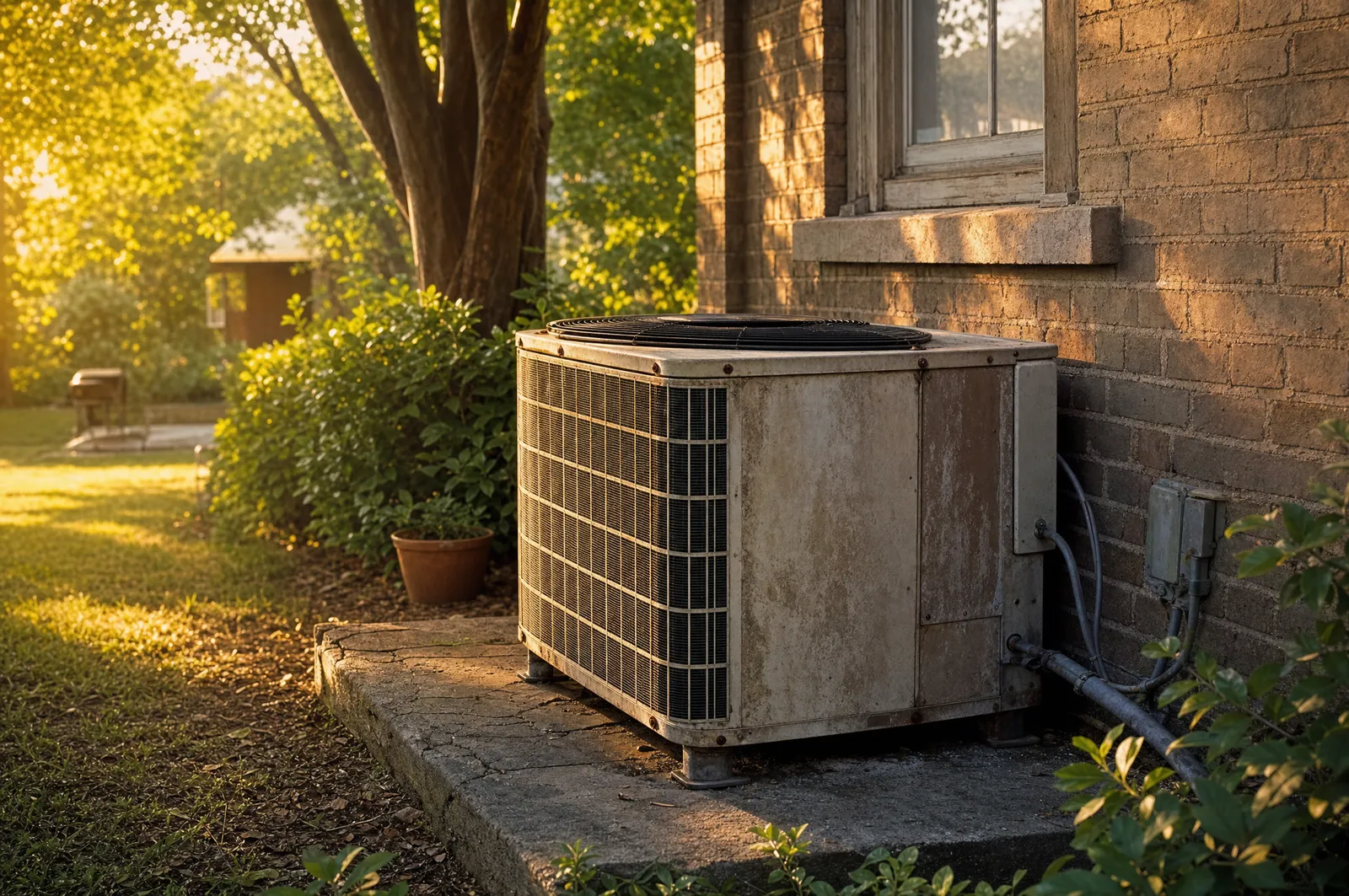
The outdoor unit's job is to dump the heat collected from your house into the outside air. When its coils are coated in dust, cottonwood fluff, and lawn clippings, that heat has nowhere to go. Gently rinse the coils with a garden hose (power off first, and no pressure washers, because the fins bend easily) and keep two feet of clearance around the unit.
5. The System Is Low on Refrigerant
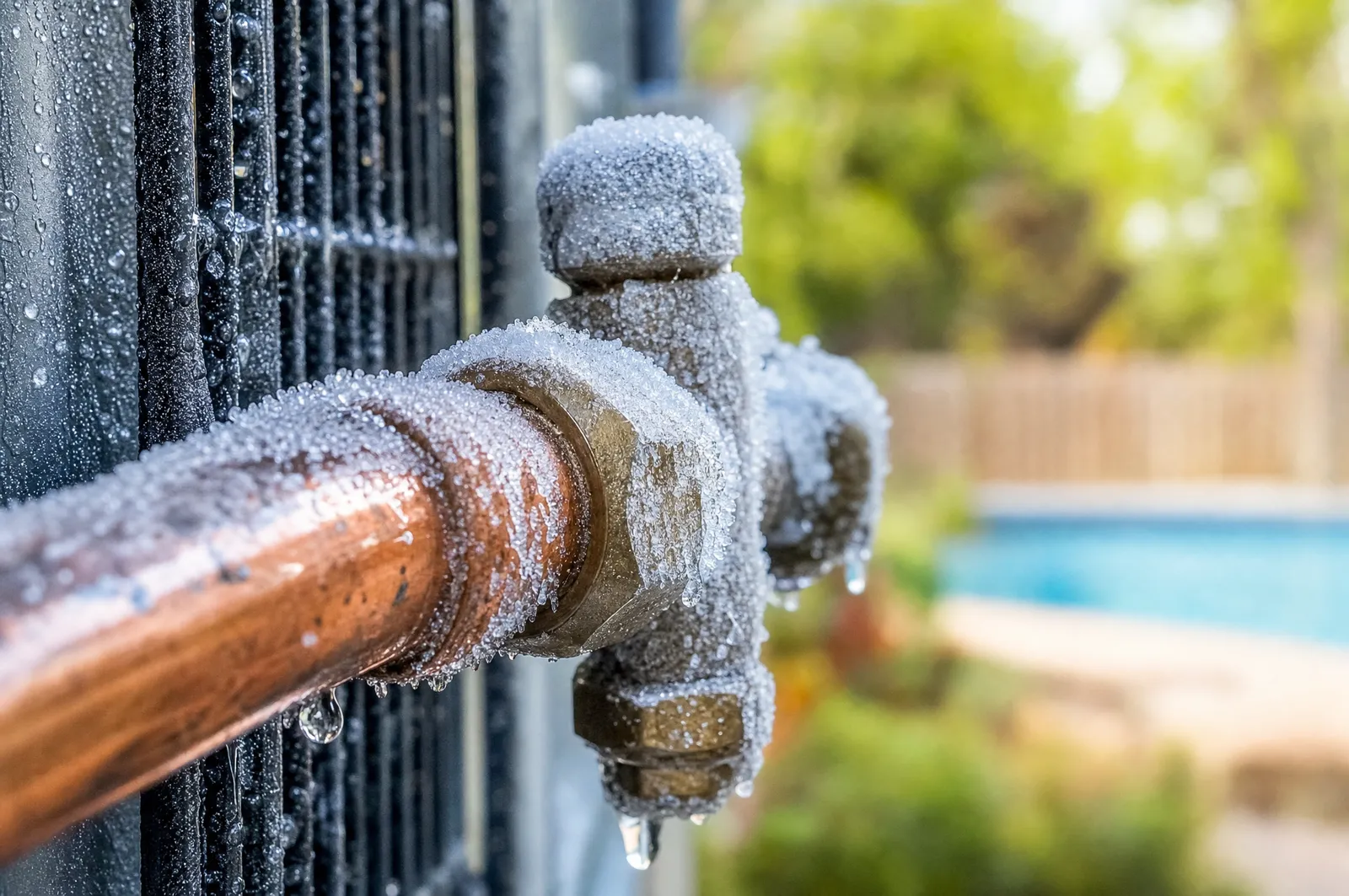
Here's the thing about refrigerant: it never gets "used up." If your system is low, it's leaking, and every pound of refrigerant escaping is cooling capacity you paid for drifting into the sky. The classic signs are lukewarm air, hissing or bubbling sounds, and ice forming on the copper lines. A proper fix means finding and repairing the leak, not just topping off the charge each June.
6. The Evaporator Coil Is Frozen Solid
Restricted airflow or low refrigerant can turn your indoor coil into a block of ice, and ice, counterintuitively, blocks cooling entirely. If you see frost on the refrigerant lines or the air feels weak and warm, shut cooling off and let it thaw. We've written a full walkthrough of what to do when your AC freezes up.
7. The Compressor Is on Its Way Out
The compressor is the heart of the system, and when it's failing, often announced by hard starts, humming, or a breaker that trips the moment it kicks on, warm air is one of the final symptoms. Compressor calls are where honest advice matters most, because the repair is expensive enough that replacement sometimes makes more sense. We'll give you the numbers straight and never push you either way.
When to Stop Troubleshooting and Call
If the thermostat, filter, and breaker checks didn't bring the cold air back, the remaining causes all involve refrigerant circuits or high-voltage components, which is territory where DIY genuinely costs more than the repair. With Stork's the diagnosis is free, the pricing is upfront and online, and our technicians serve the whole metroplex, whether that's AC repair in Dallas, a lakeside home in Forney, or a two-story in Frisco that won't cool upstairs.
Stop It Happening Again Next August
Almost every cause on this list builds up slowly, whether that's dirty coils, weak capacitors, or slow leaks, which means almost every one gets caught early by a spring AC tune-up. Our maintenance agreements back that up with 10-year parts and 10-year labor warranties. For the full picture of what can go wrong with a hard-working Texas AC, start with our complete guide to Dallas AC problems.
Warm Air Today, Fixed Tomorrow (Usually Today)
You can book a visit right from the calendar on this page, contact us online, or call 972-421-8000 and talk to a real person. Free call-out, free diagnostic, and a straight answer about what it'll take to get cold air moving again. That's how your neighbors at Stork's have done it for 30+ years.