Quick answer: How long do AC units last in Texas? Plan on 10 to 15 years, not the 15 to 20 national guides quote, because a DFW condenser logs roughly double the compressor hours of a system in a mild climate. Yearly maintenance, clean coils, and a right-sized install push a system to the top of that range. Skipped tune-ups and a slow refrigerant leak drag it to the bottom. If yours is past 10 and staring at a real repair bill, run the numbers with our repair or replace guide before you spend another dollar on it.
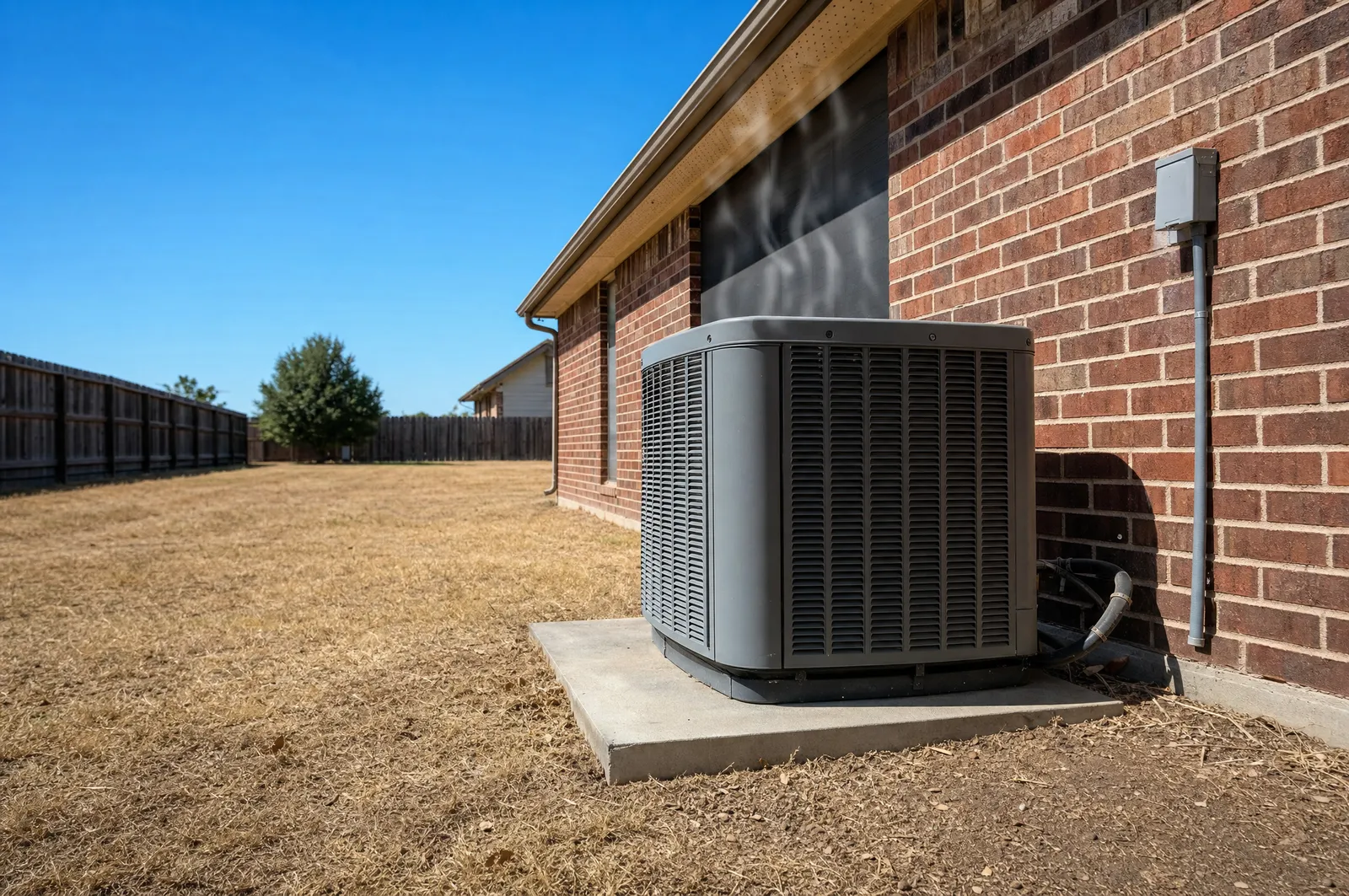
Nobody asks this question idly. It comes up in the side yard in late August, repair estimate in hand, the condenser grinding away a few feet off, and you have about a day to decide whether to put real money into a system that might not see another summer.
Search it and you'll get the same non-answer from five different sites: 15 to 20 years, no context, no asterisk. That number isn't wrong so much as it was never written for a compressor working a Dallas August, holding the line against 100-degree afternoons from May into September while the ductwork overhead bakes in a 130-degree attic.
We have condemned compressors at 11 years. We also still service 17-year-old units holding a clean 20-degree split on the worst afternoon in July. Almost none of the difference between those two houses is on the calendar.
How Long Do AC Units Last in Texas? Count Hours, Not Birthdays
Start with the arithmetic the national guides skip. A system in a mild climate logs somewhere around 1,000 to 1,400 compressor hours a year. A DFW system logs 2,400 to 2,800, because our cooling season runs May through September and the outdoor design temperature here sits near 100 degrees.
That's not a rounding error. Ten Texas summers put about as many hours on a compressor as 17 or 18 years somewhere mild. The equipment has no idea what year it is. It only knows how long it has been running.
So the honest range for a North Texas system is 10 to 15 years. Where yours lands inside that window is decided almost entirely by things you control.
What Cuts a Compressor Short
Skipped maintenance leads the list every time. A system nobody looks at runs dirty for years before it gets loud enough to complain about, and by the time you notice, the compressor has been hauling that extra load the whole way.
Dirty condenser coils are a close second. Pack a coil with dust, grass clippings, and cottonwood fluff and it can't dump heat, so the compressor runs longer and hotter to reach the same set point. Hail counts here too. One spring storm can flatten the fins on an outdoor coil permanently, and that damage is invisible from the kitchen window.
A low charge does quieter damage. Refrigerant is never used up, so a system that's low is leaking, and running it low through a Texas summer is exactly the abuse that turns a 15-year unit into a 10-year one. Read our guide to the signs of a refrigerant leak before you let anyone top a system off and call it fixed.
A bad install finishes the job. Oversized equipment short-cycles all afternoon and never wrings the humidity out. Undersized equipment runs wide open and never catches up. Either way the compressor pays the difference, and it pays it every summer it has left.
What Buys You the Extra Years
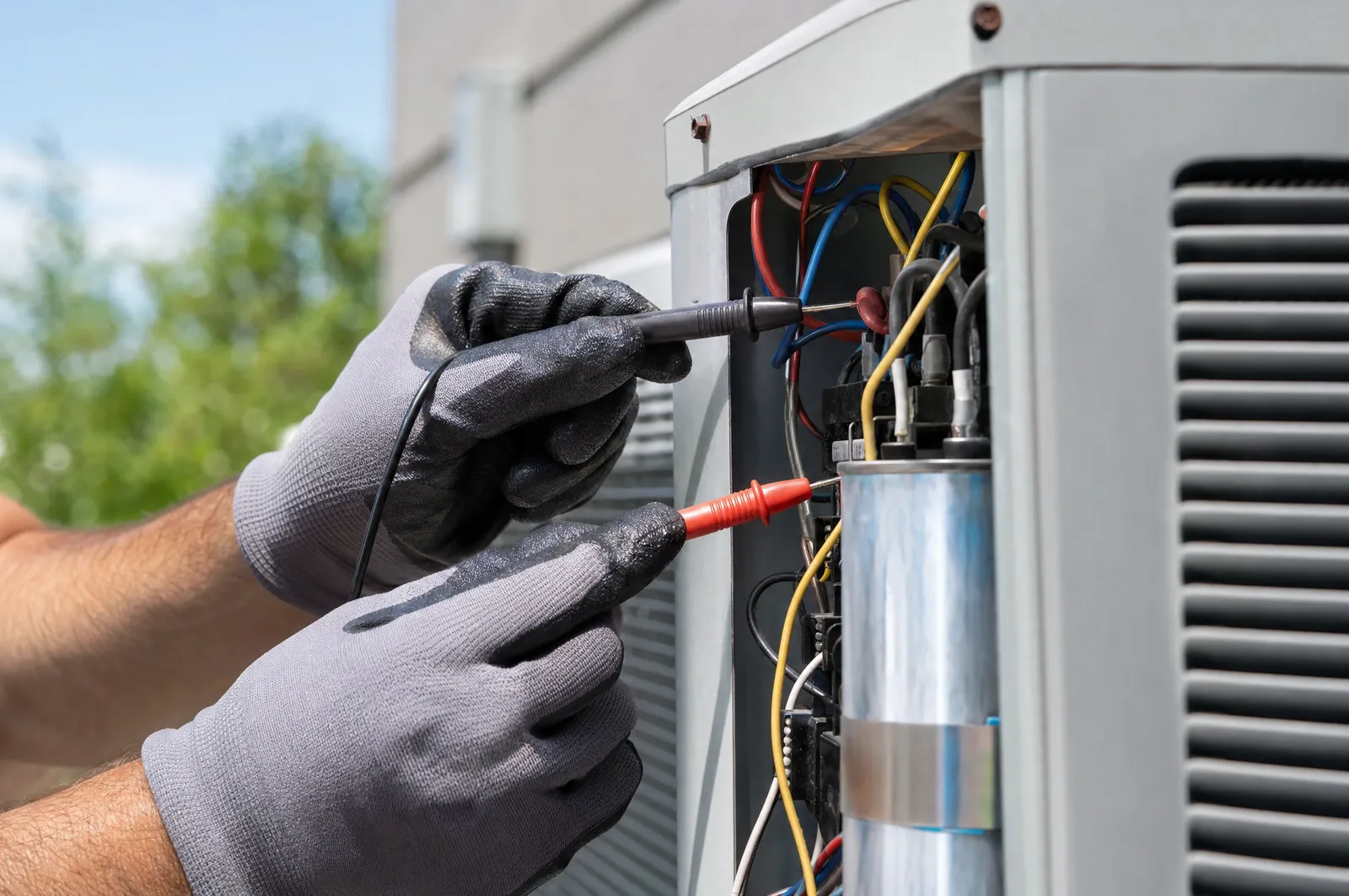
The 16- and 17-year-old systems still on our maintenance route share a suspiciously similar history. Every one of them got a real spring AC tune-up, not a filter swapped at the return grille and counted as maintenance.
Their coils stayed clean, because somebody kept two feet of clearance around the outdoor unit and rinsed it down when the cottonwood started flying. They were sized correctly on day one, which matters more here than in most places, since a Texas system is meant to run long steady cycles through July rather than start and stop all afternoon.
And when something did go wrong, it got fixed that week instead of nursed through one more summer. There's nothing clever in any of it. It's the same small things done on time, year after year, which is precisely what most systems never get.
When the Repair Bill Starts Voting for Replacement
Once a unit is past 10 and an estimate is sitting on the kitchen counter, the question stops being whether it can be fixed and becomes whether it should be.
The rule of thumb most technicians reach for is blunt: multiply the unit's age by the repair estimate, and if the result clears $5,000, replacement is usually the better spend. A 12-year-old system facing a $700 repair lands at $8,400, which isn't a close call. A 4-year-old system with the identical repair lands at $2,800 and obviously gets fixed.
Treat that as a starting point, not scripture. Repairs and new equipment both cost more than they did when somebody first wrote the formula down, so the $5,000 mark trips sooner than it used to, and tripping it should open a real conversation rather than end one. What the rule does well is stop you quietly feeding a system that's already living on borrowed time.
Refrigerant belongs in that conversation now as well. R-410A, the refrigerant in most systems installed since the mid-2000s, is being phased down, and what it costs to put a few pounds back into a leaking system keeps climbing. Equipment built since January 2025 runs R-454B instead. None of that makes a healthy R-410A system worthless, but it does change the math on any repair that means opening the refrigerant circuit on a 12-year-old machine.
For the whole decision, our breakdown of when repair beats replacement works through it properly, and you can run somebody else's quote through the free second opinion calculator before you sign anything.
Signs You're Nearer the End Than the Beginning
Age by itself proves nothing. Three or four of these stacked on top of it usually does.
Cooling bills climbing year over year with nothing in how you live to explain it. A second or third genuine repair inside two years, filters not counted. Rooms that used to cool evenly and now argue with each other. And if the nameplate on the outdoor unit reads R-22, the conversation is effectively finished, because that refrigerant is at the end of its life and one repair can cost more than the machine is worth.
We see the pattern most often in the older brick two-stories around Dallas, where the original builder equipment is still limping along in the attic and the upstairs never quite catches up, and in the single-story brick ranches around Mesquite, where a condenser that has outlasted two roofs is usually trying to tell you something.
Get a Straight Number Before You Decide
If your system is somewhere between year 10 and year 15 and the next repair feels like a coin flip, we'll give you the actual numbers instead of a pitch. Book straight from the calendar on this page, contact us online, or call 972-421-8000 and we'll walk the system with you before anybody talks about money. The call-out and the diagnosis cost nothing.
When replacement honestly is the answer, we size the new AC installation for your house rather than for whatever's on the truck that morning. And whatever ends up in the side yard, our maintenance agreements carry 10-year parts and 10-year labor warranties. Thirty-plus years in this metroplex have taught us that the systems reaching 15 are the ones somebody kept an eye on.