Quick answer: AC short cycling is when your air conditioner runs a few minutes, shuts off, and fires back up again, over and over, instead of settling into one long cooling run. The causes run from cheap (a dirty filter, a thermostat in the wrong spot) through ordinary repairs (a leak, a weak capacitor) to a design problem no part swap fixes: a system too big for the house. Every restart hammers the compressor and never lasts long enough to dry the house out, which makes short cycling the most expensive way an AC can run. A proper AC repair diagnosis tells you which of the five you have.
You catch it at the thermostat first. The screen flips to Cooling, the condenser out back spins up, and ninety seconds later the house goes quiet again. On, off, on, off, a dozen times in an hour, on the kind of August day where the driveway is still throwing heat back at the house at nine at night.
Nothing looks broken, which is the maddening part. The unit starts, air moves through the vents, and the house still never gets there while the system runs up a power bill and a repair bill at once.
AC Short Cycling Is the Most Expensive Way to Cool a House
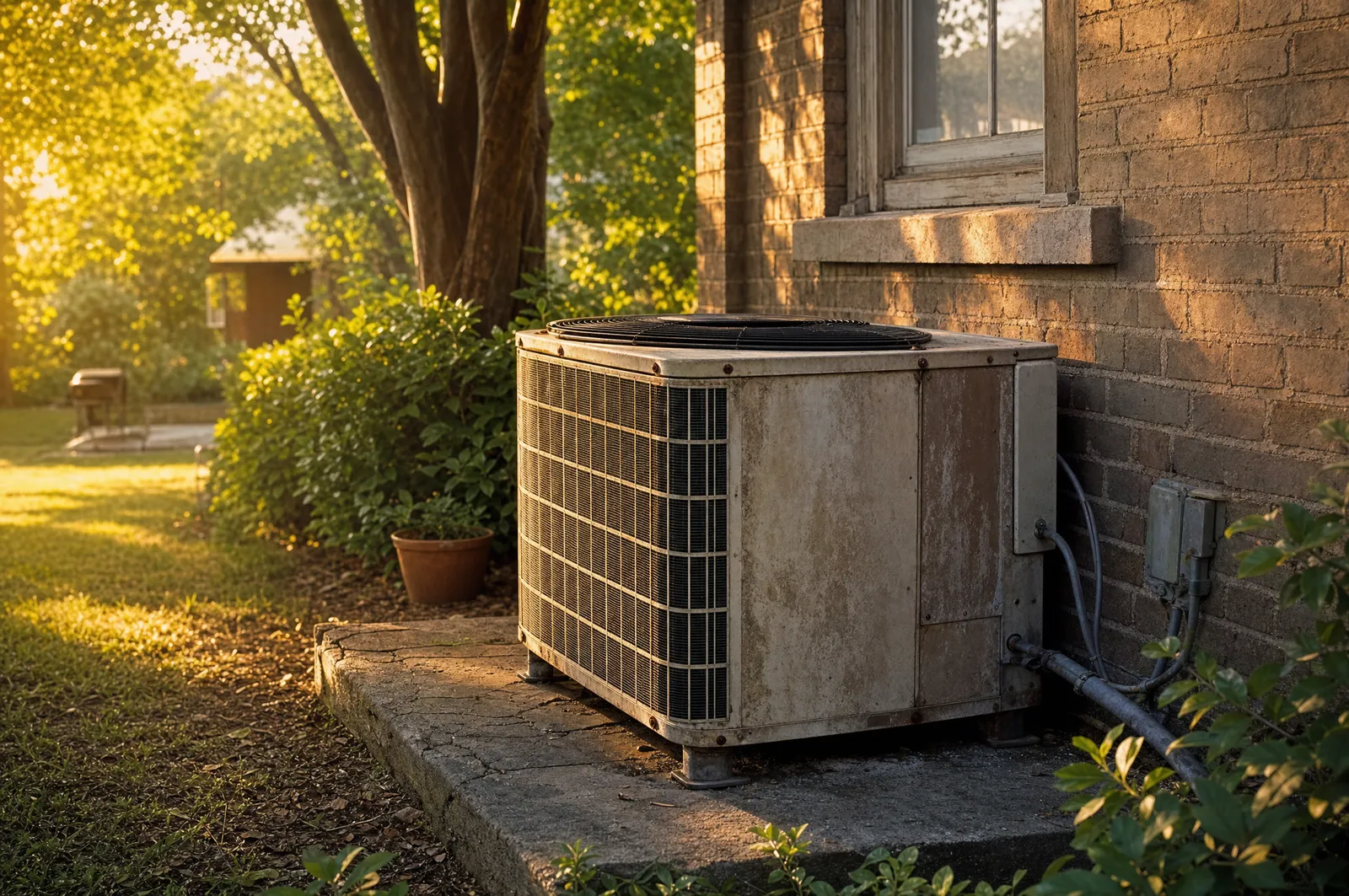
A healthy system settles into cycles of roughly 15 to 20 minutes, two or three times an hour on an ordinary day. Long enough for the compressor to reach steady operation, and long enough for the evaporator coil to wring real moisture out of the air crossing it. A short-cycling system might run five minutes, often less, gone before the coil has done any of that.
The compressor takes most of the damage. Starting one draws several times its normal running current, commonly three to six times, and every surge heats the motor windings. A compressor built to last 15 to 20 years does not get there restarting every four minutes from May through September.
You pay for it twice. Frequent restarts can add 20 to 30 percent to a summer cooling bill, and a system that never runs long enough to pull water out of the air leaves the house clammy at 74 degrees, which is somehow worse than being honestly hot.
Start at the Thermostat, Because It Might Be Lying to You
Plenty of these calls end at the thermostat, and those are the ones you want. Mount one a few feet from a supply register and cold air washes over the sensor, so it reads 72 while the house sits at 78 and shuts down before the rooms catch up. Park one in a stripe of afternoon sun and it swings the other way, reading high, calling for cool, then dropping the moment conditioned air reaches it. Either way it is measuring its own little microclimate instead of your house.
The register version turns up constantly in two-story brick homes around McKinney, where the thermostat hangs in a downstairs hallway with a supply vent almost overhead. It calls the whole house satisfied in four minutes while the upstairs bedrooms are still eight degrees behind. Moving it out of the airflow, or replacing one whose sensor has drifted, is the cheapest fix on this list. Rule it out first.
A Clogged Filter Freezes the Coil, and the Freeze Does the Cycling
A dirty filter starves the indoor coil of air. With less warm air crossing it, the coil runs colder than it was designed to, and ice creeps across the fins. The ice blocks what airflow was left, a safety shuts the system down to protect the compressor, the ice half thaws, and the loop starts over.
It looks exactly like short cycling because it is, with the cheapest culprit behind it. If you find frost on the lines, our walkthrough on thawing out a frozen AC unit covers the order to do it in. Then keep it from coming back: a fresh filter every 30 days through cooling season, vents open, and nothing stacked against the indoor unit.
Low Refrigerant Freezes the Same Coil at a Very Different Price
Refrigerant is not fuel. It circulates in a sealed loop, so a system low on charge is a system with a leak, and an undercharged coil runs colder than design and ices over the way a starved one does. From the thermostat side of the wall the two are indistinguishable: shut down, thaw, restart, repeat.
What separates them is the repair. A filter is a five-minute swap in the hallway. A leak has to be found and sealed by a licensed AC technician, not topped off every June and waved through. Buy that top-off year after year and you are paying for refrigerant that vents into a 130-degree attic, and with R-410A being phased down, that habit costs more every season.
The Capacitor Is Too Weak to Get the Compressor Moving
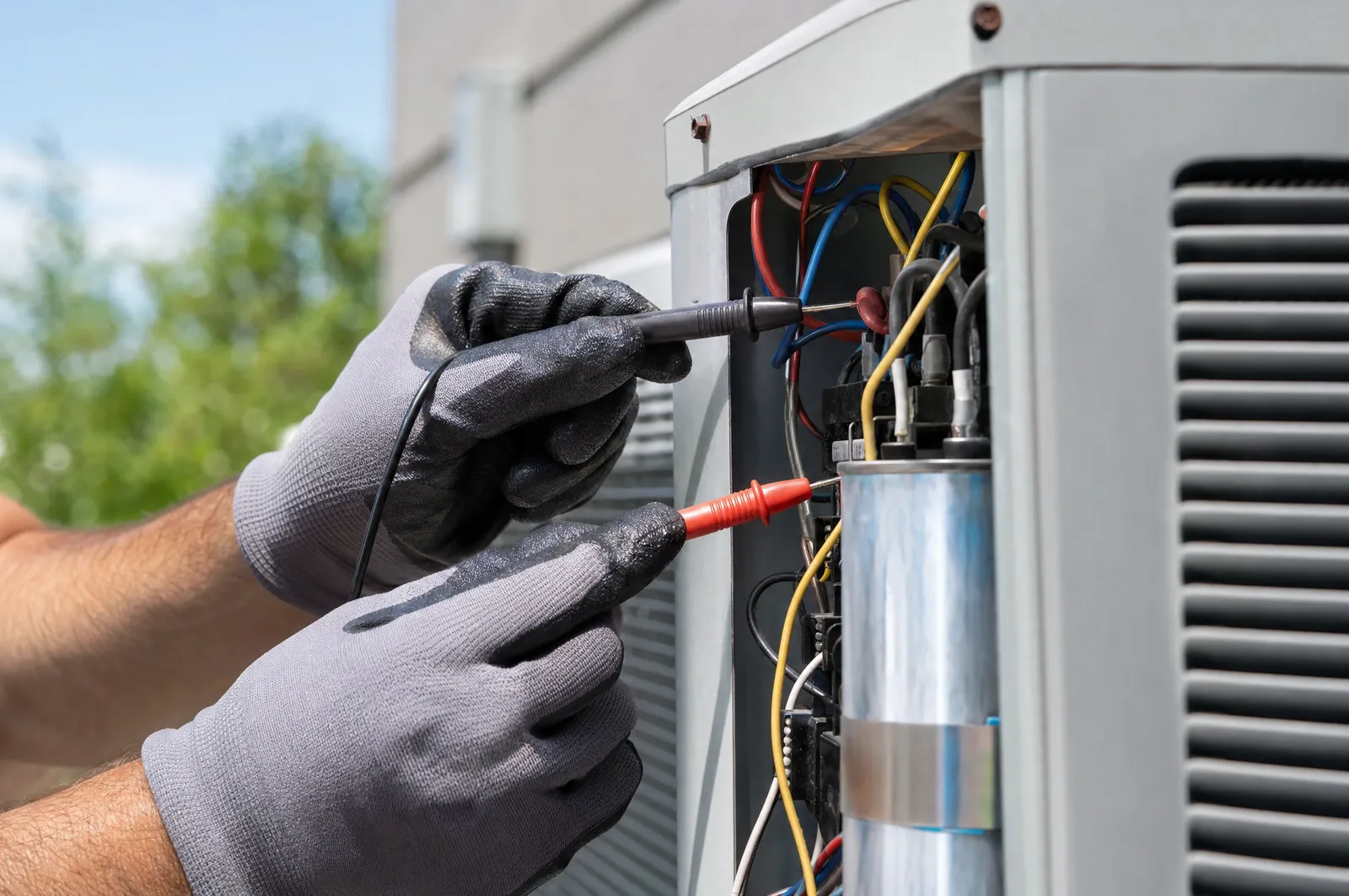
The capacitor is the electrical shove that gets the compressor turning and the steadying hand that keeps it turning after. When one ages out, it cannot hold enough charge to do either job. The compressor strains against its own inertia, trips its internal overload within seconds, and tries again a few minutes later. You can usually hear it: a hum, a hard click, half a second of hesitation before everything goes quiet.
The part is cheap, and it holds a live charge with the power off and the disconnect pulled, which is why it belongs to a technician and not a Saturday morning. A pitted contactor does the same thing for a different reason, so the meter beats the guess. Leave either one running and the compressor fights that losing start hundreds of times a week, which is how the cheapest part in the system turns into the most expensive one.
The One Nobody Wants to Hear: The System Is Too Big
Sometimes every part passes. Clean filter, correct charge, healthy capacitor, tight wiring, and it still runs in four-minute bursts, which usually means the unit is oversized for the house underneath it. Too much capacity drives the air past the setpoint before the coil has pulled any moisture out, then the house rebounds just as fast and it fires again. That is short cycling by design rather than by failure.
It turns up often in the newer subdivisions around Prosper, where a builder-installed system got sized off square footage instead of a Manual J load calculation covering that house, its west-facing glass, and its duct runs. A correctly sized system is supposed to run long and hard when it is ugly outside. Holding a 20-degree split on a 105-degree afternoon means near-continuous operation, and that is exactly right. Shutting off every five minutes is not.
Which of These Is a Repair and Which Is a Decision
The thermostat and the filter are the cheap end, sometimes free once you know where to look. A frozen coil, a leak, and a dying capacitor are ordinary repairs, and ordinary is the point: you want a technician who isolates the failed part and shows it to you, not one who bills for each guess. Our guide to common Dallas AC problems covers the rest of what goes wrong on hard-working Texas systems.
Oversizing sits in its own category. No part swap fixes a system that was wrong on the day it went in, so the honest conversation there is about a real load calculation and, sometimes, a properly sized replacement. It is also the moment to slow down. If somebody has already told you a new system is your only option, run the numbers through our free second opinion calculator before you sign anything.
On, Off, On, Off, Until Somebody Looks at It
Short cycling does not wear itself out and go away. It keeps billing you while the compressor takes the beating, and in mid-August that beating comes daily.
Book a visit from the calendar on this page, send us the details through our contact form, or call 972-421-8000 and talk to somebody who has run these calls. The call-out and the diagnosis are free, often same day this time of year, and you get a straight answer about which of the five it is. That is how Stork's has run AC calls across DFW for 30+ years.