Quick answer: The AC refrigerant leak signs worth acting on are lukewarm air at the vents, a hiss or gurgle near the copper lines, frost on the indoor coil, and a system that runs all afternoon without ever reaching the setpoint. Refrigerant travels a sealed loop and is never consumed, so a system low on charge is a system that is leaking. Topping it off every June treats the symptom while the leak, and the electric bill, keep growing. The fix is finding and sealing the hole through professional AC repair, not buying back the same refrigerant every summer.
By the third week of August a DFW air conditioner has been running most of every day since May, and that is the stretch where a slow leak stops hiding. The system that held 74 without complaining in June now stalls at 80 by four in the afternoon. You drop the setpoint a degree, hear the compressor pick back up, and an hour later the thermostat still reads 80.
That is not an air conditioner working hard in the heat. It is one trying to move heat with less refrigerant than its data plate calls for, and it has been short for weeks.
All the AC Refrigerant Leak Signs Come Back to One Hole
Refrigerant is not a consumable. It is not gasoline, and it is not the quart of oil an old truck burns between changes. A properly charged system holds the same weight of refrigerant, specified to the ounce on the equipment label, for the life of the unit, cycling the same charge through copper and coil thousands of times a summer.
So when someone tells you the system is low, low is not a condition. It is evidence. A pinhole in a coil, a lineset rubbed thin where it crosses a joist, a brazed joint that let go after fifteen summers of expanding and contracting in an attic. Every symptom below sits downstream of that one hole.
The Air Turns Lukewarm Long Before It Turns Warm
Most people meet a refrigerant leak with a hand in front of a supply vent. Air is moving, the blower sounds normal, and what lands on your palm is cool the way a garage is cool in the morning, not cold. Less refrigerant in the coil means less heat pulled from the air crossing it, and the gap between return and vent air narrows a little more each week.
That slow fade is what makes leaks sneaky. A capacitor fails on a Tuesday and you know it by Tuesday night. A leak takes a month to get your attention. It is one of several reasons an AC blows warm air, and the only one that gets worse while you decide whether to call.
A Hiss Near the Lines Is Money Leaving
Refrigerant under pressure makes noise on the way out. A steady hiss near the air handler, or along the lineset running out to the condenser, is gas forcing through an opening too small to see. Same sound as a nail hole in a tire. A gurgle points to a larger opening, or to refrigerant flashing from liquid to gas right at the breach. Note where you heard it and what it sounded like. That detail narrows the search before a technician gets the gauges off the truck.
Ice in August Means Starvation, Not Overachievement
Nothing looks stranger than frost on a copper line in the middle of a Texas August. Low charge drops the pressure inside the evaporator coil, the coil surface falls below freezing, and humidity that should be dripping into the drain pan freezes onto it instead. It reads like the system is finally trying.
It is doing the opposite. Starved for refrigerant, it is cooling itself into a block of ice while the house sits at 82. Keep running it and the ice spreads, airflow drops further, and liquid refrigerant can wash back down the suction line into a compressor built to compress vapor. That is how a leak repair turns into a compressor quote.
It Never Shuts Off, and the Bill Says So
A healthy AC runs long on a 100-degree afternoon. That much is normal, because a correctly sized system is built to hold roughly a 20-degree difference between outdoor and indoor air on a design day. A leaking one runs just as long and still loses ground.
The tell is recovery after sundown. A charged system claws the house back to 76 by nine at night. A leaking one is still at 79 at midnight with the compressor going. In a two-story in The Colony with bedrooms over the garage, that shows upstairs first, where the ducts cross a 130-degree attic and have the least margin to give. Then it shows on the electric bill, higher than the weather alone explains.
The Annual Top-Off Is the Most Expensive Way to Own an AC
For years some companies sold the summer top-off like an oil change. Pull up, hook the gauges, add three pounds, write the ticket, see you next June. It was always money poured into a hole, and the hole costs far more to feed now.
R-410A, the refrigerant in most DFW systems installed in the last 15 years, is being phased down under federal rules, and wholesale prices have roughly doubled in two years as quotas tighten. Manufacturers stopped building new residential R-410A equipment on January 1, 2025. New systems ship with lower-GWP A2L refrigerant instead, R-454B in most ducted equipment and R-32 in most ductless mini-splits.
None of that makes your system illegal or unserviceable. R-410A is still sold and still legal to recharge into equipment built for it. It only means the refrigerant you lose costs more each time you buy it back, while the hole stays exactly where it was.
Finding the Hole Is the Whole Job
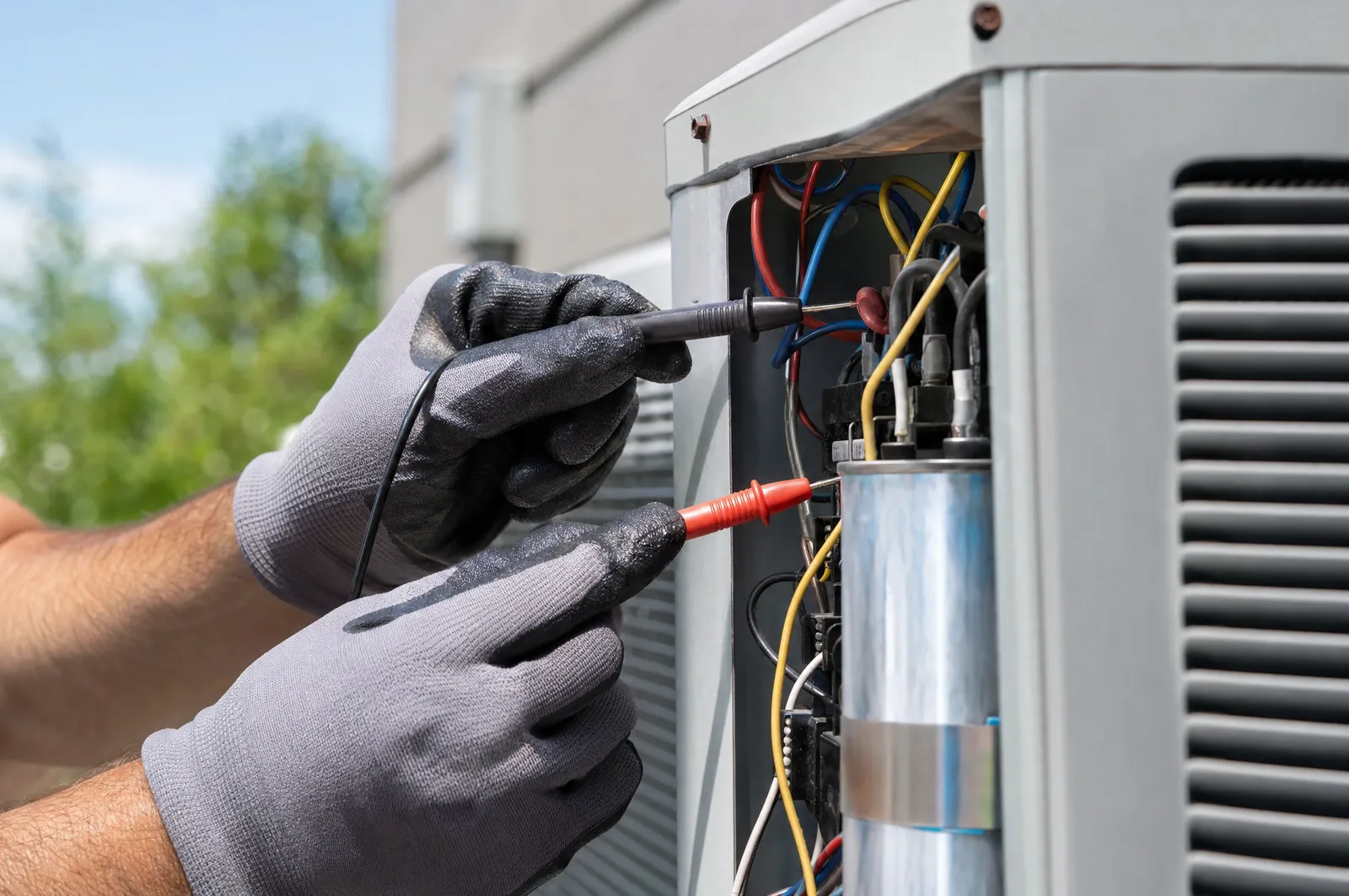
A real repair starts with locating the leak instead of guessing at it: an electronic detector sniffed along the coil and fittings, fluorescent dye circulated and read back under a UV lamp, or a nitrogen pressure test that shows where the system bleeds down.
A pinhole in an accessible line or a weeping fitting is often a same-visit repair followed by a weighed-in recharge. A leak inside the evaporator coil is a different animal. Coils suffer formicary corrosion, microscopic tunnels eaten from the outside in by organic acids that ordinary household air carries in from cleaners, aerosols, and new carpet. A coil that starts perforating rarely stops at one hole, so patching buys very little. In a 1990s brick ranch in Carrollton with a coil that has drifted down two summers running, that is where the conversation turns.
The Repair or Replace Math, Said Out Loud
A leak on a five-year-old system is worth fixing, full stop. Find it, seal it, weigh in the charge, move on. A coil leak in a system already 15 years old and running R-410A is a harder question, because you are weighing a real repair bill against equipment near the end of its life, on a refrigerant that costs more every year, in a climate that runs it five months out of twelve.
Sometimes the repair still wins clean. Sometimes it is good money chasing a unit that will find another hole next August. We work that math in front of you, the same way we lay it out in our breakdown of when to repair an AC and when to replace it. Holding a quote you are unsure about, ours or anyone else's? The free second opinion calculator checks it before you sign. If the leak is one item on a longer list, our guide to what goes wrong with Dallas AC systems covers the rest.
Find the Leak Before You Buy Another Pound
Book from the calendar on this page, send it through our contact form, or call 972-421-8000 and tell whoever answers what you are hearing and where. The call-out is free, the diagnosis is free, and pricing is published upfront so the invoice holds no surprises. You will get a straight answer about where your refrigerant is going and what it takes to stop paying for it every June. That is how Stork's has worked this metroplex for 30+ years.