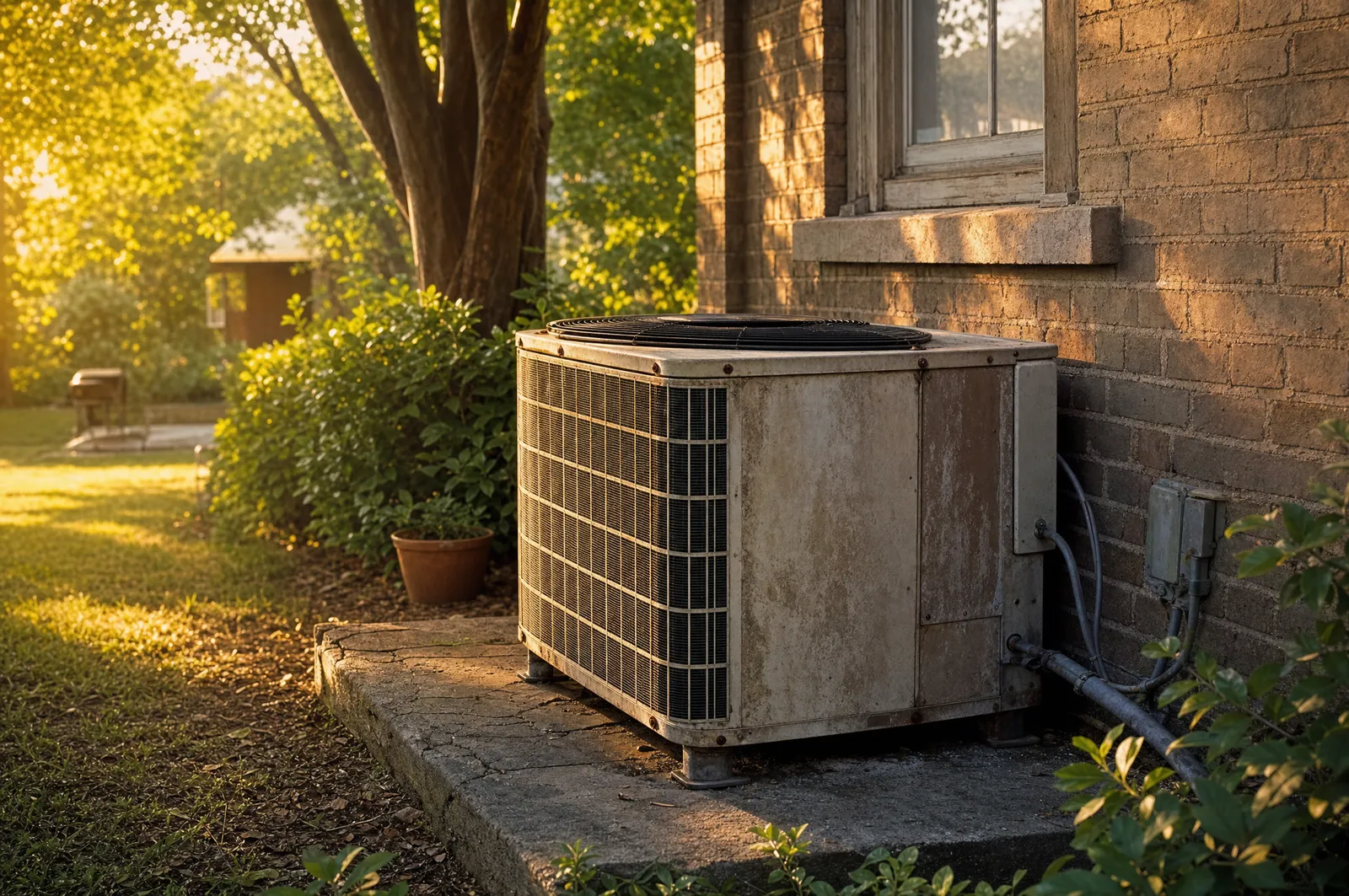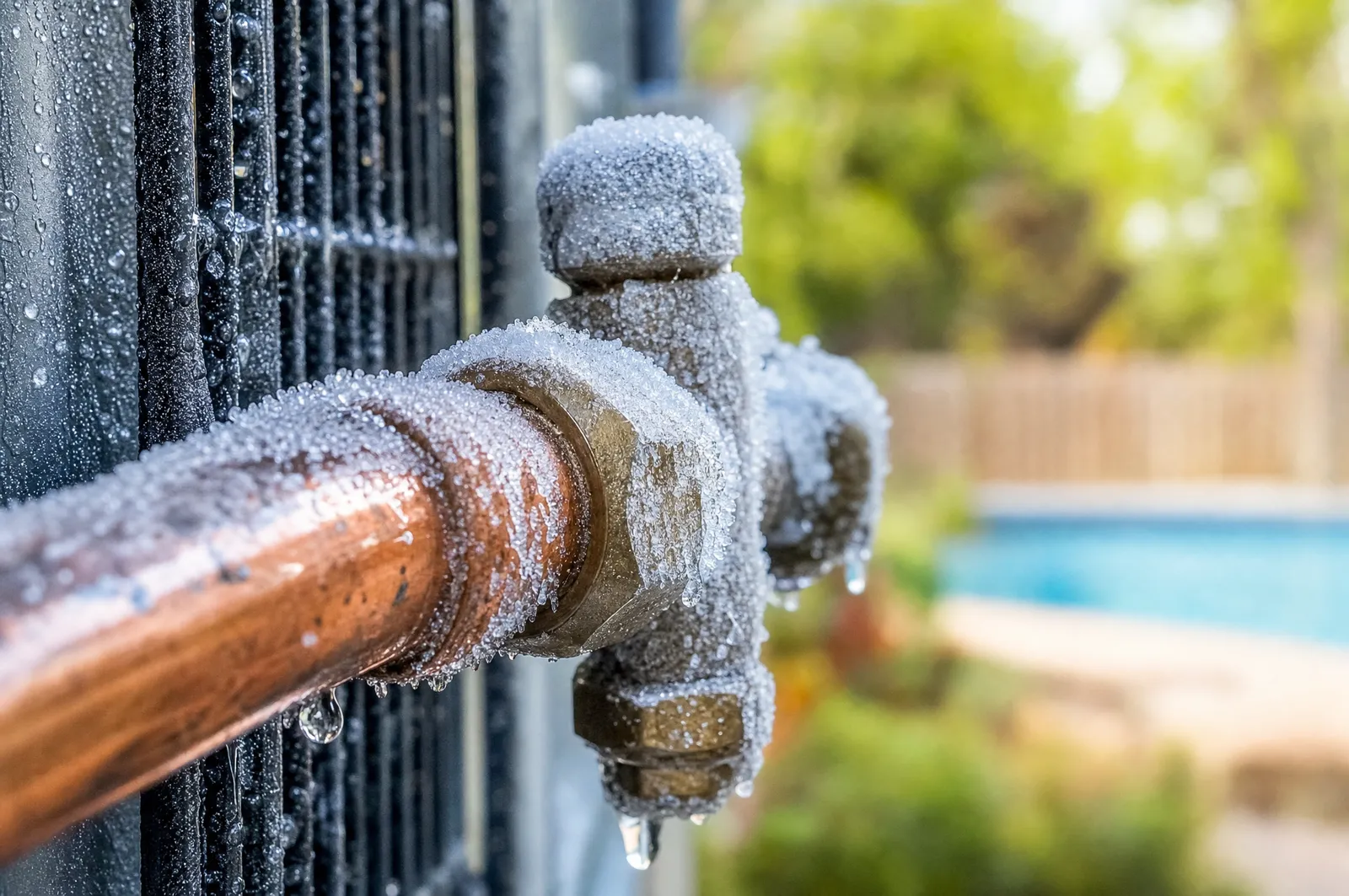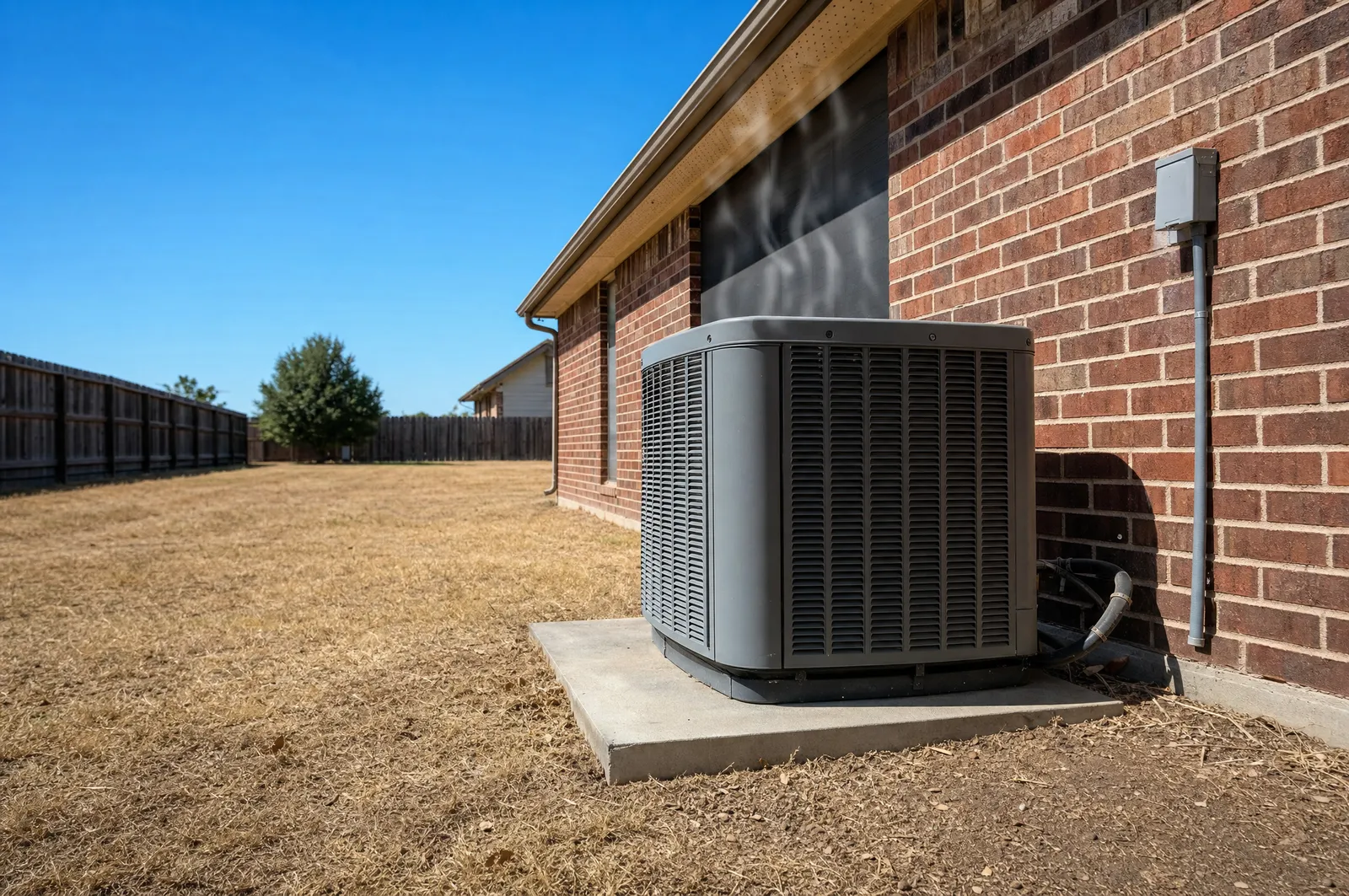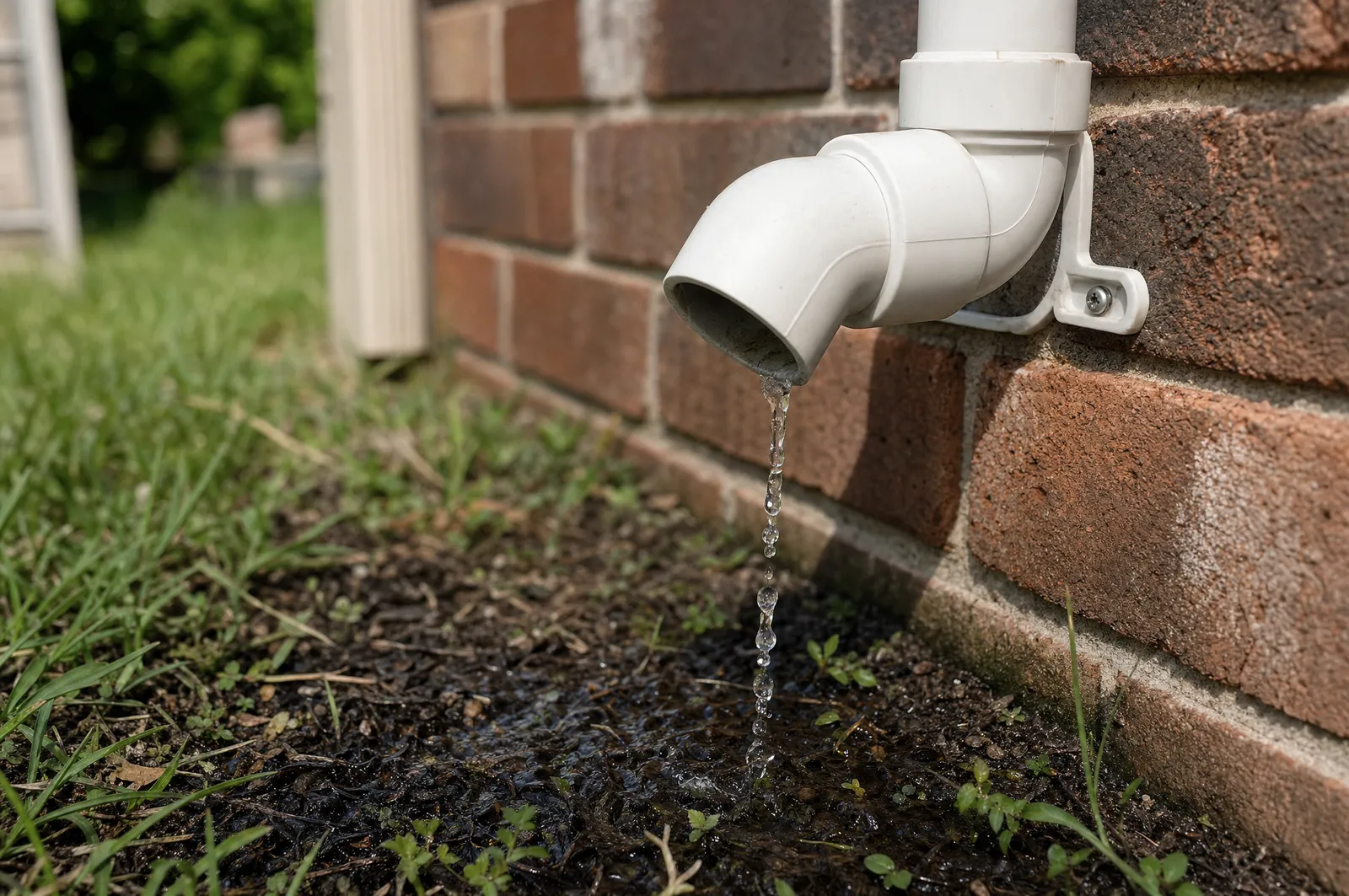
Quick answer: An outdoor unit humming with the fan sitting dead still, a compressor that hesitates before it catches, or a breaker that trips the moment the unit kicks on: those are the classic signs of AC capacitor failure, and it is the breakdown we get called out for most once DFW afternoons settle into the high 90s. The capacitor is a soda-can-sized canister that jolts your compressor and fan motor into motion, then steadies the voltage while they run. Heat kills it, which is why it quits in August. It is also one of the fastest AC repair calls we run, and the diagnosis is free.
The dispatch board tells the same story every August. The hottest afternoon of the week arrives, the phones start going around two o'clock, and a good share of those calls trace back to one part you could hold in your palm. Nobody wakes up thinking about their run capacitor. They notice the house drifting past 80 degrees while the outdoor unit sits in the side yard humming and doing nothing about it.
That hum is the tell. Power is reaching the unit and the motor is trying to turn, but nothing is giving it the shove it needs to break loose. More often than not, whatever should be giving that shove has spent one Texas summer too many baking inside a metal box.
The Capacitor Is the Muscle, Not the Brain
A run capacitor is an aluminum canister bolted inside your outdoor unit, usually wired to the compressor and the condenser fan motor at once, which is why techs call it a dual run capacitor. It stores a charge and releases it in a burst, giving both motors the kick to break away from a dead stop, then smooths the voltage so they run steady instead of straining.
Your thermostat decides when the system runs. The capacitor is what gets the compressor and fan moving and keeps them moving. When it weakens, everything upstream still works perfectly. The motors just can't answer the call.
What a Dying Capacitor Sounds Like
They rarely go quietly. The symptoms tend to arrive in this order:
- A loud hum or buzz from the outdoor unit while the fan blade stands still
- A hard start, where the compressor clicks, hesitates, or shudders before it catches
- A breaker that trips the instant the unit tries to start, because a weak capacitor makes the motor pull far more amperage than it was built for
- Vents blowing air that never turns cold, because the indoor blower is fine while the compressor outside can't get going
- A system that takes noticeably longer to kick in than it did back in June
One of these on its own is worth a phone call. Two of them together and the part is not going to make it to the next cool front.
Why August Is High Season for AC Capacitor Failure in DFW
Capacitors die of heat more than anything else, and the arithmetic is unforgiving. The rule of thumb across the electrical trade is that every 18 degree rise in operating temperature cuts a capacitor's expected life roughly in half. That is not a gentle slope. It is a halving, then another halving, and a sheet-metal cabinet standing in full sun runs hotter all afternoon than whatever your phone says it is outside.
Then add the hours. Our cooling season runs May through September, design conditions sit near 100 degrees, and August highs live in the mid to high 90s, so a capacitor here logs far more running time at temperature than the same part would somewhere mild. Run capacitors average about ten years, and twenty in a gentle climate, but in a Texas side yard we start seeing them weaken at five to eight. They fade quietly, then quit on the worst day of the year.
Shade helps less than homeowners hope, because it is never where it counts. Plenty of the brick two-stories we look after in Murphy have a mature oak over the patio and the condenser parked in unbroken west sun from noon to dinner, which is the half of the day that does the damage.
Don't Spin It Back to Life With a Stick
Search this problem online and the trick surfaces in thirty seconds: pull the top grille, slide a wooden stick through, flick the fan blade until it catches. It often works. It works for about five minutes.
The trouble isn't that the trick fails. It's that it succeeds. A capacitor too weak to start the fan is almost certainly too weak to start the compressor cleanly, so what you've built is a system that needs hand-cranking every cycle.
Each of those hard starts drags extra amperage through compressor windings that were never built to take it, and that heat is what turns a cheap repair into a replaced compressor. Capacitors also hold a real charge long after the power is off, which is not something to discover with a screwdriver and a hunch. If the fan won't turn on its own, shut the system down at the thermostat, kill the breaker, and leave it alone.
When the Same Capacitor Keeps Dying, Something Else Is Wrong
One capacitor failure in a Texas August is unremarkable. A capacitor that needs replacing every year, or one that dies four months after the last swap, is a symptom rather than the disease. A compressor pulling more current than it should, a fan motor with dry bearings dragging on every rotation, or a system that starts and stops all afternoon instead of settling into one long run will chew through capacitors faster than heat alone ever could.
That last one is worth ruling out first, and we've gone through what makes an air conditioner start and stop all day at length. For the rest of what knocks systems offline in the heat, our rundown of the AC problems we see most in Dallas covers the list.
Yes, It Really Is a Twenty-Dollar Part
The number catches people off guard, so here it is. At retail, a common dual run capacitor is a twenty to thirty dollar item, with heavy-duty and manufacturer-branded versions running two or three times that. It is one of the cheapest components in the whole system, and swapping one is among the fastest jobs in residential HVAC, usually done in the same visit as the diagnosis.
What you're paying for is the truck, the technician, and the judgment to say whether the capacitor is the actual problem or just the first thing to break because of a bigger one. We diagnose that free of charge and show you the price before anyone picks up a screwdriver. Our maintenance agreements go further still, with 10-year parts and 10-year labor warranties.
That matters most on older equipment. Out on the established streets in Garland, where plenty of condensers are pushing 15 years, a capacitor swap is quiet, unglamorous work that buys a system one more season.
Catch It on a Meter, Not on the Worst Day of the Year
Capacitors almost never fail without warning. They lose capacitance gradually, and a technician with a meter can read a part sitting below its rated microfarads months before it strands anybody. That reading takes about a minute and it's standard on a seasonal AC tune-up, which is also where we catch the dry bearing or the amperage draw that killed the last one.
A weak capacitor caught in mild weather costs the same twenty-odd dollars in parts that it costs in a heat wave. Everything around it changes: no hot house, no waiting, and no compressor that has spent two weeks hard-starting and has nothing left in it. With real heat still ahead of us, it's worth knowing where yours stands.
Cool Air Again, Usually the Same Day
If your unit is humming with a still fan, or the air out of the vents went warm this afternoon, book a visit from the calendar on this page, send us the details online, or call 972-421-8000 and talk to someone who has run this exact call more times this month than they can count. Free call-out, free diagnostic, and upfront pricing you see before you approve anything. That's how Stork's has gotten DFW through August for 30+ years.