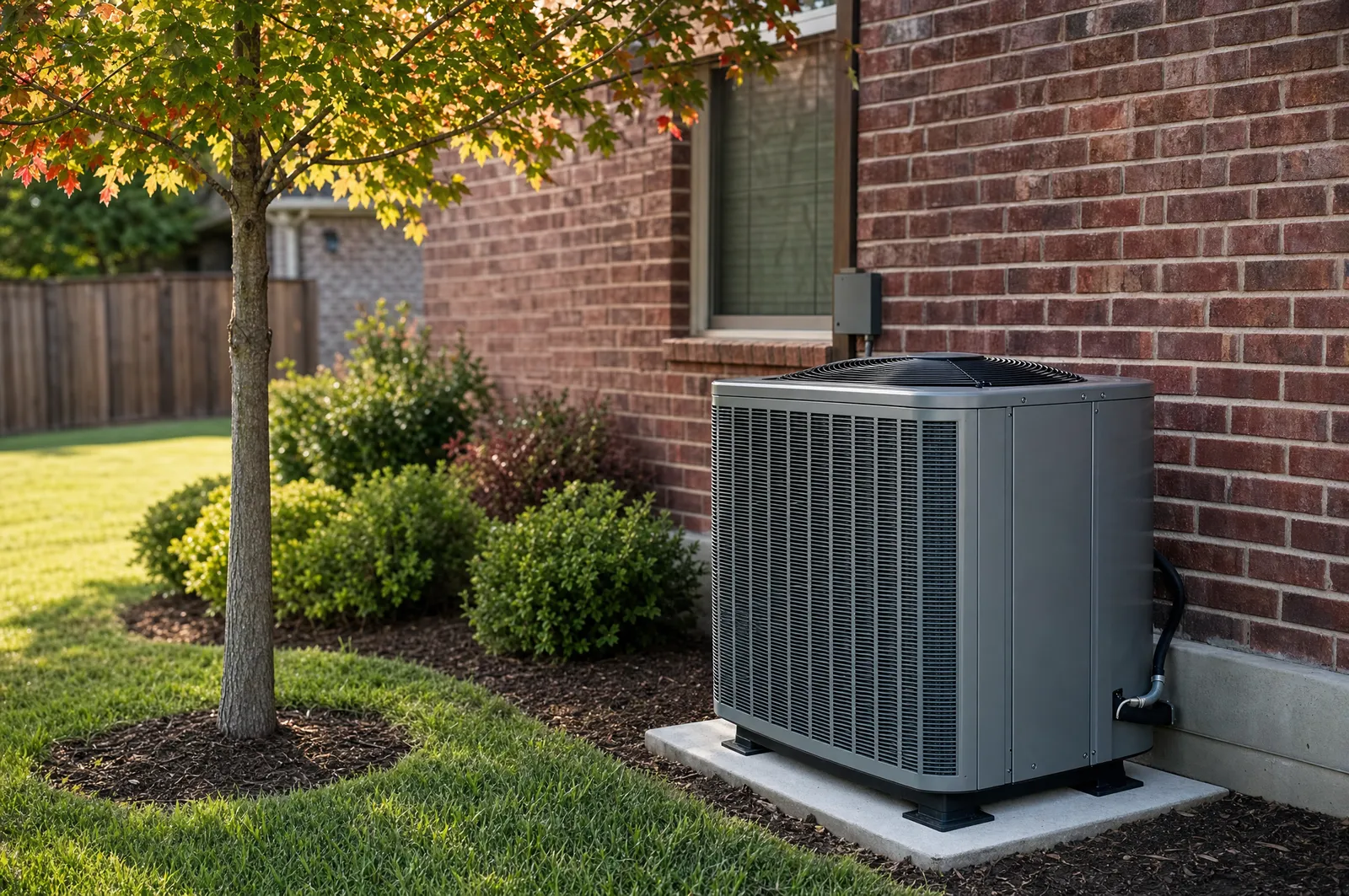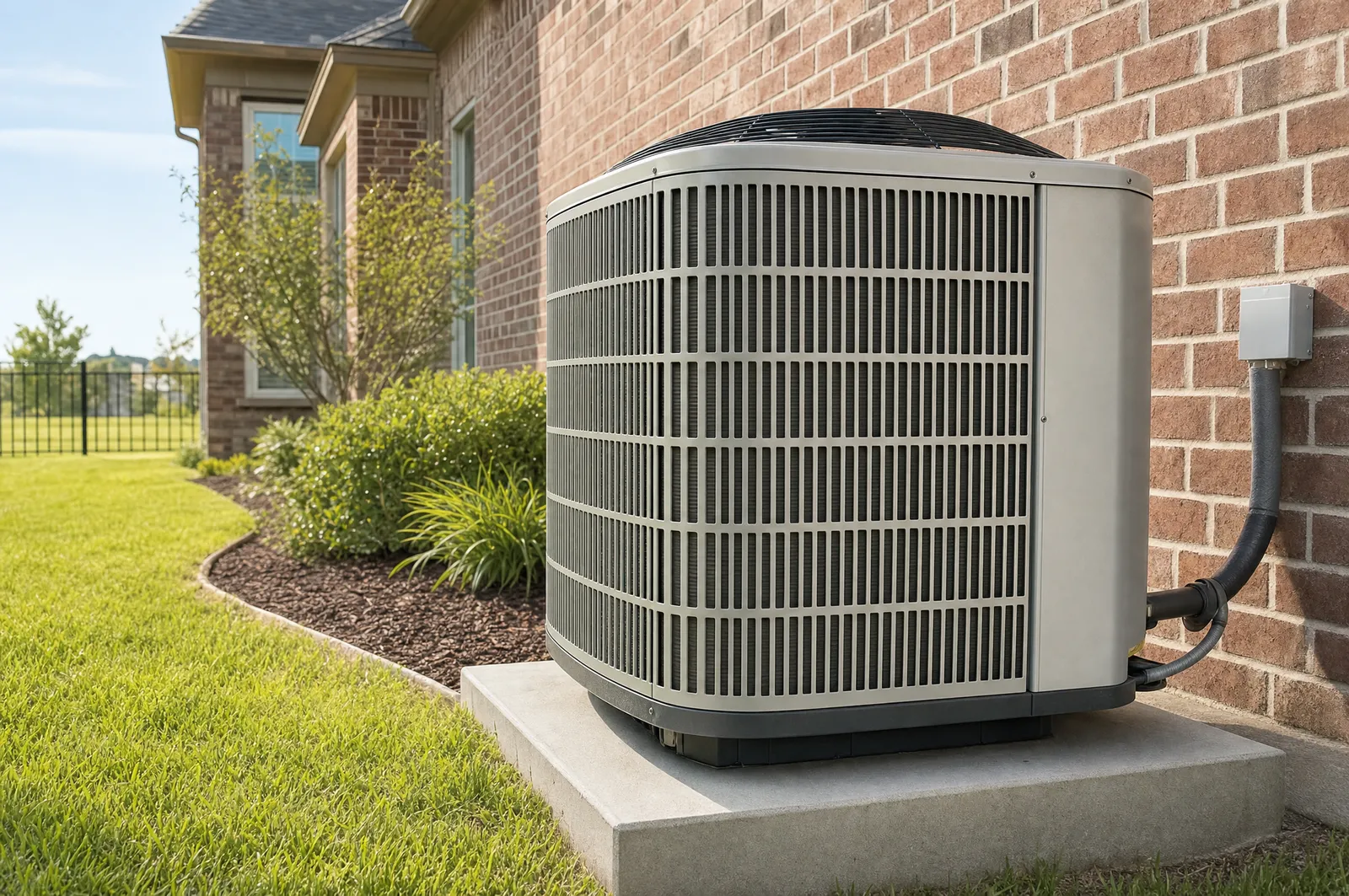
Quick answer: September is the best month for an end of summer AC tune-up, because your system just finished its hardest stretch and the wear is still fresh enough to find: a tired capacitor, a slow refrigerant leak, a smothered condenser coil, a pitted contactor. Every one of those is a cheap fix now and an expensive one in July. Scheduling is easier too, with the June wave of no-cool emergencies behind us, and an AC tune-up now can take in the furnace before the first cold front finds it.
Your air conditioner just finished a haul that would retire a delivery truck. Since Memorial Day it has run through triple-digit afternoons, nights that bottomed out near 80, and the kind of Texas sun that turns a black shingle roof into a griddle. Call it ninety-plus days at close to full load, on a machine made of spinning motors, switching contacts, and refrigerant under pressure.
Then the weather breaks and most people forget the thing exists until it quits, usually on the hottest afternoon of next July. Right now the wear from this season is fresh, and fresh wear is findable wear. A capacitor limping along at 70 percent of its rated capacity will still keep your house cold this week. Left alone until June, it's the reason your compressor won't start at all.
What a Hundred Days of Heat Does to a Capacitor
The run and start capacitors in your outdoor unit are the jolt that gets the compressor and fan motor turning on every cycle. They are also the parts least able to take heat, and they live inside a metal cabinet in an unshaded back yard. The rule of thumb is that every 18 degrees above a capacitor's rated temperature can cut its life in half. On paper these things last 10 to 20 years. In DFW we pull plenty of them at five to seven.
They rarely quit all at once. The first sign is a slow start: a compressor that hums a beat too long before it catches, an outdoor fan that takes a lazy half turn to come up to speed. We've written a full rundown of the warning signs of a failing capacitor. September is when a technician can still find a weak one on a meter instead of in a dead system on a Saturday.
A Slow Refrigerant Leak Never Announces Itself
Refrigerant is not fuel. It runs in a sealed loop for the life of the system, so a low charge means something let it out, and a leak that started in June has had all summer to work on itself. What you notice is nothing dramatic: cooling that's a touch weaker, cycles that run a little longer, maybe a faint hiss at a fitting on a quiet evening.
Homes out near the water in The Colony tend to run later into the evening, and more run hours mean more vibration at the brazed joints where most leaks begin. By September the charge has usually dropped far enough that a gauge set finds it in minutes. Catch it now and it's a repair. Ignore it into next summer and you risk a compressor running short of the oil that circulates with the refrigerant, a far more expensive conversation. Our guide to the signs of a refrigerant leak covers what to watch for between visits.
Your Condenser Spent the Summer Wearing a Coat
The outdoor coil's entire job is handing your house's heat to the outside air, which it can only do if air moves freely through the fins. After a season of cottonwood fluff, grass clippings, and dust, those fins are wearing a layer of insulation nobody designed in. An EPA study put numbers on it: 0.042 of an inch of buildup, thinner than a dime, dropped efficiency 21 percent and pushed energy use up by roughly a third.
The newer streets around Celina make the point: with construction still going up a block over, fine grit works into a two-year-old condenser faster than any owner expects. A real tune-up means an actual coil cleaning with the proper chemistry, not a pass with the garden hose, and this is the month it pays best. The coils have had the whole season to load up, and a clean one finally runs at the efficiency you are paying for.
Every Cycle Burns a Little Piece of the Contactor
The contactor is the switch that throws power to the compressor and outdoor fan every time the thermostat calls for cool. Each closing draws a small arc across the gap, and one cooling season is thousands of closings. Those arcs pit and blacken the contact faces until the connection turns unreliable, a leading reason an AC clicks at the thermostat while the outdoor unit sits there doing nothing.
Here is what no homeowner can settle from the patio: clean-looking contacts prove nothing. A contactor can look fine and still carry enough resistance to sag the voltage under load. The only honest test is measuring that drop while the compressor is pulling, which takes a meter, a pulled panel, and somebody who knows the reading it should give.
September Is the Month We Can Actually Get to You
Every June it goes the same way. The first run of 95 degree days lands, the phones light up, and triage runs the rest of the summer: a family with no cooling in a Texas July goes ahead of a tune-up, every time. That is the right call, and it is also why maintenance slides down the list until the idea quietly dies.
By September the calls thin out and there is room on the board again. Nothing about your system has to wait behind somebody else's emergency.
What an End of Summer AC Tune-Up Actually Covers
Not a lap around the outdoor unit with a clipboard. The visit is built around the parts that took this summer's beating:
- Testing each capacitor's real output against its rated microfarads
- Checking refrigerant charge and operating pressures against the nameplate
- Inspecting the contactor and tightening every electrical connection
- Cleaning the condenser coil properly, not rinsing what shows from the yard
- Flushing the condensate drain before it clogs and backs up
- Calibrating the thermostat and checking airflow at the return
None of that is dramatic work. All of it is what stands between a scheduled visit this month and an unscheduled one when it is 103 outside.
One Tune-Up Fixes This Year. An Agreement Fixes Every Year.
A single visit catches the wear this summer put in. A maintenance agreement catches it every year, on a schedule, which is the only reliable way small problems stay small. It also carries a 10-year parts and 10-year labor warranty, and labor is the half that matters. Plenty of equipment warranties send you a free part and leave you paying the technician who puts it in.
The First Cold Front Finds Every Forgotten Furnace
Nobody in McKinney is thinking about heat in September, not with the AC still running most afternoons. But the average high at DFW slides from about 93 at the start of the month to 84 by the end, and the first real front always turns up sooner than anyone planned. It finds the furnaces that haven't lit since March.
A furnace that sat all summer can be hiding a cracked heat exchanger, a burned-out igniter, or a blower motor that stiffened up from doing nothing, none of which surfaces until the thermostat asks for heat instead of cool. If a furnace shares the system with your AC, have the technician look at both while the truck is in your driveway. Booking furnace repair in September beats needing it at 11 at night in the first cold snap.
Catch It Now, or Meet It Again in July
You can book straight from the calendar on this page, send us a message, or call 972-421-8000 and get a real person. Call-outs, diagnostics, and estimates are free, and our pricing is published upfront before anybody picks up a tool. For the wider view of what goes wrong on a hard-working North Texas system, our guide to common Dallas AC problems has it. Thirty-plus years in, we would still rather find a weak capacitor in September than replace a compressor in July.