Quick answer: SEER2 ratings explained without the showroom pitch: the number tells you how much cooling a system delivers per unit of electricity it burns, scored under a tougher lab test the Department of Energy adopted in 2023. Nobody can legally put a residential split system below 14.3 SEER2 into a Dallas home, roughly what the old scale called 15 SEER. If you're retiring a unit built before 2006, that one jump captures most of the savings available to you, while climbing to 16 or 18 buys comfort more than it buys a cheaper bill. Our AC replacement and installation team runs that math against your actual house before you sign anything.
Three quotes are spread across the kitchen table, and every one of them leads with a SEER2 number as if the number explains itself. 14.3. 16. 18.5. The first installer told you the cheap one is a waste of money. The second told you the expensive one is a waste of money. Each of them is right about something and quietly wrong about something else.
September is when this decision usually lands. The system limped through August, something finally let go in the last stretch of the heat, and now you have a few tolerable weeks to think before the first cool front makes it easy to shelve until May. The SEER2 figure on those quotes is part physics, part federal law, and part sales tier. Those three parts do not carry equal weight.
The Test Got Harder, So the Numbers Got Smaller
SEER2 became the federal efficiency test on January 1, 2023, and the change wasn't cosmetic. The old SEER test ran equipment against 0.1 inches of water column of external static pressure, which is close to a wide-open lab bench with nothing in the way. SEER2 raised that to 0.5 inches, five times the resistance, because that's nearer to what a blower actually fights in a house: real ducts, a loaded filter, and a couple of hard turns through a hot attic.
Harder exam, lower scores, on equipment nobody changed. Same machine, same compressor, a number about five percent smaller. A unit the old scale called 16 SEER rates near 15.2 SEER2 today. So when a quote hands you a bare SEER figure, ask which scale it came off before you set it beside anything else.
SEER2 Ratings Explained: 14.3 Is the Floor, Not a Feature
The Department of Energy splits the country into three efficiency regions, and Texas sits in the Southeast one, alongside the rest of the hot, humid half of the map. For a residential split system under 45,000 Btu/h, anything up to about three and a half tons, the minimum is 14.3 SEER2. Larger systems, and plenty of DFW two-stories run one, have to clear 13.8 SEER2.
Set that against the numbers you probably still carry in your head. 14.3 SEER2 is roughly the old 15 SEER. It sits well above the 13 SEER equipment a Texas installer could legally hand you until the 2015 regional standard, and it's a different animal entirely from the 10 SEER boxes that were code through the 1990s. So SEER2 rated on a quote is not an upsell. It's the floor, the least anyone is allowed to sell you, whatever badge is on the cabinet.
The Real Money Is in Retiring a 10 SEER Unit
If the compressor that just quit is original to a house built before 2006, you've been buying your cooling from a 10 or 12 SEER machine. Move that to 14.3 SEER2, call it a 15 SEER equivalent, and the same cooling takes about a third less electricity to make.
That gap bites harder here than almost anywhere. Cooling season in DFW runs May through September, and on a 100-degree design day a correctly sized system is built to run long and hard just to hold a 20-degree split between the driveway and the living room. A third off isn't a one-bad-week number. It's a third off, five months a year, for as long as you own the house. A brick two-story in one of the older Dallas neighborhoods we work every week, built when 10 SEER was code, is exactly where the modern floor pays for itself fastest.
That arithmetic sits underneath most repair-versus-replace calls, too. Our guide to repairing versus replacing an AC runs the comparison for one specific unit, and if you're not sure yours is near the end, we've laid out how long AC units last in Texas.
What 16 and 18 SEER2 Actually Buy
Once you're buying at 14.3 SEER2, the next rung up stops paying the same way. Going from 10 SEER to the modern floor takes roughly a third off your cooling electricity. Going from the floor up to 18 SEER2 takes maybe another fifth off what's left, and the equipment price climbs faster than the bill drops.
That doesn't make the high tiers a bad buy. It means they solve a different problem. Systems in the 16 to 18 SEER2 range are nearly always built around two-stage or variable-speed compressors, and that's where the value quietly shifts from a cheaper bill to a better house: quieter cycles, steadier temperatures room to room, real humidity control. Worth the money if you're staying a decade, or if comfort complaints are what sent you shopping in the first place. Hard to defend on bill savings alone if you'll be handing someone else the keys in five years.
Variable Speed Is Really a Humidity Story
A variable-speed compressor doesn't just snap on and off. It modulates, loafing along at partial capacity through a mild afternoon instead of blasting for ten minutes and quitting. Those long, slow cycles keep the indoor coil cold and wet, and a cold wet coil wrings far more water out of the air than a single-stage unit hammering through short bursts.
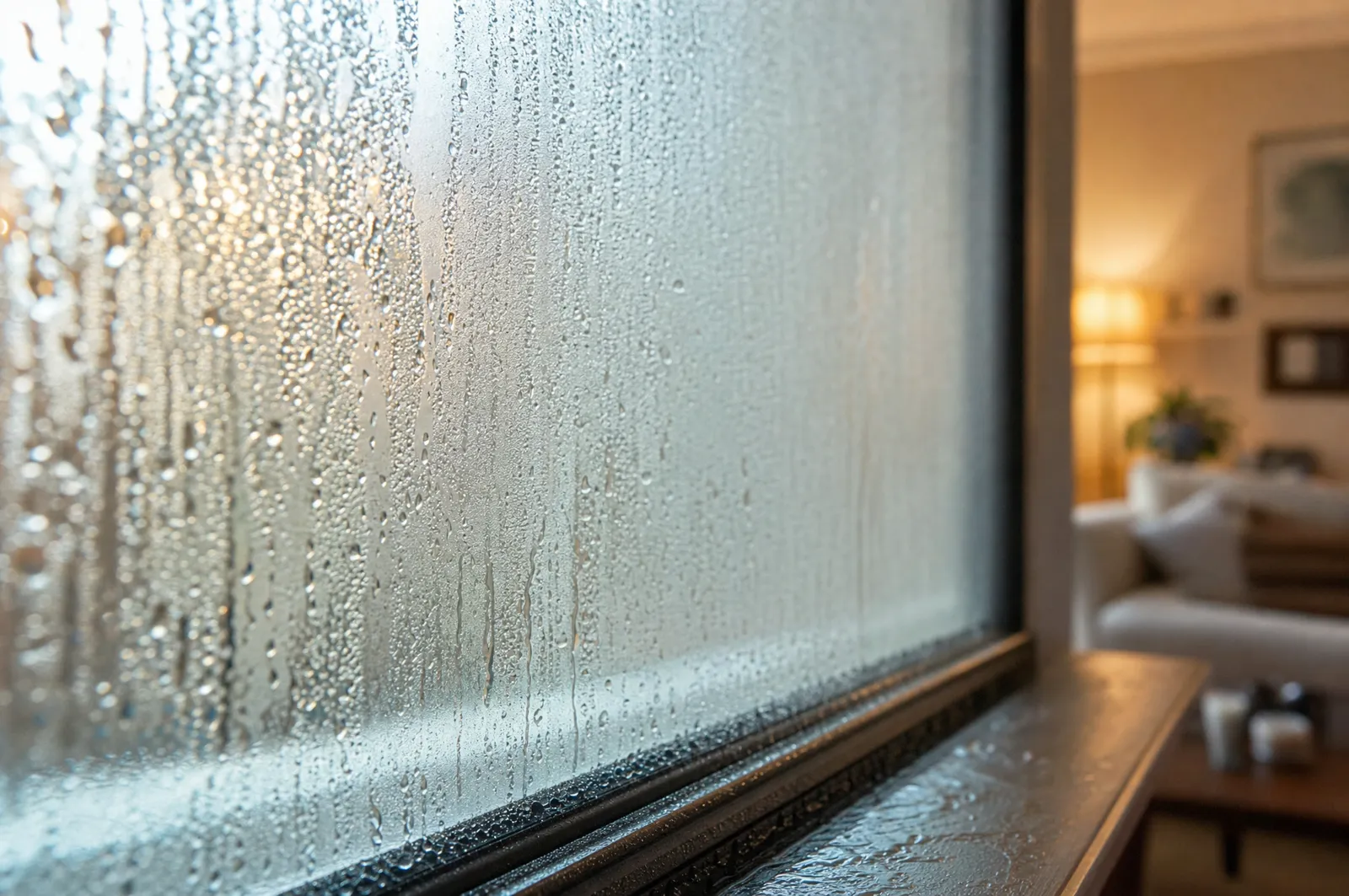
Which is why two houses set to the identical thermostat number can feel nothing alike. In the August you just lived through, that's the difference between 74 degrees feeling like relief and 74 degrees feeling clammy. If your system gets the house cold and still leaves it sticky, treat that as a clue before you shop on SEER2 alone. We've gone deeper on why a house feels humid with the AC running.
Install Quality Beats the Label Every Time
A correctly sized, properly installed 14.3 SEER2 system will beat a sloppily installed 18 SEER2 system on the electric bill and on comfort, every time. The label describes how a machine behaved in a lab. It says nothing about your duct layout, your load calculation, or whether the charge is right on the day the truck pulls away.
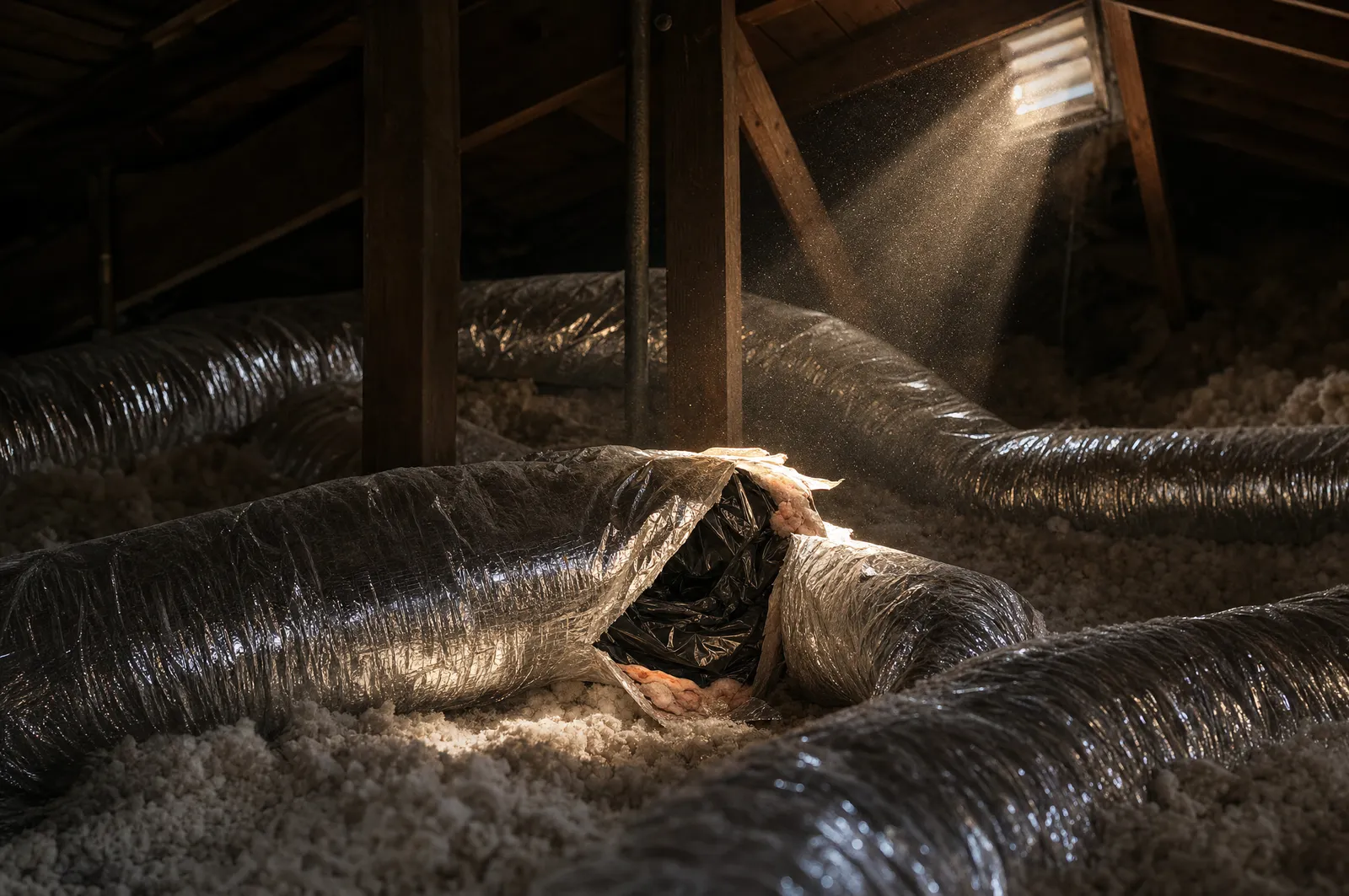
Newer houses get no pass here. A rushed duct run in a Plano subdivision that went up on a builder's schedule can lose a fifth of its cooling before the air reaches a single vent, because somebody taped a boot on a Friday afternoon instead of sealing it with mastic. Add an attic sitting past 130 degrees, which is an ordinary DFW summer, and a leaky return hands back most of what the higher SEER2 number was supposed to win.
Ask what happens after the install, too. A new system only keeps the efficiency it was sold with if somebody cleans the coil and checks the charge every year, which is why our maintenance agreements carry 10-year parts and 10-year labor warranties.
A system sized and installed right will run hard on a 105-degree afternoon, and that's normal rather than a defect. What it shouldn't do is run wide open on a mild September day the way it did in August. When it does, the sticker was never the problem.
Get the Right Number for Your House, Not the Biggest One
Every quote you take should show its SEER2 rating beside the math that produced it: your square footage, your ductwork, your load. If somebody already handed you a number and a price, run it through our free second opinion calculator before you sign. If you're only starting to look, book a free estimate from the calendar on this page or contact us online. Call 972-421-8000 and we'll walk the label and the math together, with nobody steering you toward the biggest number on the page. That's how Stork's has handled DFW replacements for 30+ years.