Quick answer: Heat pump vs. AC and furnace in Texas comes down to a lopsided calendar. We cool roughly May through September and ask for real heat maybe six or eight weeks a year, and that imbalance flatters a well-sized heat pump until a hard freeze pushes it onto backup electric strips. Dual fuel, a heat pump paired with a gas furnace, closes that gap for anyone who already has gas service. There's no universal winner, only the system that fits your gas line, your electric plan, and the ductwork you already own.
Your old AC quit sometime in August, the kind of quit where the compressor hums for a second and then goes quiet. The technician who came out handed you a question along with the bad news: while we're replacing this, do you want to talk about a heat pump? Now it's September, the first cool front is close enough to feel, and you're holding two quotes for two different machines.
Both of them will cool your house fine next July. The difference shows up in January, on your utility bill, and on the one morning it's 28 degrees and everybody's breath fogs up in the driveway.
Heat Pump vs. AC and Furnace in Texas: One Machine or Two
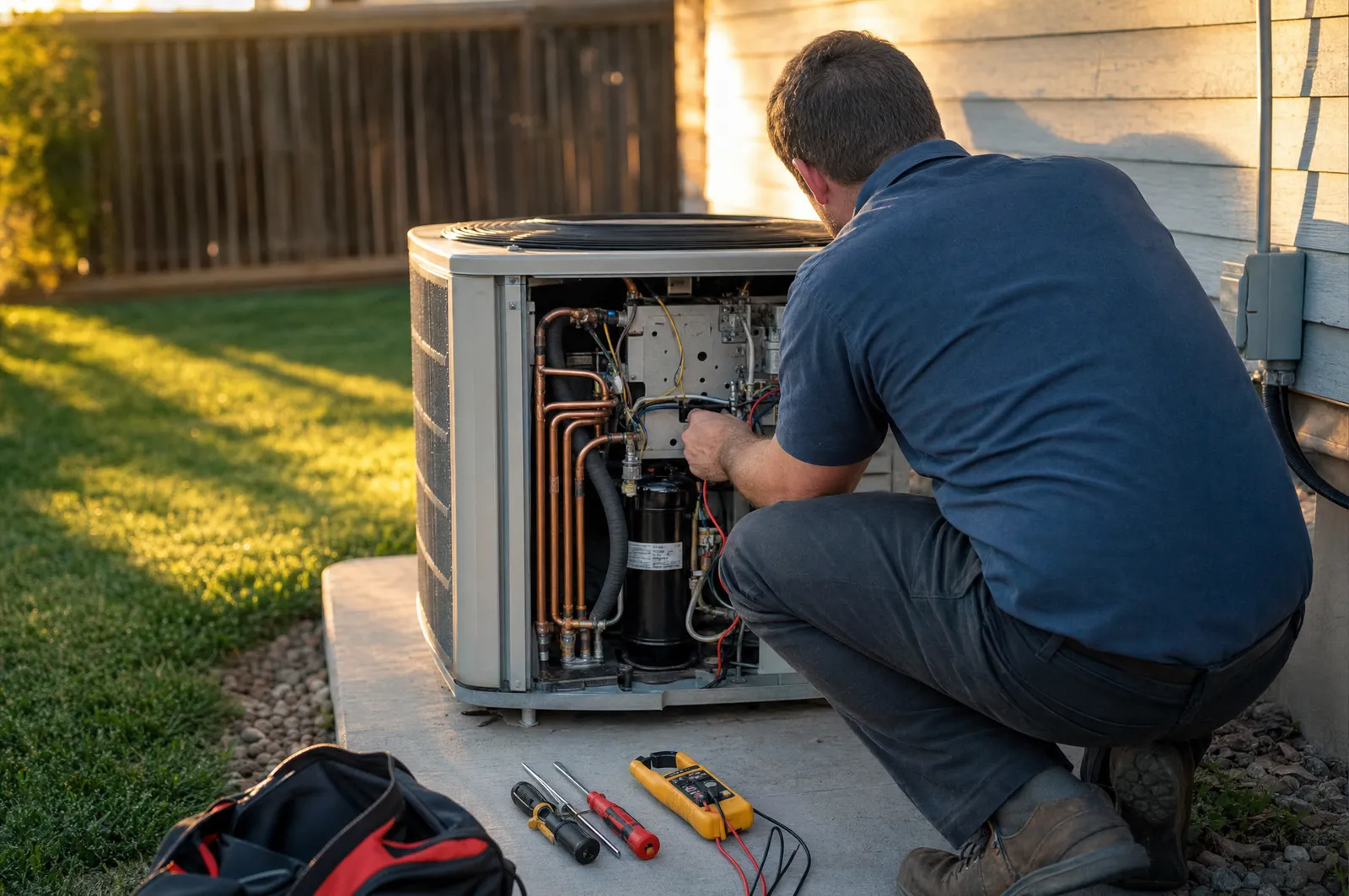
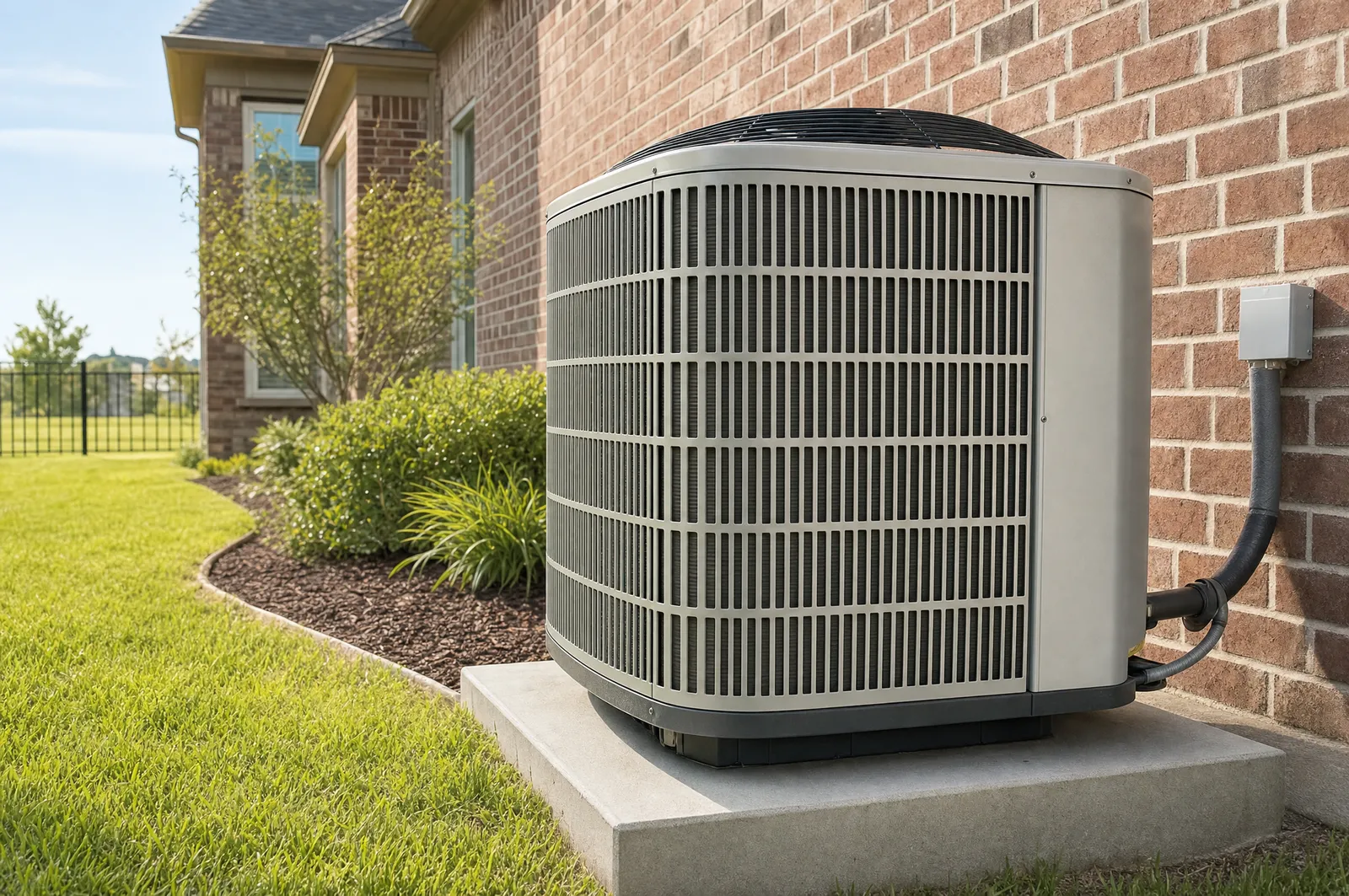
An air conditioner and a heat pump are mechanical cousins. Both use a compressor, refrigerant, and two coils to move heat from one place to another. The difference is that a heat pump runs the cycle backward on demand. In summer it pulls heat out of your house and dumps it in the side yard, same as any AC. In winter it reverses, scavenging heat out of cold outdoor air and pushing it inside. One machine, one refrigerant circuit, both seasons.
A conventional system splits the work in two. The AC moves heat in one direction only, and a gas furnace handles winter by burning fuel and sending warm air down the same ducts. Two boxes, two energy sources, one job each. Both show up on the replacement quotes we write every week, and neither is the sucker's choice.
Texas Weather Tips the Scale
Summer design temperature in DFW sits near 100 degrees, and plenty of afternoons beat it. Whichever architecture you buy, the box outside works hard from May into September. That half of the decision is a wash.
Heating is the opposite story. Our first freeze usually holds off until mid to late November, and outside of a few genuine cold snaps, a DFW winter asks for gentle heat rather than a furnace grinding against single digits for weeks. Heat pump heating efficiency gets rated in HSPF2, a separate number from the SEER2 that governs the cooling side, and the federal minimum for a new split system is 7.5. Across the temperatures a North Texas January actually serves up, that machine does fine. It only starts losing ground as the outdoor air drops toward freezing, which here is a handful of mornings, not a season.
The house matters as much as the climate does. A 1980s brick ranch in Plano under mature shade trees carries a far lighter heating load than a new two-story in Frisco with vaulted ceilings and a wall of west-facing glass that gives its heat back the moment the sun drops. Size the equipment to the house you actually own, and judge the cooling half by its SEER2 rating, not a rule of thumb off a sales flyer.
Gas Is Cheap Here, and It Still Might Not Decide It
Once the climate math leans toward a heat pump, price per unit of energy sorts out the rest. Natural gas, delivered across most of the metroplex by Atmos, is an inexpensive way to make heat. Electricity in Texas's deregulated market swings hard by provider and plan, and a heat pump's backup strips sit at the expensive end of it. Strip heat is resistance heat, closer to running a house full of space heaters than to running the compressor.
Because our heating season is so short, that gap moves the annual bill less than you'd expect. Five months of a compressor fighting 100-degree afternoons is what drives a DFW power bill, regardless of which box handles the other seven. Your rate and your gas line belong in this decision. They just rarely settle it alone.
Dual Fuel: The System That Refuses to Pick a Side
If you already have gas service and want both answers, dual fuel puts a heat pump and a gas furnace in the same house and lets the thermostat referee. The heat pump carries the mild majority of the winter. Once the outdoor temperature drops past a switchover point, usually set between 30 and 40 degrees depending on what you pay for gas and power, the furnace takes the shift and electric strip heat never enters the picture.
Across a full DFW year, that's the cheapest system to run. It's also the most expensive on install day, since you're buying two heating appliances plus a thermostat built to manage the handoff between them.
The Honest Caveats Nobody Puts in the Brochure
A heat pump standing alone leans on electric resistance strips once outdoor air falls below its balance point. The strips work. They also draw far more power than the compressor does to make the same heat, so on the few genuinely cold mornings we get, your bill notices.
You'll feel the defrost cycle, too. In cold, damp weather the unit reverses for a few minutes to melt frost off the outdoor coil, and the air at the vent turns cool while it does. Normal operation, and reliably good for one panicked phone call the first winter.
Gas heat carries an asterisk of its own, and it's not the one salespeople lead with. A furnace burns fuel, which earns it working carbon monoxide detectors on every level and a technician's eyes on it once a year. That's routine housekeeping, not a reason to lose sleep. What isn't routine: if someone tells you the heat exchanger is cracked and the unit has to come out today, ask to see that crack documented on camera before you approve anything. A real one photographs. An undocumented one is reason to get a second opinion on the furnace you already own before you buy a system you weren't shopping for.
Install Quality Beats Architecture
Whichever box you choose, a correctly sized and correctly installed unit beats a sloppy install of the other kind. Oversized equipment short cycles and never pulls the humidity down. Undersized equipment runs flat out and still loses ground on the worst afternoon of the year. Leaky ductwork strangles airflow no matter what's bolted to the end of it.
That's the real argument for slowing down before you sign. If a contractor handed you one quote and no explanation of why that architecture suits your house, run it through our free second opinion calculator. And if the system you have now is limping rather than dead, start with our breakdown of when to repair and when to replace.
So Which One Is Right for Your House?
There's no universal winner, but the decision usually sorts itself into one of three piles.
- No gas line at the house. A properly sized heat pump with backup strips is a legitimate, unremarkable answer in a winter this mild.
- Gas at the meter, room in the budget. Dual fuel runs cheapest over a full year and never touches strip heat.
- Gas at the meter, tight budget. A conventional AC and furnace pairing stays proven, familiar, and the smallest number on install day.
Then spend the rest of your attention on the load calculation and the ductwork. That's the part you keep paying for every month, long after you forget which brand is on the label.
Get a Straight Answer Before You Buy
Book a free estimate right from the calendar on this page, send us the details online, or call 972-421-8000 and talk to someone who installs both every week. We'll walk the house, run the load numbers, and tell you which system fits, including the times that answer is the cheaper one. Free call-out, free estimate, pricing published upfront. Thirty-plus years in DFW will do that to a company.