Quick answer: A surge protective device wired in at your electrical panel guards every circuit downstream of it at once: the AC condenser's control board and capacitor, the furnace, the recessed lights, every outlet in the house. A power strip only protects what's plugged into it. Texas takes more lightning than any other state, and the grid throws off smaller spikes all year long every time it switches. Whole home surge protection means stopping both kinds at the one door all your power comes through.
A line of storms rolls in after dark, the kind that blinks the lights twice before the rain even starts. Ten minutes later the air conditioner comes back on with a groan instead of its usual hum, and by morning it's pushing room-temperature air. Nobody heard a strike close enough to worry about. The bolt that did the damage may have found a substation two miles off, or it may never have touched the ground at all.
That's the part most homeowners miss. A surge doesn't need a direct hit to kill expensive equipment, it needs a way in. In most North Texas houses built before surge protection became standard practice, the way in is a panel with nothing standing guard on it.
Lightning Is the Dramatic Threat. The Grid Is the Daily One.
Texas leads the country in lightning, and not by a little. The state logged roughly 47 million lightning events in 2025, more than Florida and Oklahoma combined, and Rosston, north of Dallas, took more per square mile that year than anywhere in the country but one town in Oklahoma. Closer to home, detectors counted about 125,000 events inside ten miles of the Cotton Bowl. We get it in two waves out here, the loud one in spring and another when the first real fronts start shoving through in fall.
But the surges doing the quiet damage are the ones nobody notices. Every time Oncor switches a capacitor bank, re-energizes a circuit after an outage, or a transformer down the street resets itself, a smaller spike rides the same line into your house. Big motors do it from the inside too, every time the AC compressor kicks on.
None of that trips a breaker or throws a spark. It just takes a little life off whatever it touches. In the newer neighborhoods around Allen, where a row of houses can share one transformer and one feeder, a single utility event puts the same spike on several panels in the same instant.
What Whole Home Surge Protection Does at the Panel
The device mounts inside your panel or immediately beside it, between the incoming service and every branch circuit in the house. It does nothing until voltage climbs past a set threshold. Then it opens a path, dumps the excess to ground in a few billionths of a second, closes again, and goes back to doing nothing. It has more in common with a pressure relief valve than with a battery.
It's also a consumable, and any electrician who tells you different is selling something. The internals take damage every time they clamp a serious event, and eventually they're spent. That's why the good units carry a status light. Glance at it when you change the air filter, because a dead surge protective device looks exactly like a live one from across the garage.
A Power Strip Covers One Lamp. The Panel Covers the House.
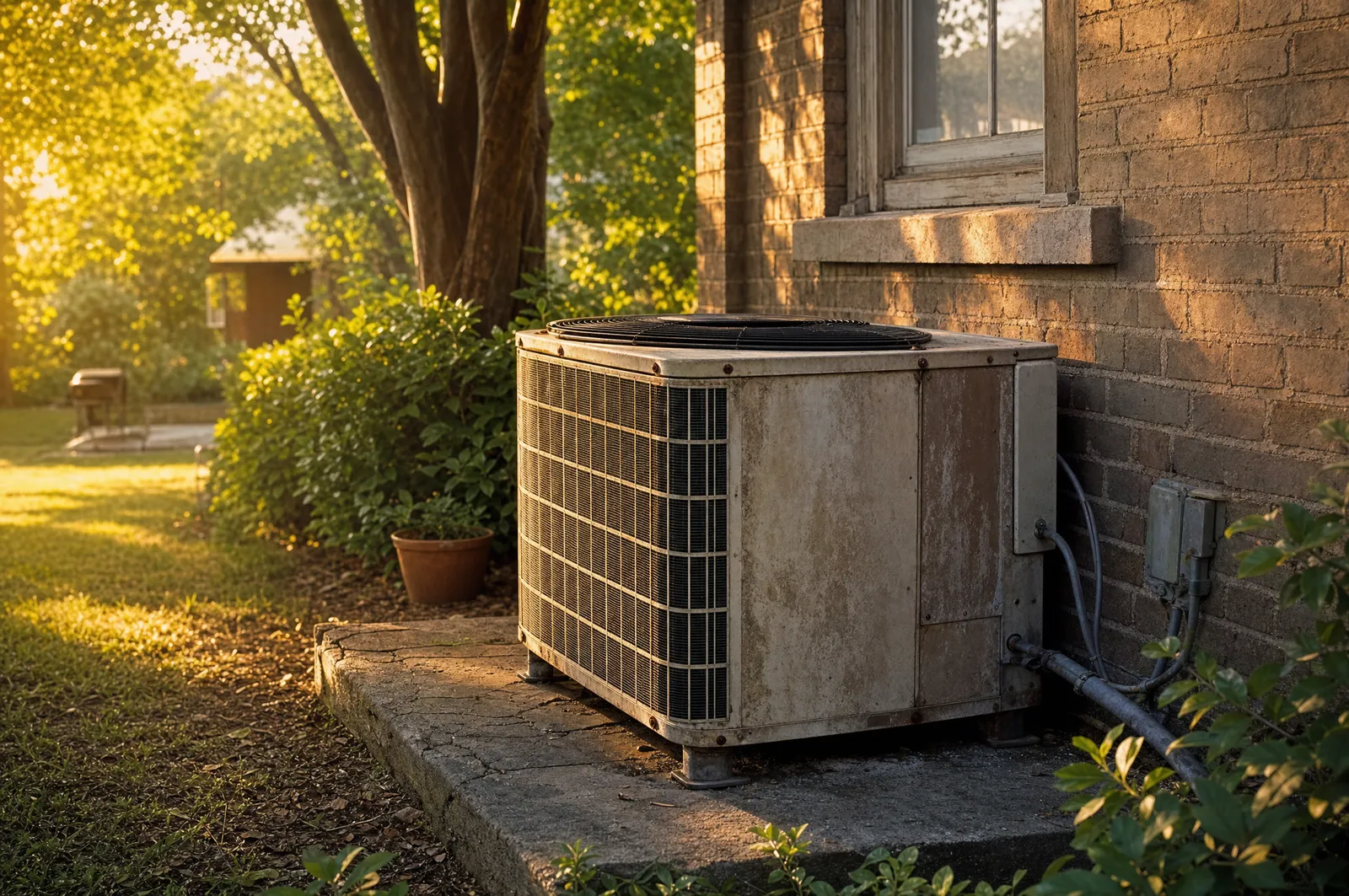
Point-of-use strips protect whatever is plugged into them, up to their own rating, and a big enough spike walks straight past that rating before the strip gets a say. The device at the panel covers the hardwired equipment nothing else can reach: the condenser out back, the furnace and air handler boards, the built-in oven, the dishwasher, the LED cans in every ceiling.
The two aren't rivals, they're layers. The panel takes the big hit, and strips on the television, the desktop, and the network gear mop up the residual voltage that gets past it. Skip either layer and the other one is doing a job it was never built for.
Your AC Has Been Running Since May
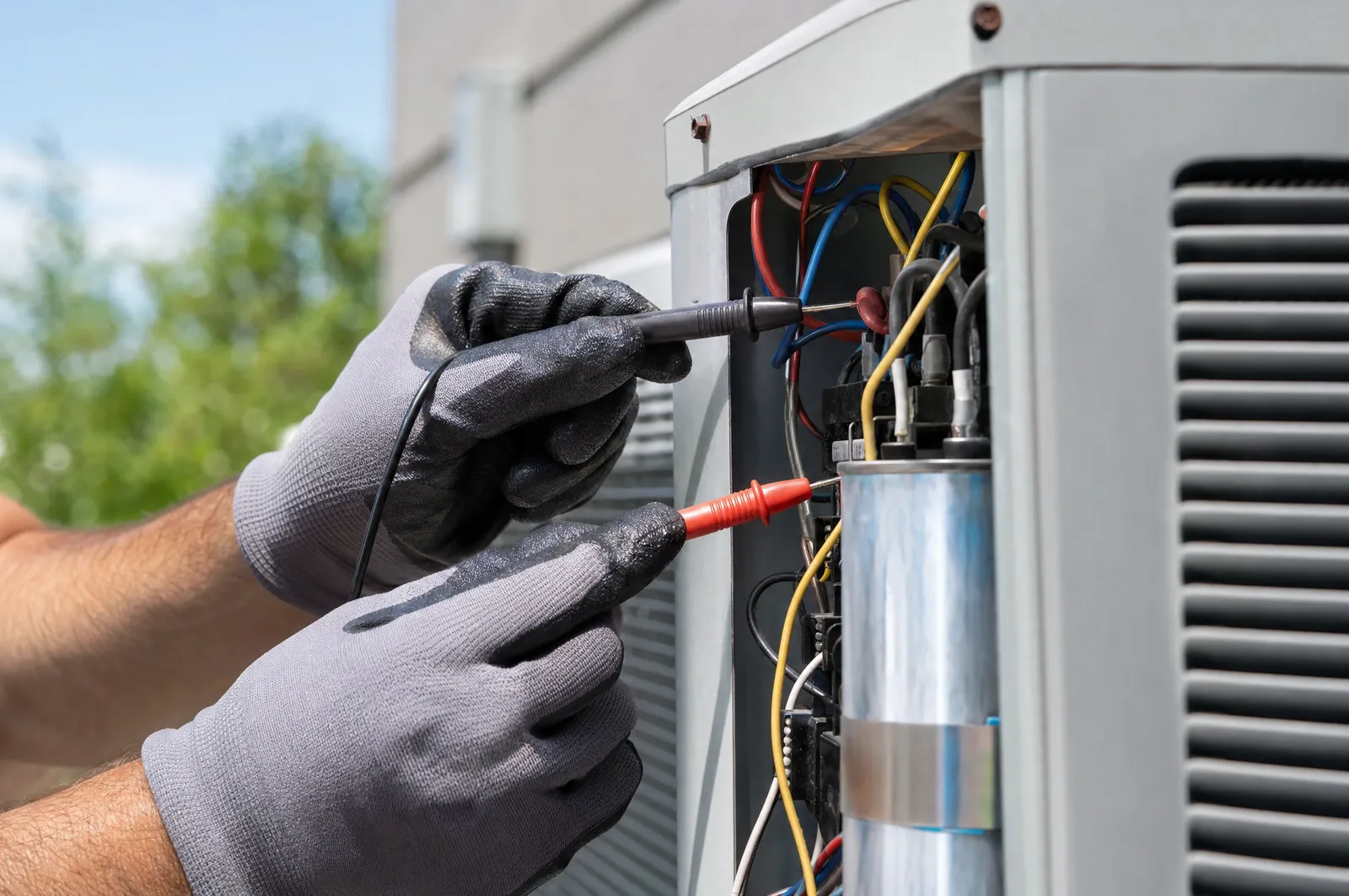
Heat wears out the exact parts a surge goes hunting for. A run capacitor sitting in a condenser cabinet through an August afternoon spends the whole summer near the top of its rated voltage, and it gives up a little capacity every week it does. The control board bolted in beside it runs hotter than anyone designed it to run, May through September, every year.
By the end of August, plenty of systems out here are limping along on components with very little margin left. If you've spotted the early signs of a weak capacitor, a surge is often what turns a slow fade into a dead condenser. A spike doesn't care how much life a part had left. It finds the weakest thing on the circuit, and after a Texas summer, the weakest thing is usually the capacitor or the board sitting right next to it.
The Fridge, the EV Charger, and the Board You Won't Need Until November
The AC gets top billing because it's the most expensive thing on the panel, but it has plenty of company. A refrigerator full of groceries. A furnace control board that means nothing to you until the first hard cold front, and a great deal the morning after it. An EV charger in the garage, the biggest continuous load in most houses that have one. A standby generator and its transfer switch.
Every one of them is fed by the same service a surge protective device stands in front of. Lake homes around Rockwall add a list of their own: boat lifts, dock lighting, pool equipment, irrigation controllers, all of it running off a panel that sits closer to open water and taller trees than most suburban lots do.
The Panel Has to Be Healthy Enough to Take It
Not every panel is ready for the device on the day you decide you want one. Some are simply full. Some are the discontinued brands whose breakers earned a reputation for not tripping when they should, and they have no business carrying everything that's been added to the house since. And a device landed on a panel with loose neutrals or a questionable ground can't do much of anything, because everything it does depends on a good low-resistance path to ground underneath it.
So the conversation usually starts with an electrical safety inspection that tells us what's actually in the panel and what it will support. If the panel turns out to be the weak link, the panel upgrade goes first and the surge device goes in as part of that work. That order saves opening the same panel twice.
The Code Stopped Calling This Optional
The National Electrical Code has required a Type 1 or Type 2 surge protective device on services feeding a dwelling since the 2020 edition, mounted as part of the service equipment or immediately next to it. Texas adopts the NEC statewide. It covers new services and replaced ones alike, which is worth knowing before anybody touches your panel: it's part of the job now, not an optional line item.
Sizing it, landing it on leads short enough to keep it fast, and verifying the grounding and bonding underneath it are not plug-in work. Our electrical side runs under GM Steve Tigert, a Texas Master Electrician, and every job gets looked at and quoted before anybody opens a panel. Diagnostics are free and our pricing is published upfront, so the number is on the table before you agree to anything.
Before the Next Line of Storms Comes Through
You can book from the calendar on this page, reach us through our contact page, or call 972-421-8000 and talk to somebody who can tell you what your panel will and won't take. Free diagnostics, upfront pricing, and 30+ years of doing this work across the metroplex.