Quick answer: A whole home generator in Texas runs on natural gas, starts itself within seconds through an automatic transfer switch, and gets its size from a load calculation rather than the biggest kilowatt number on the showroom floor. Essential-circuits systems back up a short list: refrigerator, lights, furnace blower. A true whole home system carries the entire panel, air conditioner included, for as long as gas reaches the meter. Either way the job starts with your panel and your gas line, which is why a generator installation is something you plan in October and regret putting off in January.
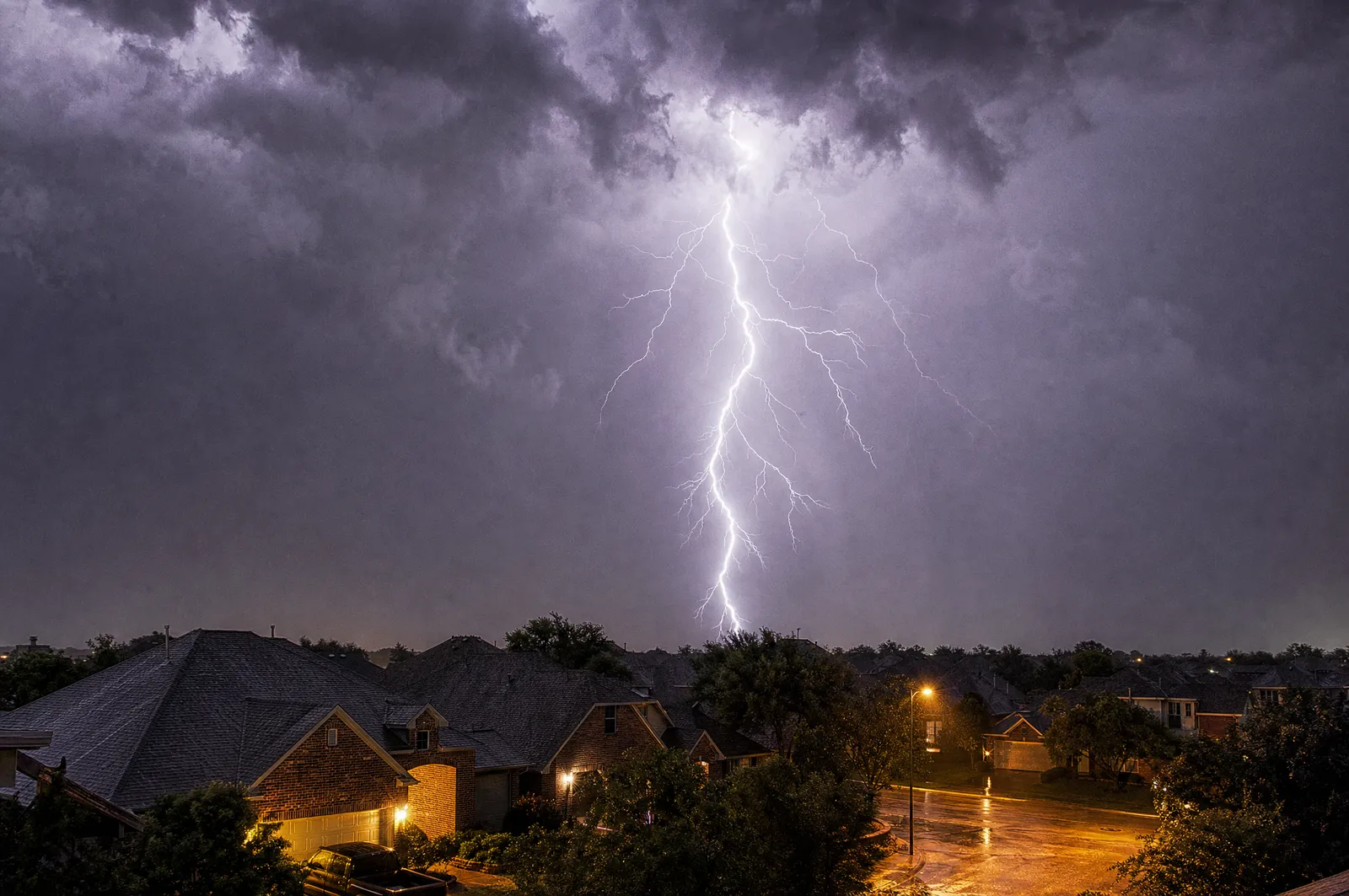
Everybody in North Texas has a version of the same February 2021 photograph: icicles off the patio furniture, the street dark at four in the afternoon, kids wearing coats indoors. What sticks longer than the cold is the not knowing. Hour thirty of an outage is nothing like hour six. By then you've stopped waiting and started calculating. How long the food holds. Whose house still has heat. Whether the pipes in the north wall will make it.
Roughly 4.5 million Texas homes and businesses were dark at the peak of that storm, some of them for four days. We've installed a lot of generators since. Here's the honest version.
A Full Gas Line and No Heat
ERCOT ordered rolling blackouts across the state that week, and in plenty of neighborhoods the rolling never came back around. So thousands of families sat in cold living rooms next to a perfectly good gas furnace and a perfectly good gas line, because a gas furnace still needs electricity to run its blower and its control board.
That's the detail that turns a curious homeowner into a serious one. No power, no heat, gas or not.
Standby vs. Portable: What Happens While You're Asleep
A portable generator is a machine you wheel out, fuel by hand, and start by hand, then either run cords from or feed into a manual transfer switch you installed years earlier. For a six-hour summer outage it's a sensible thing to own. What it needs is you: awake, home, and willing to go out in sleet every few hours with fuel cans that get harder to find as the storm drags on.
A standby generator asks nothing of you. It lives on a pad outside, plumbed into your gas line and wired to an automatic transfer switch that watches utility power continuously. When the grid drops, the switch starts the engine and moves the house over before you've finished registering that the lights went out. It runs as long as gas keeps reaching the meter.
Twenty Feet Out, and Never the Garage
While we're on portables, here's the part that gets skipped. Of the 246 deaths Texas health officials attributed to that storm, 19 were carbon monoxide poisoning: generators, grills, and cars running in enclosed spaces, and heater vents that iced over.
The rules are short. Outdoors only, at least 20 feet from the house, exhaust aimed away from doors, windows, and vents. Not in the garage with the door up, not on the porch, not in a carport. Opening things up doesn't dilute carbon monoxide fast enough to matter.
Keep working CO alarms on every floor whether you ever own a generator or not. Your furnace has probably run once or twice by now, which makes this the month for fresh batteries and an honest look at the heating system.
What a Whole Home Generator in Texas Actually Covers
"Whole home" gets used loosely on showroom floors. Two genuinely different products hide under it.
An essential-circuits system backs up a list you choose: refrigerator, some lights and outlets, the furnace blower, maybe a well pump. Those units commonly land between 10 and 18 kilowatts and feed a dedicated subpanel. A true whole home system carries the entire panel, air conditioner included. For most DFW houses that's an air-cooled unit in the low-to-mid twenties, while a large house with two condensers, an electric range, and an EV charger in the garage can push past 30 kilowatts into liquid-cooled equipment.
What matters more than either range is where the number came from. A licensed electrician runs a load calculation: square footage, fixed appliances, HVAC demand, and in a Texas house the air conditioner is almost always the largest item on the list. Skip it and you buy one of two mistakes, a generator that sags when the compressor starts in July, or far more machine than your house will ever ask for.
Before the Generator, the Gas Meter Has to Agree
A standby unit needs its own gas line, run from the meter and sized for its BTU demand, not a tap off the line already feeding the furnace and water heater. So the first real question isn't which model you want. It's whether your meter can serve one more large appliance. Sometimes the utility has to upsize it first, which is calendar time you don't control.
One honest note. Natural gas is why a standby unit runs for days, but it isn't a law of physics. Texas prioritizes residential gas customers and most homes kept service through February 2021, though not every home did. A standby generator is far better odds than a stack of gas cans. It isn't a guarantee, and anybody selling it to you as one is selling.
Five Feet From a Window Is Not a Suggestion
Placement is a code question, not a landscaping preference. Standby generators are generally held to five feet of clearance from openings in the wall of the house, windows, doors, and vents alike, three feet from the vent on a gas regulator, and three feet of working room at the front and both ends. All of it gets permitted and inspected.
Easy on an acre. A genuine puzzle on a narrow side yard, or on one of the lake lots around Rockwall where the buildable ground is already spoken for by a pool and a path to the dock. We've spent longer working out where a unit can legally sit than deciding which unit it would be.
The Generator Is the Easy Part. The Panel Isn't.
A transfer switch doesn't attach to good intentions. It attaches to a panel, and the panel has to be in shape to take it. Service that's aging or undersized, or a panel nobody has evaluated since the house last changed hands, is where these projects stall halfway through.
So we start with an electrical safety inspection before anyone talks model numbers. Is this panel ready for a transfer switch as it stands, or does an electrical panel upgrade come first? Plenty of houses in the older parts of McKinney carry service that was right for the era it went in and has since been asked to absorb a heat pump, a second refrigerator, and a car.
While the panel is open, it's the natural moment for whole home surge protection. The instant the grid comes back after a long outage is exactly what that hardware is for.
Ask in October, Not During the Storm Watch
Every step above takes calendar time. Load calculation, panel inspection, gas line evaluation, permit, and if the meter needs upsizing, the utility's own schedule. None of it compresses because a forecast changed.
Availability is what compresses. Supply tightens and installer calendars fill the week a hard freeze shows up in the ten-day, and the homeowners who get a unit in the ground are the ones who asked in the fall. Right now the ragweed is still going, the furnace has barely run, and nobody is in a hurry. That's the whole argument for asking this week.
We'll Tell You If You Don't Need One
We'll walk the property, look at the panel, run the load calculation, and tell you straight whether essential circuits covers what you care about or whether the whole panel is worth backing up. Sometimes the answer is that the panel comes first and the generator waits a year. Diagnostics are free and our pricing is published upfront online. Book from the calendar on this page, reach us through our contact page, or call 972-421-8000. Stork's has been doing this around DFW for 30+ years, and we'd rather talk you out of the biggest unit on the lot than sell you one.