Quick answer: Nearly all of the furnace problems in Dallas homes come down to eight things: no ignition, cold air at the vents, short cycling, a burning smell, weak airflow, a dead thermostat, new noises, or a breaker that won't stay on. Four you can rule out yourself in five minutes. Anything touching gas, the flame sensor, or the heat exchanger belongs to a technician, and professional furnace repair from Stork's starts with a free diagnostic, so finding out costs nothing.
The first real cold front shows up the same way every year: fast, and usually overnight. You go to bed with a ceiling fan running and wake up to a 58-degree house and a furnace that's been quiet since March being asked to remember its job. Most of them remember. The ones that don't are why our phones start ringing in October.
Why Furnace Problems in Dallas Cluster on the First Cold Night
That call is rarely a surprise to the furnace. Yours works a fraction of the hours a Minnesota furnace does, tucked into an attic closet and forgotten from spring until the fans come down. Light duty isn't easy duty, though. It sits in a 130-degree attic all summer while the blower pushes house dust across the burners and the flame sensor, and nothing ever runs long enough to burn it off.
Then a blue norther drops the temperature 30 degrees before dinner, and a furnace that got no gentle September ramp-up goes from cold storage to full output in one evening. Every marginal part gets tested at once. That's nearly every no-heat call we run in the fall, and why our first cold front furnace checklist exists.
The Eight We Get Called For Most, Easiest First
Roughly in order, from what you might solve on a Saturday to what you shouldn't touch.
1. It Runs the Startup Sequence and Nothing Catches
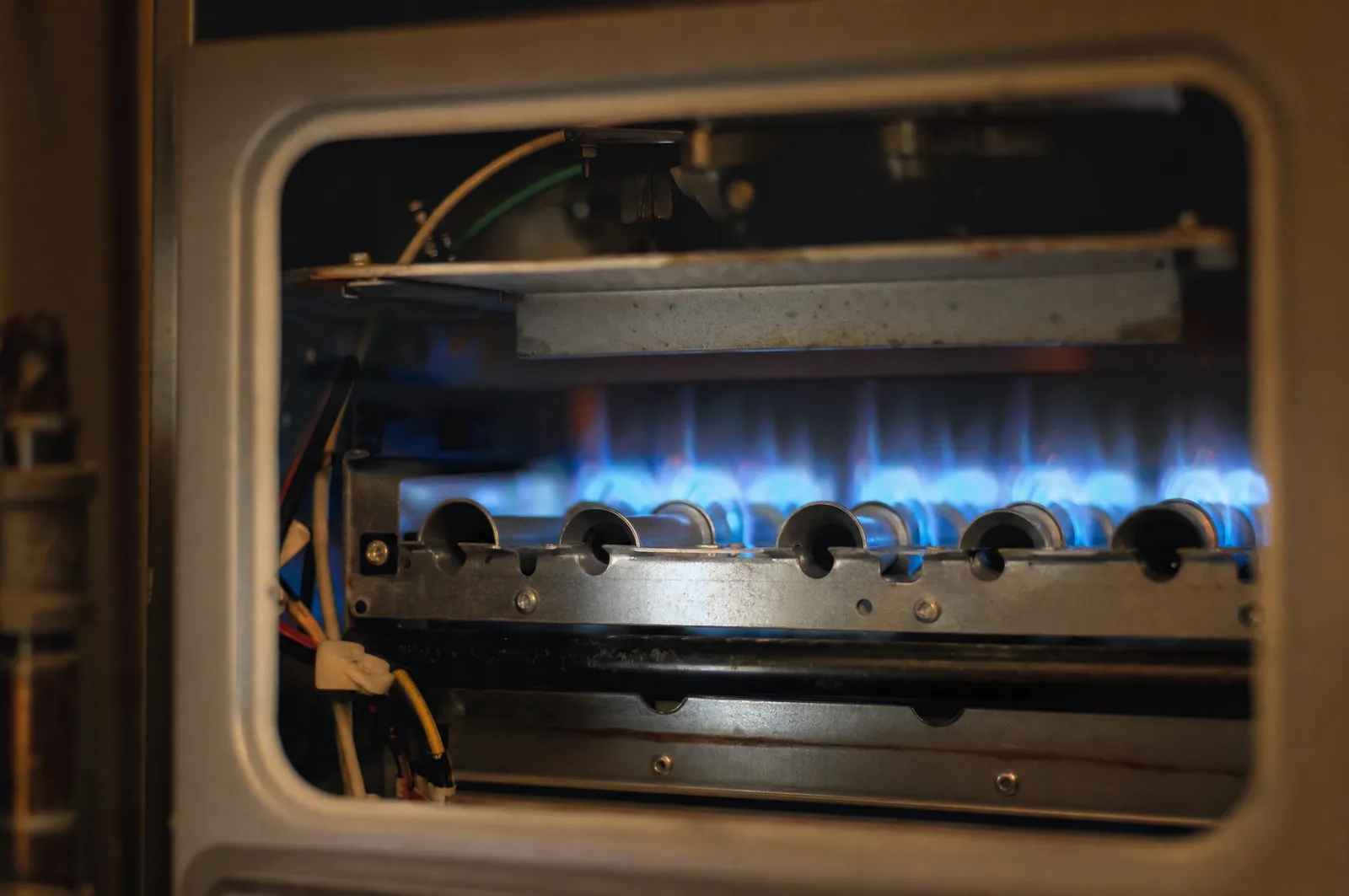
The inducer spins up, the igniter clicks or glows, and the sequence quietly gives up. Most control boards try about three times before locking out, which is the furnace protecting itself rather than breaking. Blame usually lands on a flame sensor too dusty to confirm a flame, a fouled burner, or a gas valve that isn't opening fully. Units untouched since spring are the ones we find in lockout.
2. The Blower Runs but the Air Is Cold
Air moves and none of it is warm. On a gas furnace that's the ignition story above, read backward from the vent: the blower did its part, the burners never did theirs. On a heat pump, a defrost cycle blows cool air for a few minutes and that's normal. Still cold long after, and it isn't.
3. It Fires, Quits, Fires Again
A furnace that runs four minutes, shuts off, and starts over never warms a room, and burns gas failing to. The usual culprit is a filter loaded enough to choke airflow across the heat exchanger, so heat stacks up and the high limit switch cuts the burners. An oversized furnace or a blocked flue produces the same stutter. Change the filter first: it's free to rule out and right more often than anything else on this page.
4. It Smells Like Something Is Burning
A faint dusty smell in the first hour of the season is summer dust cooking off a hot heat exchanger, and it clears on its own. What doesn't belong: a smell still there after that hour, anything electrical or like hot plastic, or the rotten egg odor added to natural gas. Gas isn't a repair question, so leave the house and call the gas company from outside. We sort the harmless from the urgent in what a furnace smell is actually telling you.
5. The Vents Are Barely Pushing
Hold a hand to the register and the air is warm enough, but there isn't much of it, and the back bedroom never catches up. Start with the filter, then the blower motor, then the flex duct in the attic, where a run stepped on during a water heater swap can throttle a whole room.
6. The Furnace Is Fine and the Thermostat Is Not
Sometimes nothing downstream is wrong. Dead batteries, a low-voltage wire backed out of its terminal, a smart thermostat that fell off the Wi-Fi and quietly stopped calling for heat. If it keeps losing its mind, a thermostat repair or replacement beats another winter of not trusting the wall.
7. It Bangs, Squeals, or Rattles
A healthy furnace is boring. A bang a second or two after the burners light usually means gas pooled before it caught, which is delayed ignition, and it's not worth running again to find out. A squeal points at blower bearings, or a slipping belt on an older unit. A rattle is often just a loose access panel. None of the three get cheaper by waiting.
8. The Breaker Won't Stay On
Gas makes the heat, but electricity runs the blower, the igniter, and the control board. A breaker that trips again and again, or a furnace that needs its service switch cycled nightly, is reporting a fault rather than a fluke. Resetting once is reasonable. Resetting every night through a cold snap is how a cheap part turns into an expensive one.
Five Minutes Worth Doing First
Before you call anybody, us included:
- Thermostat: set to HEAT, target above room temperature, fresh batteries
- Air filter: hold it to a light, replace it if you can't see through it
- Breaker panel: reset a tripped furnace breaker once, but only once
- Registers: supply and return vents clear of furniture, rugs, and boxes
- Service switch: the one near the furnace that looks like a light switch, off and on
When to Stop and Hand It Over
Gas, the flame sensor, the heat exchanger, and repeated lockouts belong with a licensed technician, for the plain reason that a furnace burns fuel inside your house. Put a working carbon monoxide detector on every level of the home and outside the bedrooms, and have the system inspected once a year. That pairing is how a genuine heat exchanger problem gets found before it matters.
A word about heat exchangers, because this is where our trade keeps its worst habit. Anyone who condemns yours should show you the crack on camera, so ask for the footage. Our guide to choosing an HVAC company in Dallas covers what else to ask, and if you're already holding a replacement quote, our free second opinion calculator is a second read on it. With Stork's the diagnosis is free and the pricing published, so when the fix really is a flame sensor and a cleaning, that's what you'll hear.
Most of This Is Preventable in an Afternoon
Almost everything above announces itself first: a burner slow to light, a filter three months overdue, a flame sensor wearing a season of dust. The average first freeze at DFW lands around November 22, which puts October at the cheap end of the calendar. Sorting this now costs you an afternoon. Sorting it during an ice storm costs you a night in a cold house and whatever the schedule allows.
Our maintenance agreements cover the furnace alongside the air conditioner with 10-year parts and 10-year labor warranties. And heating repair booked in the shoulder season is a different experience from the same repair booked in January.
Attic Furnaces, Lake Houses, and Everything Between
Stork's has worked North Texas for more than 30 years, and the metroplex isn't one housing stock. Most of what we open in Dallas is a furnace wedged into an attic above a bedroom, in a house built before anyone worried about service clearance. Newer Carrollton subdivisions bring the opposite job: condensing furnaces where a plugged condensate drain or a blocked PVC intake ends the first genuinely cold morning. Around Rockwall, lake houses sit empty midweek, and a system nobody has heard run since spring can be well into failing before Friday.
Get It Handled Before the Next Front
The calendar on this page will book you a slot, or send us a message and we'll come to you. If you'd rather talk it through, 972-421-8000 reaches a person and not a phone tree. Free call-out, free diagnostic, and a straight answer about what your furnace needs, while the weather still makes it a choice.