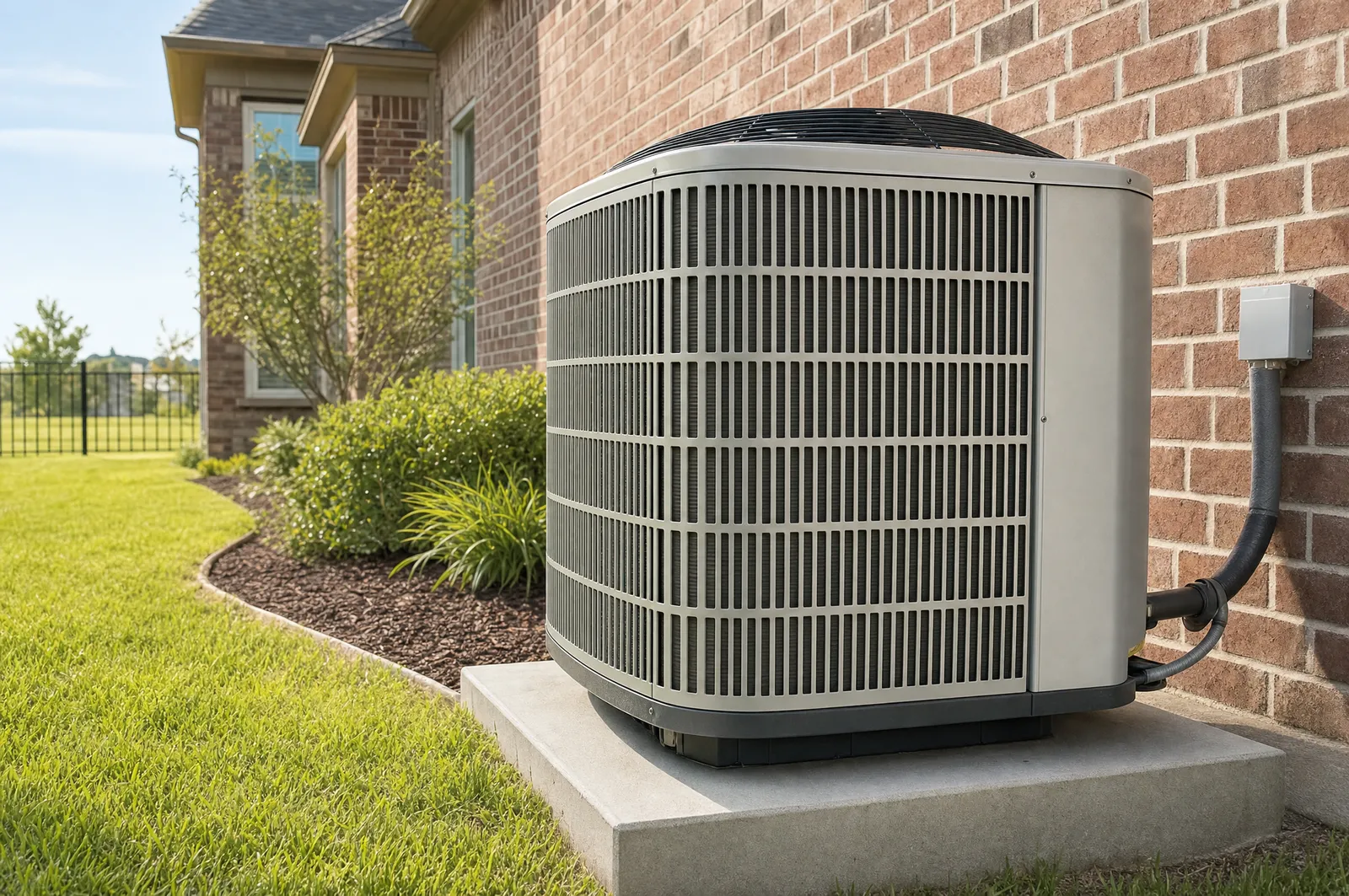
Quick answer: A furnace burning smell in the first 30 to 60 minutes after you move the thermostat to heat is normal. It's a summer of dust baking off the heat exchanger, and it fades on its own. A smell that's acrid, plastic, or electrical, or one that's still there after an hour, means shut the system down and call for furnace repair. Rotten eggs is the exception to all of it: get everyone out of the house, then call your gas company from outside.
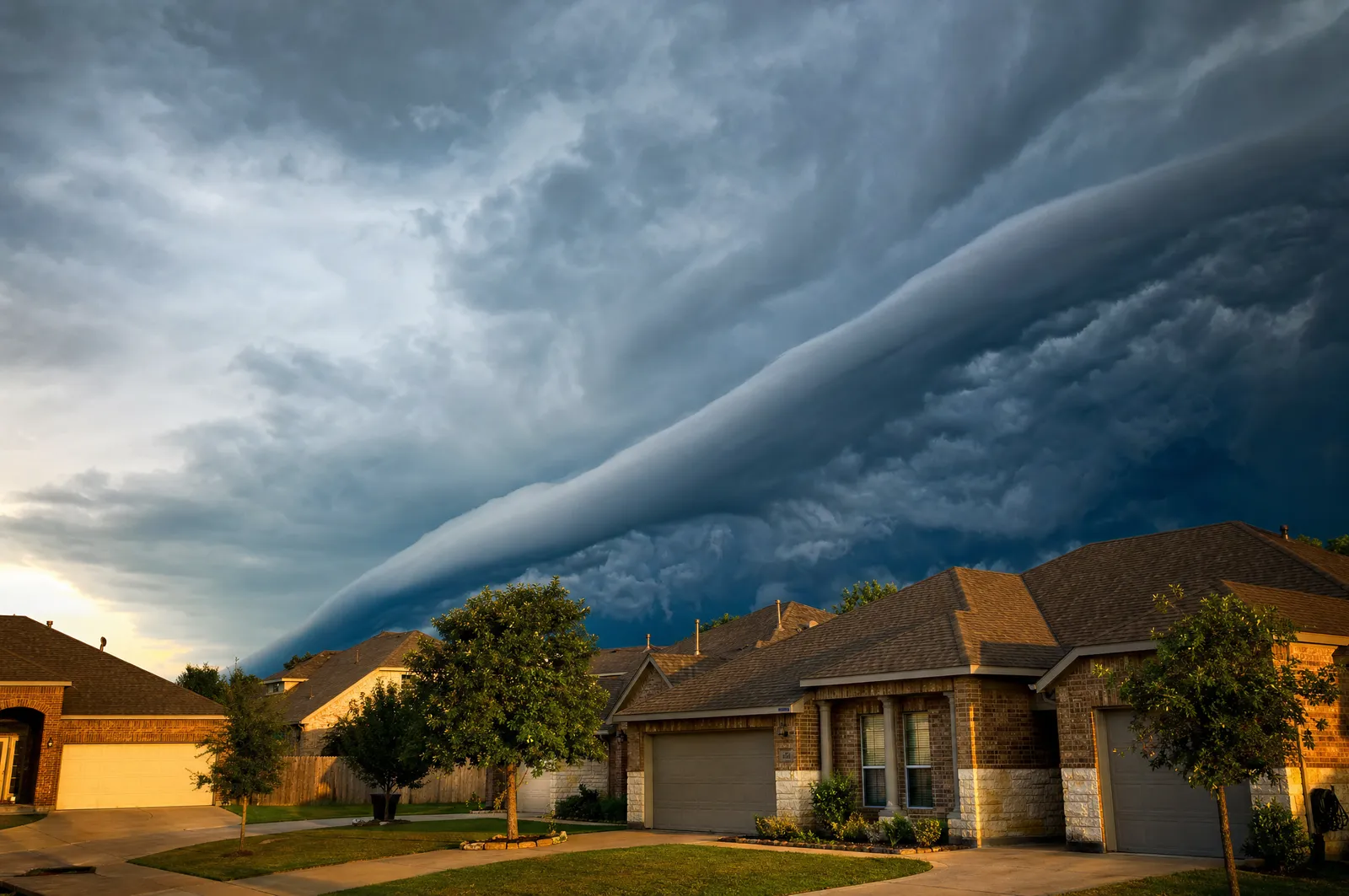
Sometime in the next few weeks a front comes through with enough teeth to make the house feel cold at six in the morning, and somebody reaches over and moves the thermostat to heat for the first time since February. Thirty seconds later the vents hand back a smell nobody asked for, and the whole kitchen stops talking.
It's the most predictable thing about the start of heating season in North Texas, and every October we take the same call from somebody standing under a vent taking a hard sniff. Most of the time that smell means nothing at all. Sometimes it means shut the furnace off. Once in a great while it means walk out the front door and keep walking. They're different smells, and telling them apart is a lot easier before you're the one standing there.
The Furnace Burning Smell That's Supposed to Happen
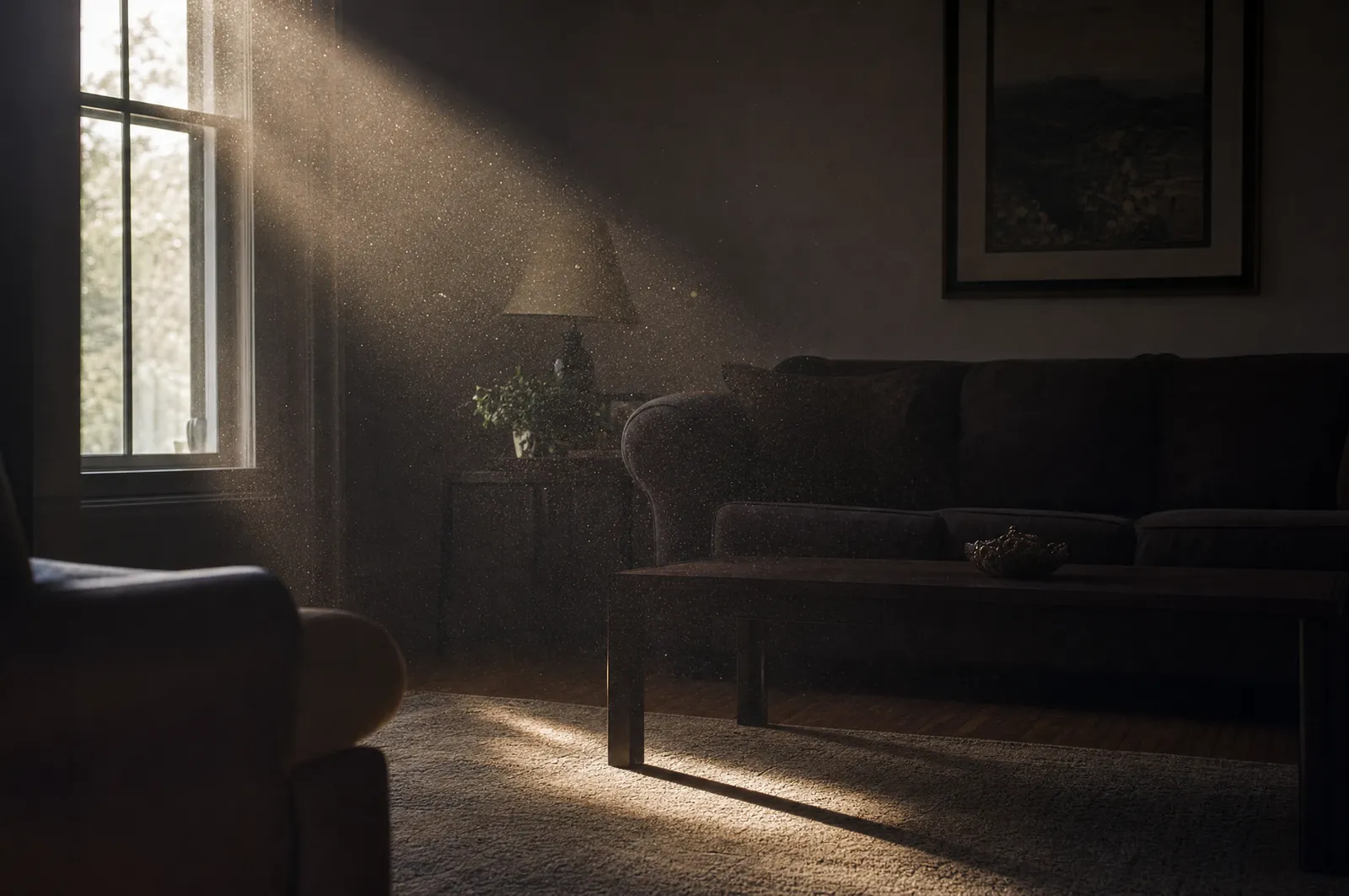
Your furnace hasn't fired since February, and if last winter stayed soft, it didn't work hard even then. All summer, dust has drifted down onto the burners, the heat exchanger, and the inside of the cabinet, the same quiet way it builds on top of a ceiling fan blade until somebody finally looks. The first time the burners light, that metal heats fast and every bit of it cooks off at once.
The smell is dry and a little sharp, more scorched than smoky, closer to a hot iron pressed onto a dusty shirt than anything actually on fire. It's worst where the furnace lives in the attic, which covers a lot of the older ranch and split-level houses in Richardson: that cabinet sits in 130-degree heat from June through September, then collects whatever the return pulls up off the floor the rest of the year.
Crack a window, leave the blower running, and give it half an hour to an hour. If it fades and doesn't come back on the next cycle, that's the whole story. It also lands in the same few weeks ragweed peaks across the metroplex, so if throats are scratchy that morning, the furnace is probably taking blame it hasn't earned.
Four Other Smells and What Each One Is Telling You
Past that first hour, or if what came out of the vents was never dust to begin with, sort it by what it actually smells like.
- Acrid, hot plastic, like an appliance running too hard. That's usually wiring insulation cooking or a blower motor straining, sometimes because a filter nobody has changed since June has it fighting for every cubic foot of air. Shut the furnace off at the thermostat, and at the breaker if the panel is handy. Melted insulation doesn't heal, and if the trouble turns out to be the wiring rather than the furnace, it belongs to a licensed electrician, which is the other half of what we do.
- Burning that never fades, or comes back on every cycle. Old dust burns off once. Something still smoking on the second and third cycle is actively overheating, not shedding a summer of grime. Turn it off and get heating repair scheduled before you run it again for warmth.
- Musty, like a gym bag left in the trunk. Not a burning smell at all, though it turns up the same week. Techs call it dirty sock syndrome: mold and bacteria that grew on the air conditioner's evaporator coil through a humid Texas summer, sitting in the same air handler your furnace blows through. That one needs the coil cleaned, not a repair.
- Rotten eggs or sulfur. Gas. Stop sorting smells and get everybody outside. The next section is the only part of this article that's an emergency.
Rotten Eggs Is the One You Don't Wait Out
Natural gas has no smell of its own. Utilities blend in a compound called mercaptan for exactly this reason, so a leak announces itself as rotten eggs or sulfur and nobody mistakes it for scorched dust. The order of operations is short, and it matters. Get everyone out, pets included. Don't flip a light switch, don't hit the garage door button, don't light anything, and don't make the call from inside the house, because every one of those is a spark, and a spark is the only thing the gas is missing.
Once you're well away from the house, call your gas utility. They would far rather roll a truck for a false alarm than get the other call. After they've cleared the house, the furnace still needs a look before anyone trusts it again, and that part is ours: trace the source, check the connections, and confirm the thing is burning the way it was built to.
The One Smell You'll Never Catch
Carbon monoxide has no odor at all, which is precisely why your nose is the wrong instrument for the job. Nobody should be selling you a furnace on that fear, and nobody should be ignoring it either. Put a CO detector on every level of the house and one outside each sleeping area, replace them on the date printed on the back, and have the system looked at once a year. Those three habits are worth more than any amount of standing in a hallway trying to decide whether the air smells wrong.
When the Smell Outlasts the First Hour
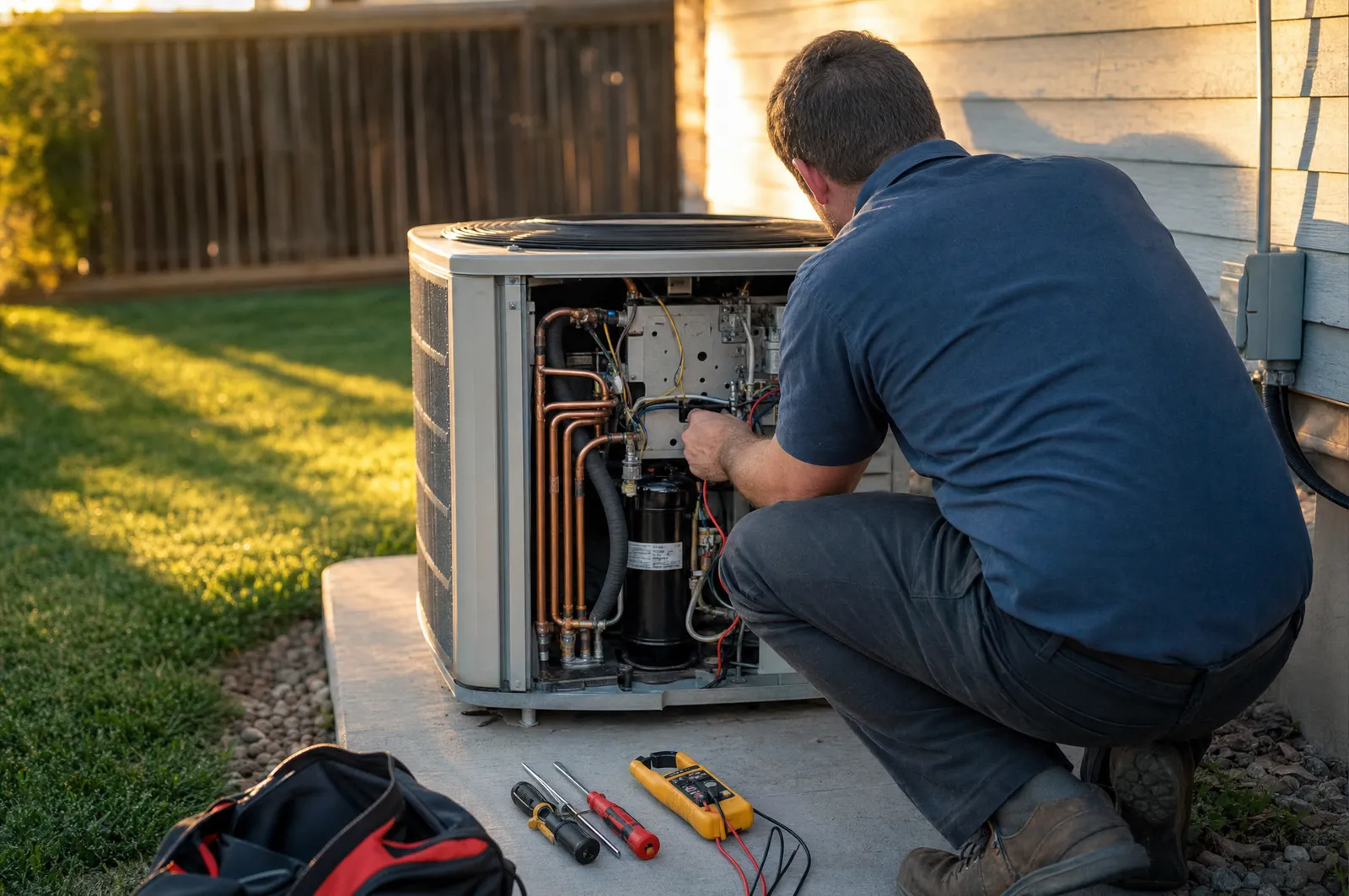
If it's still there after an hour, or back on the third cycle, somebody has to watch the furnace run before anyone can honestly name the problem. Often it's unglamorous: a blocked flue, a filthy flame sensor, a limit switch tripping over and over, a blower wheel packed solid with lint.
Sometimes it's a cracked heat exchanger, and that one deserves plain talk. A real crack is a real reason to replace a furnace. It's also the easiest call in the trade to assert and never prove, which is why we tell everybody the same thing: before you sign anything based on a cracked heat exchanger, ask to see it documented on camera. A technician who actually found the crack will be glad to put the footage in front of you. Anyone who won't is asking you to buy a furnace on faith.
Next Fall It Should Smell Like Nothing
A fresh filter in September and a set of trained eyes on the burners before the first front cuts all of this down to almost nothing. That holds for a twenty-year-old gas furnace in a house that's outlived two roofs, and it holds for the high-efficiency unit in a newer Murphy subdivision that hasn't met a real ice storm yet.
Our checklist for the first cold front runs through what to look at before you flip the switch, and the annual visit is where the small stuff gets caught: a scorched burner, a tired capacitor, a filter nobody has touched since summer. Every one of those is an inconvenience in September and an emergency at eleven at night in January. Our maintenance agreements put 10-year parts and 10-year labor warranties behind that work while they're at it.
Don't Spend the Evening Sniffing Vents
If you've already talked yourself out of worrying and back into it twice, stop debating it and let somebody with a combustion analyzer settle the question. Book straight from the calendar on this page, send us the details through our contact page, or call 972-421-8000 and talk to an actual person. The call-out is free, the diagnosis is free, the pricing is published online before you approve a thing, and you'll know today whether the answer is burnt dust or something worth fixing. We've been taking the first-cold-front phone calls in this metroplex for 30+ years, and we still take every one of them seriously.