Quick answer: If you are asking why is my house so dusty, the answer is usually mechanical, not seasonal. Ragweed is loose across the metroplex until the first freeze, but pollen alone rarely explains a house that needs dusting twice a week. The bigger driver is a leaky return duct pulling attic dust and insulation fiber into your airstream. Seal those leaky return ducts first, seat the filter properly second, and clean the ducts only when a specific finding justifies it.
You run a microfiber cloth over the entertainment center on Sunday. By Wednesday there's a gray film thick enough to write your name in, the ceiling fan blades have gone furry, and your eyes are doing the gritty thing they do every September. The ragweed blooming along every creek bed and fence line in North Texas is the obvious suspect.
It's guilty of something. Just not all of it. A house that needs dusting twice a week almost always has help, and the likeliest accomplice is running through your attic right now, quietly doing the opposite of its job.
Ragweed Gets Blamed for a Lot It Didn't Do
North Texas pulls one of the longest ragweed seasons in the country: August through the first freeze, which usually waits until late November. It peaks right now. So yes, this is a rough month to breathe.
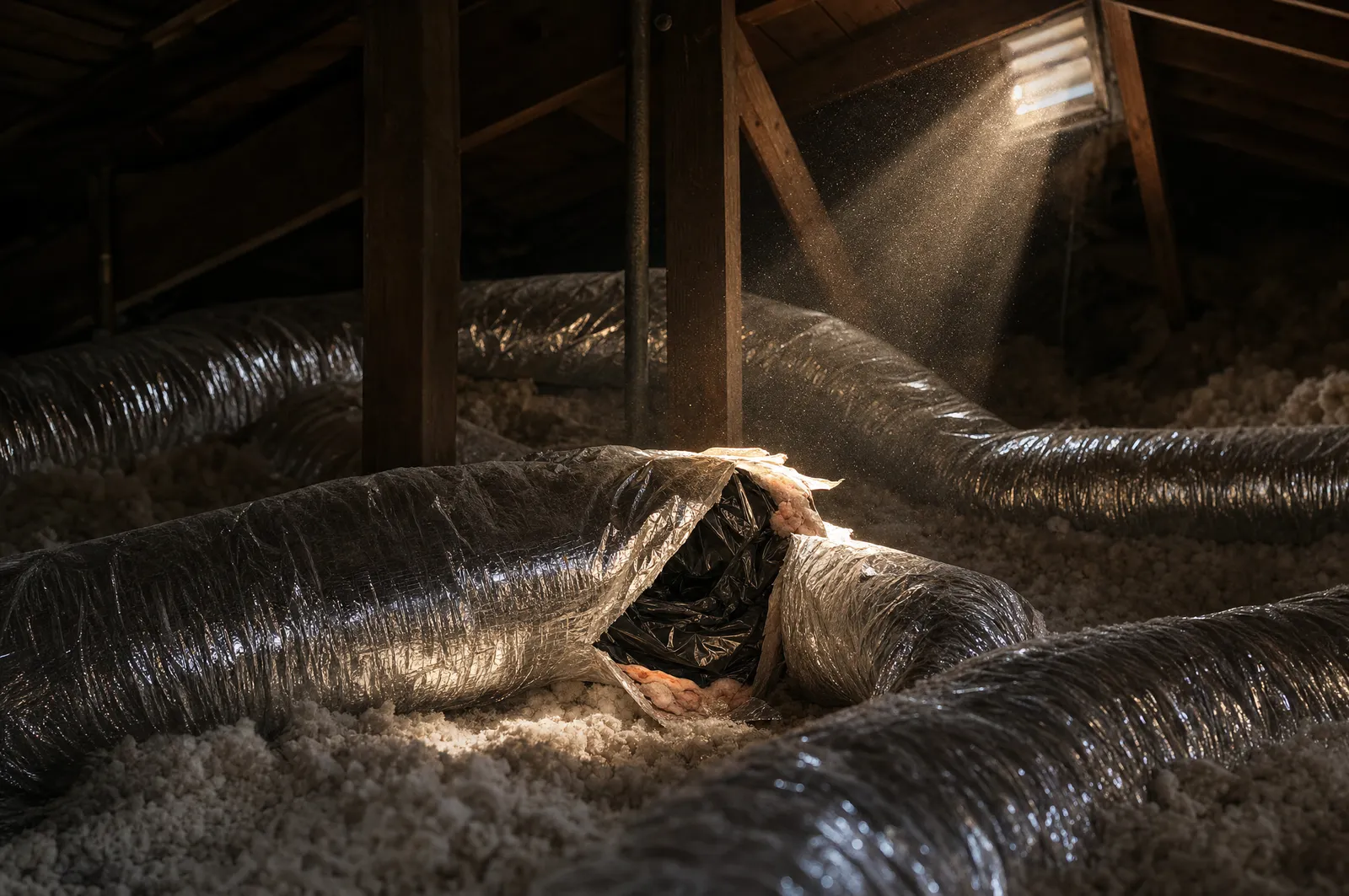
But allergy season arrives just as duct leaks and tired filters finish a full Texas summer of getting worse, and together they read as "the house is suddenly filthy." Your air handler has run for hours a day since May, pulling air through ductwork baking in a 130-degree attic. If that ductwork has gaps, and most systems past a decade old do, it hands whatever lives up there to every room in the house.
Your Filter May Be Filtering Almost Nothing
Start with what you can check today. A filter only works if air is forced through the media instead of around it. Cardboard-framed budget filters warp in the slot, and even a well-rated filter accomplishes nothing with a quarter-inch gap around its frame. Air takes the easiest path, and a gap beats a good filter every time.
For everyday dust and pollen, MERV 8 is the baseline most residential systems handle without strain. MERV 11 catches finer dust and pet dander; MERV 13 is where a lot of allergy sufferers end up. Ask a technician before you jump. Older blowers were never sized for the added resistance, and a high number on an undersized system chokes airflow instead of cleaning it.
Why Is My House So Dusty? Check the Return Side
Here's the mechanism nobody explains while they're selling you a thicker filter. Supply ducts push conditioned air to the rooms; return ducts pull it back to be cooled or heated again. In most DFW homes a long stretch of that return runs through the attic, sealed with mastic or tape that was imperfect when new and has spent years expanding and contracting through Texas summers and January cold snaps.
When a return develops a gap, a split seam, a boot worked loose off its collar, the blower doesn't care where the air comes from. It just pulls. And a leaky return pulls straight out of the attic: loose-fill insulation fiber, dust that settled on the decking a decade ago, grit blown in through the soffit vents, delivered through every supply register you own. Your ducts aren't just moving dust around. They're importing it.
The tell is easy to check. Pull the filter and look for fibrous, cotton-candy wisps caught in the weave. That's attic insulation, which means air is entering the system upstream of the filter, and it beats sneezing as a diagnostic.
A Leaky Return Costs More Than a Dusty Shelf
Pulling hot attic air into a system that's trying to cool the house adds load the equipment has to work back off, so it runs longer to reach the same setpoint. ENERGY STAR puts duct losses in a typical house at 20 to 30 percent of the air moving through the system. Return leaks are the share of that loss that also makes you sneeze.
Age and layout both matter. In the brick ranches filling the older neighborhoods of Mesquite, the return climbs a chase inside an interior wall, and the joint where that chase meets the attic plenum works loose after enough heat cycling. The two-story homes around Garland more often run long flex returns across open attic, taped once at installation and never touched again. Either way it's wear, and wear is fixable.
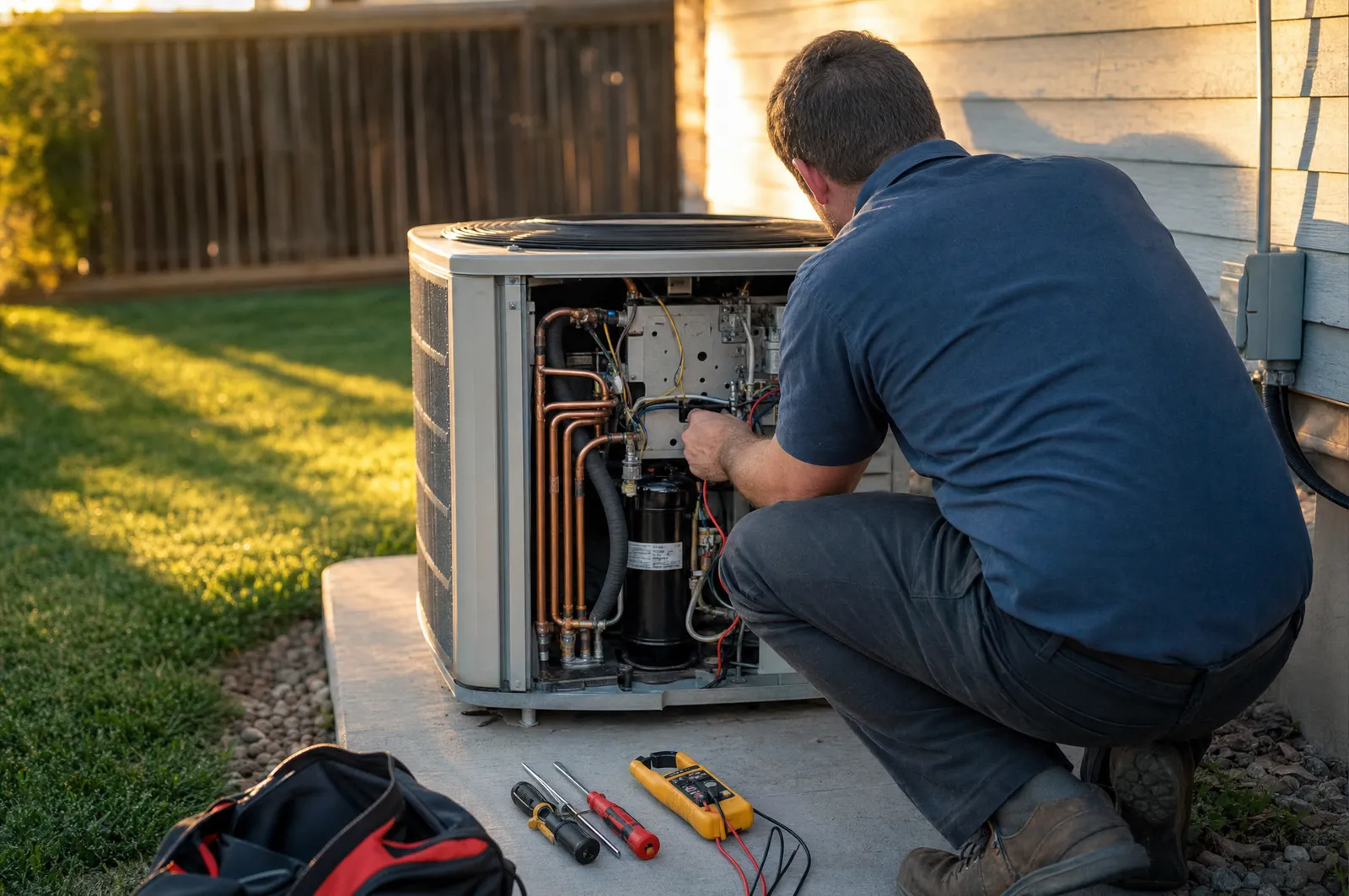
Once a technician pressure tests the system and locates the leak, the repair is usually undramatic: mastic on the accessible joints, a crushed return boot swapped out, a torn section of flex patched. That's duct repair, an afternoon of work, not the full replacement most people brace for.
Duct Cleaning Is a Remedy, Not a Ritual
Duct cleaning gets sold on a calendar, and EPA guidance doesn't back that up. It points to three conditions: substantial visible mold inside the ducts, an infestation of rodents or insects, or ducts clogged badly enough that you can watch debris blow out of the registers. Those are findings, not anniversaries.
That said, when a return leak has spent two years feeding insulation and attic grit into the system, the ducts are genuinely loaded, and no filter upgrade reaches what's already inside the metal. Professional duct cleaning earns its keep there, with one condition: seal the leak first. Clean ducts still connected to a hole in the attic refill on exactly the same schedule.
The First Cold Front Turns That Dust Into a Smell
Late September is also when the first front slides through and somebody flips the thermostat to heat for the first time since March. A dusty, scorched smell for the first hour or so is summer's dust burning off the burners and heat exchanger. A persistent electrical or hot-plastic smell is a different animal, and if you smell gas, everyone leaves the house first and you call the gas company from outside.
While the furnace is on your mind: keep working carbon monoxide detectors on every floor of a home with gas heat, and have the system checked once a year. If anyone tells you the heat exchanger is cracked, ask to see it on camera before you approve any furnace repair. A technician who genuinely found the crack will have the footage, and a confirmed crack means the furnace stays off until it's repaired or replaced.
If Ragweed Still Wins Indoors, Upgrade the Filtration
With the leaks sealed and the filter seated, some households still want more. If September has you on antihistamines indoors as well as out, a whole-home filtration upgrade does what a better disposable can't: a deeper media cabinet carries far more surface area without strangling airflow, and UV lamps or electronic air cleaners go after what media alone misses, from microbial growth on a damp coil to ultrafine particles. The right one depends on what your blower tolerates, not on the biggest number on the box.
What to Do First, and What to Do Last
If you only get to one of these, make it the first.
- Seal the return leaks. It stops the dust getting in instead of chasing it after the fact.
- Seat the filter properly. No gap around the frame, and a rating your blower can pull through.
- Clean the ducts if the findings justify it. After the leak is sealed, never before.
- Add filtration for allergy season. It helps once the leaks are handled, never instead of handling them.
- Keep up the boring parts. HEPA vacuum, bedding washed weekly, filter changed on a schedule.
Let's Find Out What Your Ducts Are Actually Doing
A dusty house in September is annoying, not mysterious. Stork's can run a duct leakage check and tell you straight whether you're looking at a repair, a cleaning, or both, with upfront pricing before anything starts. The call-out, the diagnosis, and the estimate are all free.
Book straight from the calendar on this page, reach us online, or call 972-421-8000 and talk to somebody who has crawled a lot of Texas attics. We've been at this across the metroplex for 30+ years, and a dusty house is one of the more satisfying problems to solve.