Quick answer: Do heat pumps work in Texas winter? Yes, and North Texas is the easy case. A properly sized heat pump carries a Dallas-area home on its own nearly every night of the season, with backup electric heat strips filling the gap on the handful of mornings that drop into the 20s. The steam boiling off the outdoor unit on a frosty morning is a defrost cycle, not a breakdown. The heat pumps that genuinely struggle here were undersized, badly installed, or overdue for service long before the first cold front.
The warning always arrives the same way. You mention you're putting in a heat pump, and somebody at the end of the driveway (a neighbor, a brother-in-law, the guy with his Christmas lights up before Halloween) tells you they're fine for mild weather, but a real Texas cold snap will have you eating dinner in a sweatshirt. Repeat that at enough tailgates and it hardens into settled fact.
It stopped being true a long time ago. What is true is that a heat pump behaves in ways a gas furnace never does, and two of those behaviors look alarming the first time you meet them. Nobody hands you a manual on the November morning they show up.
Do Heat Pumps Work in Texas Winter? North Texas Is the Easy Case
Heat pumps have a genuinely hard time where lows sit in the single digits for weeks and the ground stays frozen until March. That is not Dallas, Collin, or Rockwall County. Our winter design temperature, the number your contractor sizes equipment around, sits in the low 20s. The average first freeze at DFW lands around the third week of November, and most cold snaps here break inside three or four days.
A heat pump does lose capacity as the air outside gets colder. That's physics, and anyone who says otherwise is selling something. But it gives that capacity up gradually, and a correctly sized system already has our low-20s design day baked into the math. The units we find genuinely underperforming in January aren't beaten by the climate; they're undersized, installed without a real load calculation, or worn out.
It Doesn't Make Heat, It Fetches It
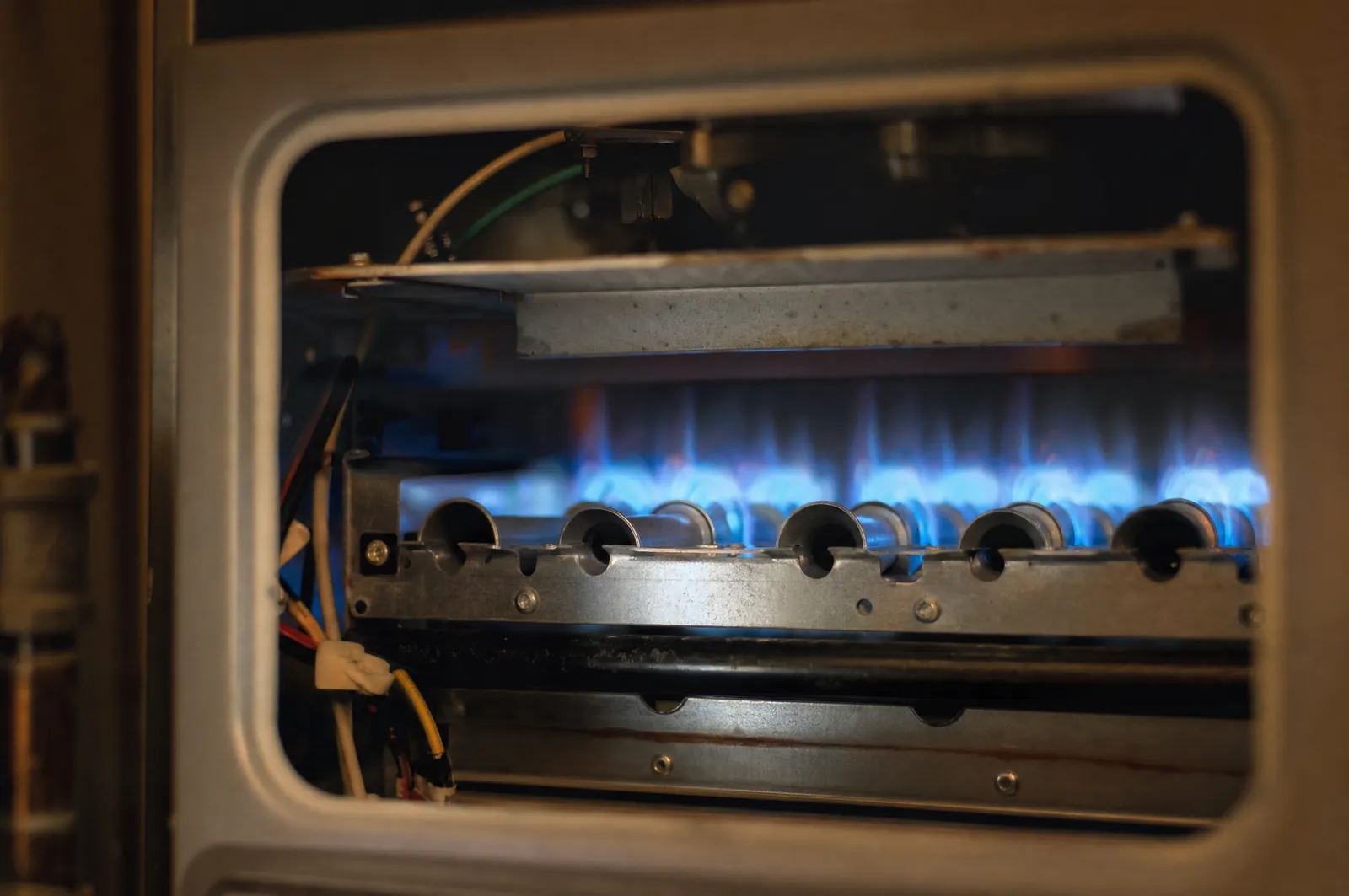
A heat pump burns nothing. It moves heat, which is exactly what your air conditioner does all summer, only pointed the other way. Even 35-degree air holds usable heat energy, and the refrigerant in the outdoor coil is run colder than that air on purpose, so heat flows into it, rides inside, and comes off the indoor coil as warm supply air.
The component doing the pointing is a reversing valve: one part decides whether the same equipment cools your house in July or heats it in January. It's also why a heat pump returns more warmth per dollar of electricity than a space heater ever will. It isn't paying to create heat, only to relocate it.
The Steam Cloud That Convinces People Something Broke
On a damp morning in the 30s, moisture freezes onto the outdoor coil the way it frosts your windshield. A frosted coil is an insulated coil, and an insulated coil can't absorb anything. So the system throws that reversing valve and runs backward on purpose for a few minutes, pushing hot refrigerant out to melt the ice off. The outdoor fan stops, the coil steams like a kettle, and every winter somebody calls convinced their unit is on fire.
Indoors the air can feel lukewarm while that happens, though most systems bring the electric strips on during a defrost to take the chill off. Five to fifteen minutes later the valve flips back and normal heat returns. This is a different animal from a furnace blowing cold air, which usually does point at a real fault. A heat pump in defrost is performing scheduled maintenance on itself, in your side yard, at six in the morning.
When the Heat Strips Take Over, the Meter Notices
The colder it gets, the less heat there is outside to move, so the heat pump's output tapers just as your house starts losing heat faster. Somewhere below freezing those two lines cross and the compressor can't cover the load alone. That's when auxiliary heat, a bank of electric resistance strips in the air handler, switches on to make up the shortfall. Nothing broke. The thermostat did the arithmetic.
Strips work fine. They're just expensive, closer to a space heater's economics than a heat pump's, because they're back to creating heat instead of moving it. A multi-day freeze that drags lows into the teens will show up on that billing cycle, and it should. That's the toll for the other five months, when the same system heats the house for a fraction of what strips cost.
Emergency Heat Is Not a Turbo Button
The EM HEAT setting on the thermostat reads like a boost. It is the opposite. Flipping it shuts the heat pump off entirely, compressor and all, and runs your house on those same resistance strips alone, around the clock, at their price.
It exists for one situation: the heat pump itself can't run, either iced over past what a defrost cycle clears or mechanically down and waiting on a repair. Reaching for it during a cold snap because it sounds stronger doesn't warm the house one degree faster. It just benches the efficient half of your system and hands the whole job to the expensive half.
Cold Snap Etiquette for Heat Pump Owners
A few habits keep a heat pump out of the strips. Set the thermostat where you want it and leave it there; a five-degree jump all at once reads as falling behind and pulls in auxiliary heat a one-degree nudge never would. Keep the outdoor unit clear of ice, leaf drift, and whatever the north wind stacks against your fence line. Leave EM HEAT alone unless the outdoor fan has visibly stopped and stayed stopped.
Then get the system looked at before the first freeze rather than during it. A fall heating check catches a weak capacitor or a low charge while it's still an ordinary Tuesday repair. That matters more on a heat pump than on anything else in the house, because it's your furnace and your air conditioner in one cabinet, which is why heat pump maintenance runs twice a year instead of once. Our maintenance agreements back that work with 10-year parts and 10-year labor warranties.
Dual Fuel, for the Belt and Suspenders Buyer
If you want backup that never touches a resistance strip, dual fuel pairs a heat pump outside with a gas furnace inside, sharing one set of ducts and one thermostat. The heat pump handles the mild months, which around here is most of them, and at a set outdoor temperature it hands the load to the furnace. That changeover point commonly lands in the 30s, depending on what gas and electricity cost you. The coldest nights burn gas instead of strips, and gas is the cheaper fuel at the extremes.
Two honest caveats. It costs more up front than either system on its own, and it puts combustion back into a house that otherwise wouldn't have any. A straight heat pump produces no exhaust and no carbon monoxide; add a furnace and you want working CO detectors on every floor and the gas side inspected once a year, same as any furnace home.
Dual fuel also assumes there's gas at the meter, and plenty of the homes we work in don't have it. A good share of what's going up on the new streets around Celina is all electric by design. Others sit past where the main ever reached, which describes more than a few properties we service around Forney. For those houses the question answers itself. If you're still weighing a straight heat pump against a furnace with a separate AC, our comparison of all three setups covers the cost and comfort tradeoffs.
Winter Ready, However Cold It Actually Gets
Icing over between defrost cycles, short cycling, or running the strips on a 45-degree evening all earn a look now, while the schedule is still open. Book from the calendar on this page, send us the details online, or call 972-421-8000 and talk to a person. Free call-out, free diagnostic, pricing published before you approve anything, and 30-plus years of getting North Texas through everything from a mild December to a genuine ice storm.