Quick answer: Christmas lights tripping a breaker is almost always circuit math, not a failing panel. Incandescent strings draw roughly ten times what LED strings do, and the garage or exterior circuit you plugged into is usually already carrying a freezer, a door opener, and a porch light. A GFCI outlet that pops in the rain is a different problem, moisture setting off ground fault protection rather than an overload. If the trips continue after you have gone LED and spread the load out, an inspection of the circuits and the panel will tell you whether you need a dedicated exterior circuit.
By the last week of October the boxes are down from the attic. Somebody wants the roofline done before the first real blue norther makes ladder work miserable, so up you go. Then you plug in the last string, the house glows for about four seconds, and everything goes dark: the display, the porch, and whatever was humming in the garage freezer.
Then comes the walk to the panel in your socks. The breaker did exactly what it was installed to do, which is the part worth sitting with. The same houses go through this most years, and the question is why that one circuit keeps getting asked for more than it has.
Incandescent Strings Pull About Ten Times What LEDs Do
A 100 count string of incandescent mini lights draws about 40 watts. The LED version of that same string, same length, same look from the curb, draws about 5 or 6. That tenfold gap settles most of these arguments before you open the panel.
The old C9 bulbs make it starker. Each incandescent C9, the fat screw-in kind still boxed up in half the garages in this metroplex, burns 7 watts. A 25 bulb string is 175 watts. Line the eaves with a hundred of them at a bulb per foot and you are pulling roughly 700 watts through one outdoor receptacle before the inflatable snowman is plugged in. The LED C9 that screws into the same socket draws well under a watt.
What a 15-Amp Circuit Will Actually Carry
Most garage and exterior outlets sit on a 15 amp, 120 volt circuit. Flat out that is 1,800 watts, but lights burning six or eight hours at a stretch count as a continuous load, and the working ceiling for that is 80 percent, about 1,440 watts.
Run that against 40 watt mini strings and the arithmetic says 36, which is a number nobody should act on. The real limit lives in the string cord. That wire is 22 gauge, and a UL listed run of it is capped around 210 watts end to end, because the cord cooks long before the breaker notices anything is wrong. In practice that is three to five incandescent sets, and the tag on the plug tells you how many. Go LED and the same tag often allows a dozen.
Christmas Lights Trip the Breaker on a Circuit That Was Already Busy
This is where most of it starts. Plenty of DFW houses, particularly anything built before the mid 2000s, run one 15 amp circuit out to the garage receptacles, the porch light, and the one or two exterior outlets the builder bothered with. Before a single string gets plugged in, that circuit may already be carrying a chest freezer cycling on whenever it likes, a garage door opener, and a dusk to dawn light on the driveway side.
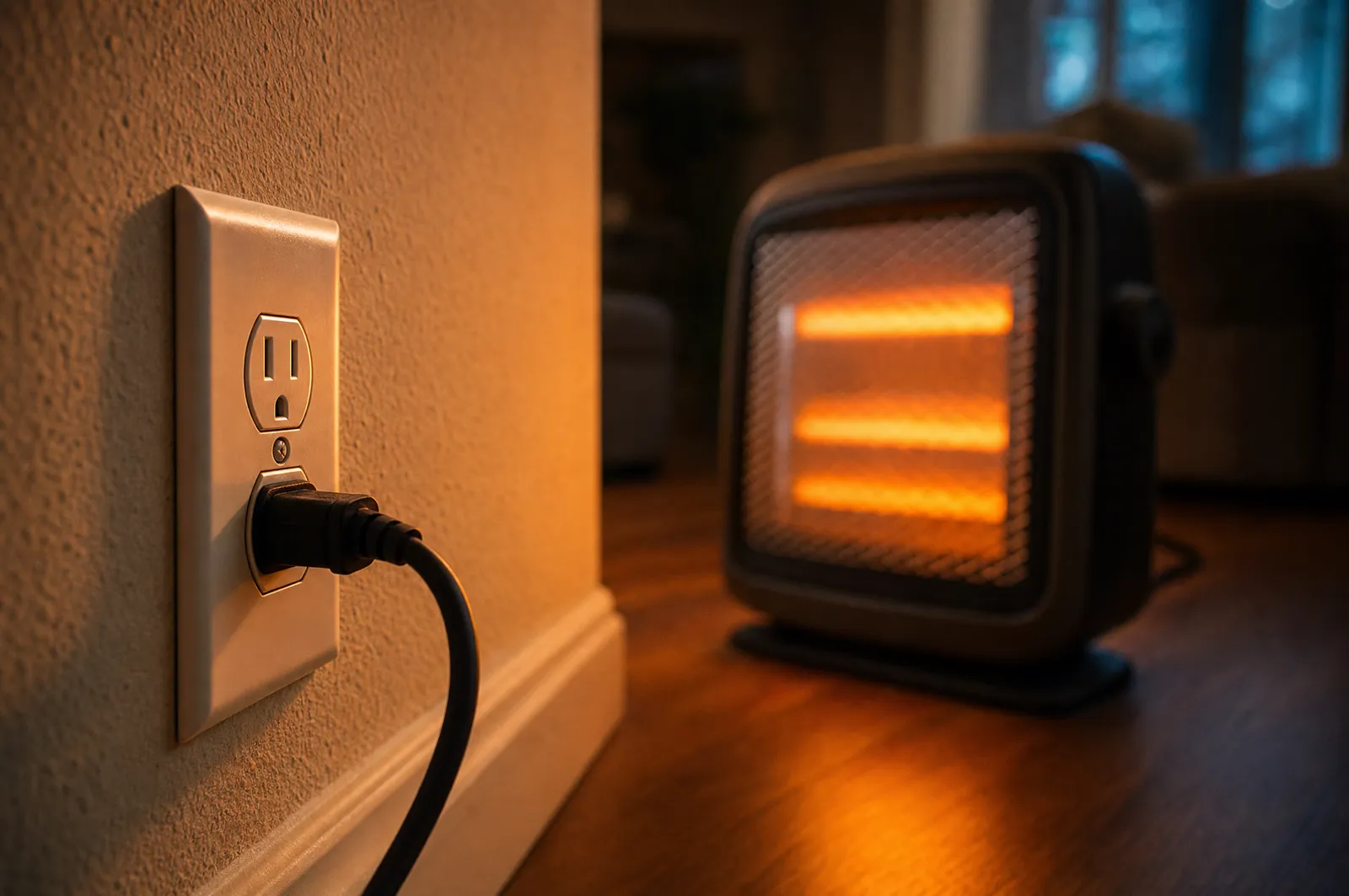
Hang three incandescent strings and a spinning inflatable off what is left and the margin is gone. It also explains the house that ran the same display for six years and then started tripping: something else moved onto the circuit. A garage space heater is the usual culprit, since a typical one draws 1,500 watts, about 12.5 amps, most of a 15 amp circuit by itself. Those never belong on an extension cord or a power strip.
A GFCI Trip and a Breaker Trip Are Two Different Warnings
Every outdoor receptacle on a house built or updated to current code is GFCI protected, and it is watching for one thing: current leaking to ground instead of returning the way it came. Water standing in a connector, a cord nicked by the shrub trimmer, a socket that took on moisture. It cuts power at a leak of 4 to 6 milliamps, thousandths of an amp, well below the level that injures anyone. It is there to protect the person on the ladder, not the wire.
A breaker is doing different math. It watches total current and heat, and it does not care whether the night is bone dry or the rain is blowing sideways. The pattern tells you which problem you have. A reset button popping out on the outlet whenever the weather turns is the GFCI catching moisture, usually at a connection that needs a proper in-use cover rather than a wiring fault. A breaker dropping on a clear, cold, dry night the moment the last string goes in is load, and drying things out will not change it.
The Extension Cord Sins
Cords take a lot of the blame for holiday tripping and mostly earn it. An indoor rated cord run out to the flowerbed is the first mistake, since that jacket was never built for weather or for the January cold snap that stiffens it. Chaining two or three together to reach the far end of the roofline is the second, because every connection adds resistance, and resistance is heat.
The rest of the list is short. Do not coil the slack into a tight loop, which traps the heat the cord is trying to shed. Do not run a cord through a door gap that pinches the jacket every time it shuts. Keep the connections up out of the mulch and off wet ground, because that puddle is exactly what ground fault protection exists to catch. One outdoor rated cord, run in a straight line with its slack loose, retires most of this at once.
When the Fix Is a Dedicated Circuit, Not a Smaller Display
If you have switched to LED, trimmed the incandescent count, and you are still arguing with the same breaker every year when the boxes come down, the circuit is undersized for the job you have handed it, and that goes double once a display gets ambitious. The houses in Frisco that pull a slow line of cars down the street every December, and the acre lots around Prosper with a hundred feet of driveway and oaks worth wrapping, are not running that off one garage outlet. They run dedicated exterior circuits, sometimes two or three, so the decorations are not fighting a freezer for the same 15 amps.
Pulling a new circuit for exterior lighting, or putting receptacles where the display actually goes instead of where the builder guessed, is ordinary work that ends the annual ritual. Permanent exterior lighting installed to code and a few outdoor outlets placed where you need them earn their keep every year, not just this one.
When the Tripping Is About the Panel, Not the Lights
Sometimes the exterior circuit is not the story. If lights trip breakers on more than one circuit, if the panel cover feels warm or the breakers buzz, or if the house is still on a 100 amp panel sized long before the hot tub, the shop compressor, and the EV charger in the garage, the panel may be telling you it is out of room. Leave the cover on and have someone qualified read it.
If the answer turns out to be capacity rather than one crowded circuit, an upgraded panel fixes the cause instead of the symptom, and it pairs sensibly with whole home surge protection going into the months when North Texas storms and hard freezes are hardest on the grid.
Before You Unplug Half the Display
Book a visit from the calendar on this page, send it through our contact page, or call 972-421-8000 and talk to a real person about what that circuit is carrying. Diagnostics are free and our pricing is published upfront, so you know the cost before anyone opens a panel. Stork's has been untangling DFW wiring, outlets, and December overloads for 30+ years.