Quick answer: Dry air in your house in winter is mostly a leak problem. Cold outside air carries almost no moisture, and every gap it sneaks through gets heated to 70 degrees, which drops indoor relative humidity from a comfortable 30 to 40 percent down into the teens. Seal the obvious leaks first, since that is what is actually feeding the dryness, then put moisture back with a whole-home humidifier mounted on your furnace. If your windows start fogging on the inside, ease the setting back instead of pushing it higher.
You grab the doorknob and take a shock hard enough to make you flinch. Your lips have been cracked since Halloween. Your kid turns up at breakfast with a nosebleed nobody can explain, and the dog has started walking around the living room rug instead of across it. In the back bedroom, the hardwood has opened up gaps you could sweep crumbs into.
None of that is coincidence. It is what the first hard week of furnace weather does to a Texas house. All summer we are out here showing homeowners how to pull moisture out of the air. In November the job reverses, and most people never realize their house needs it put back.
What Causes Dry Air in Your House During a Texas Winter
The physics is simple, even though it feels backward. Cold air holds only a fraction of the water vapor warm air can. Outdoor air at 30 degrees might read 70 or 80 percent relative humidity on your phone and still be carrying almost nothing, because cold air's total capacity is so small to begin with.
Now pull that air inside and heat it to 70. The amount of water in it does not change by a drop, but the air's capacity to hold water climbs several times over, so relative humidity collapses. That 30-degree air reading 70 percent outside arrives at your vents somewhere around 15 percent.
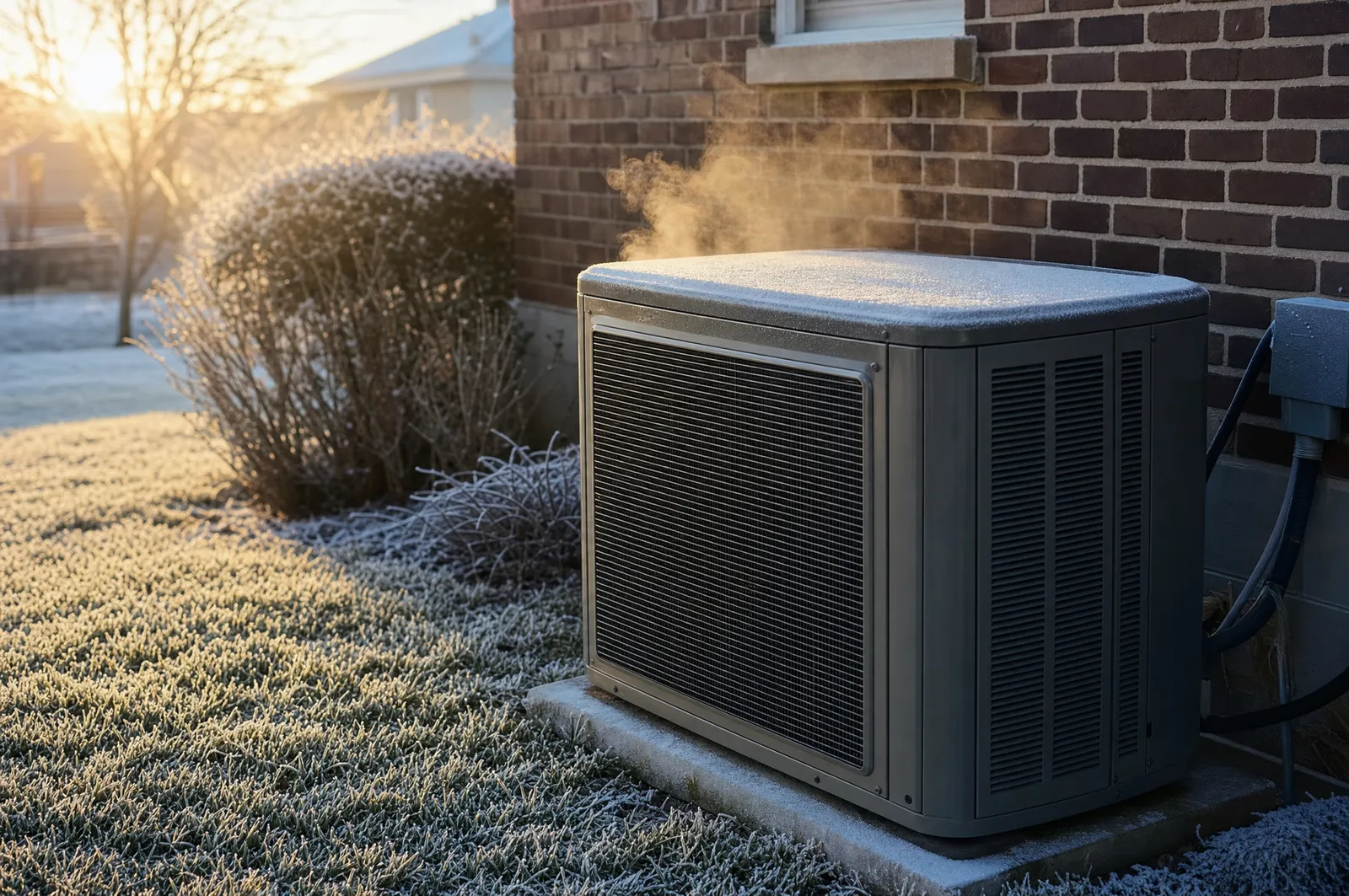
Your furnace puts none of it back, either. Gas heat sends its combustion moisture straight up the flue. All the furnace does is reheat the same dry air and push it through the ducts again, and again, for as long as the cold lasts.
The Symptoms You've Been Blaming on Everything Else
Static shocks are the one everybody names. The rest of the list usually gets blamed on something else entirely. Cracked lips and split knuckles. Morning nosebleeds, especially in kids, because the lining inside the nose dries out and the small vessels under it turn fragile. A scratchy throat that clears by lunch and returns by bedtime. Houseplants crisping at the tips no matter how faithfully you water them.
Your floors keep score too. Take a house from 50 percent humidity down to 30 and a floor of narrow oak strips can give up close to a quarter inch across an eight-foot room. That shrinkage has to go somewhere, and it goes into the seams between boards.
Comfortable through the winter is roughly 30 to 40 percent. Below 30, your skin, your sinuses, and your hardwood all start filing complaints at the same time.
The Same House, the Opposite Problem
Plenty of people reading this found us back in July, when the question was why the house still felt humid with the AC running. That is not a contradiction. It is one house at two extremes. In August a Texas home is fighting to wring water out of thick Gulf air. In January that same house sits in air so dry it can barely hold a drop, and the furnace runs it past you over and over. There is no gentle middle season here where humidity just parks itself at a sensible number.
Why DFW Dries Out in Bursts Instead of Seasons
Up north the furnace runs more or less continuously from November through March, which is at least a steady problem to solve. DFW does not do steady. A norther can take 30 degrees off the thermometer between lunch and dinner, the furnace runs hard for three days and strips the house dry, and by the weekend it is 70 degrees again with the system shut off entirely. The next front is usually about a week behind that one.
How fast your house feels it depends a great deal on how tight the house is. A 1990s brick two-story in Plano leaks at the attic hatch, the can lights, and every door that has been slammed for 25 years, so it can go from comfortable to shocking you at the light switch inside of 48 hours. A newer, tighter build out toward Rockwall holds its moisture noticeably longer, which is a real advantage. The catch is that a tight house has less room for error in either direction, so what it wants is ventilation you control rather than leaks you tolerate.
If the furnace itself is straining to keep up through those swings, put a heating repair visit on the books before the serious cold arrives in December.
Seal the Leaks Before You Add Any Moisture
This is the step almost everyone skips, and it is the one aimed at the actual cause. Every gap around a door, a window, an attic hatch, or a can light is a straw pulling cold, dry air in for your furnace to heat and dry out further. Weatherstripping, door sweeps, and a few dollars of caulk cut down the sheer volume of dry air your house has to deal with. Handle that first and a humidifier has far less work left to do.
Sealing leaks is not the same as sealing the house shut, though. A house with no air exchange collects its own problems: stale air, cooking and shower moisture, and everything else with nowhere to go. A fresh air ventilation system brings outside air in on purpose, in a measured amount, on a schedule you set. That is a different animal from air wandering in through whatever gaps your walls happen to have.
Put the Moisture Back at the Furnace, Not Room by Room
Portable humidifiers cover one room and want refilling daily, which is why most of them are in a closet by the middle of December. A furnace-mounted humidifier installs on the furnace or the ductwork and treats every cubic foot of air the system moves. A humidistat decides when it runs, so it handles the swings without you thinking about it: working hard while the furnace cycles through a cold snap, sitting idle once the weather turns mild again.
Dry air also keeps dust and dander airborne longer instead of letting it settle, which is part of why the scratchy-throat season and the dusty-house season show up together. A whole-home air purification system is a common addition on the same visit for exactly that reason.
The Sign You've Gone Too Far
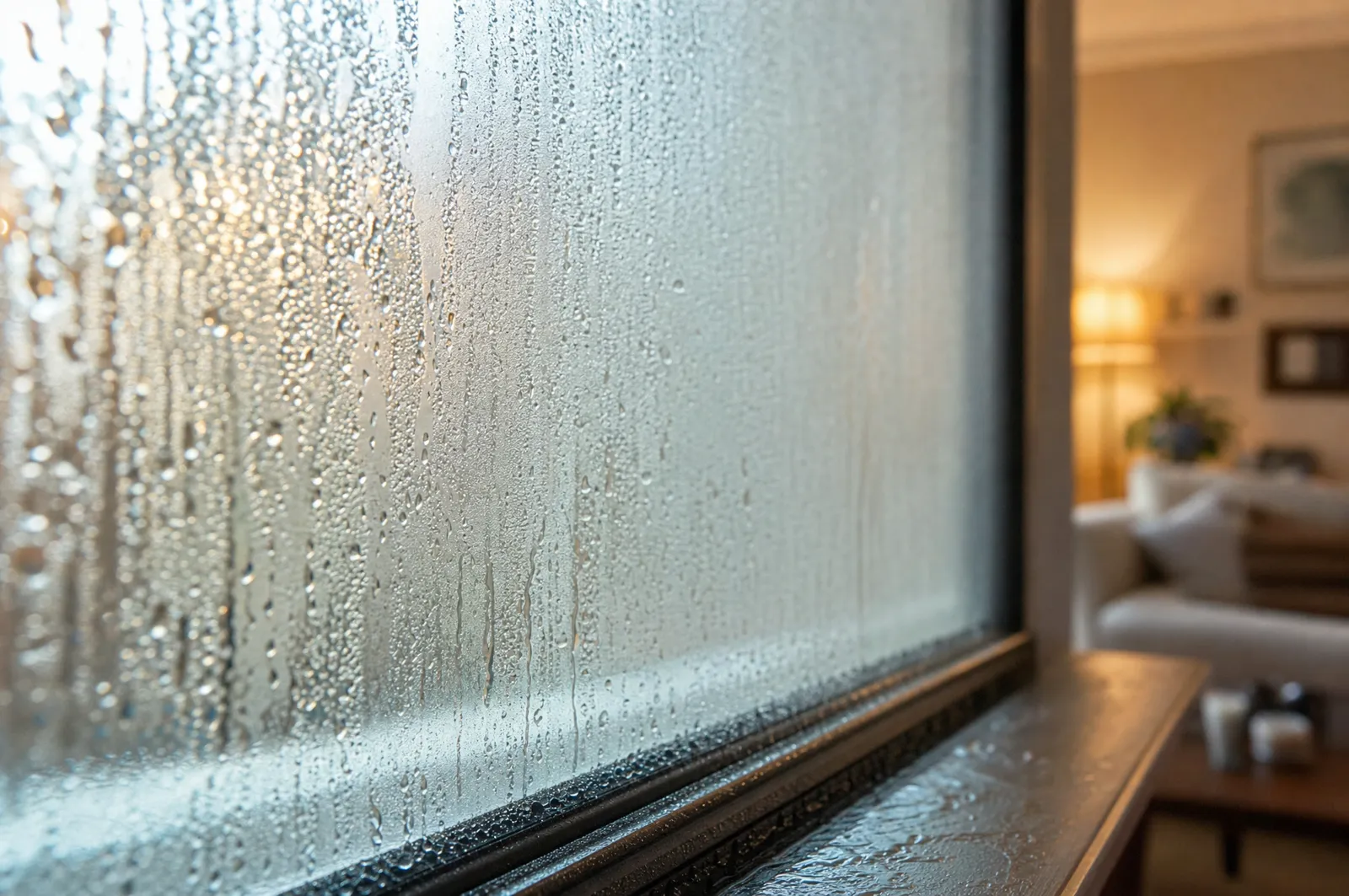
More is not better. Condensation or fog on the inside of your windows, especially along the bottom edge of the glass, means you are adding more moisture than the house can hold at the current outdoor temperature. Whatever is landing on the glass is also landing where you cannot see it, like the back side of exterior walls and the attic sheathing. Drop the humidistat a few points and the windows should clear within a day. As a rule, the colder it gets outside, the lower your setting has to sit.
Dry House Now, Comfortable by the Next Front
You can book from the calendar on this page, reach us through contact us online, or call 972-421-8000 and get an actual person. Our pricing is upfront and published online, and we have been reading these swings for DFW homeowners for 30+ years.